Pick a place you can reach
A day gecko enclosure asks for height, not a forgotten sliver of floor. Choose a secure surface where you can open the doors, check the lights, and reach the upper areas without dragging furniture across the room.[1][2]
Leave enough space around the enclosure for routine work. You will need a clear path for a towel, food cup, water container, and cleaning tools. A location that looks neat yet blocks those small jobs soon becomes the wrong location.[2]
The room is part of the habitat
The enclosure does not sit outside apartment life. Sun through a window, a heating vent, an air conditioner, and the heat from cooking can all alter the room around it. Watch the planned spot across a full day before you commit.[2]
Giant day geckos use their enclosure's upper routes during daylight. Their lighting and climate should support that daily pattern. Keep equipment clear of splashes, easy to inspect, and arranged so ventilation can do its job.[1][2]
Keep household hygiene simple
Set aside care tools that belong to the enclosure alone. Reptiles and their surroundings can carry germs that affect people. Washing with soap and running water after care protects the household and keeps the routine clear for guests.[3]
An apartment works best when care supplies have one home outside food-preparation space. That simple boundary prevents a food cup, cleaning cloth, or insect container from drifting onto a kitchen counter during a rushed evening.[3][2]
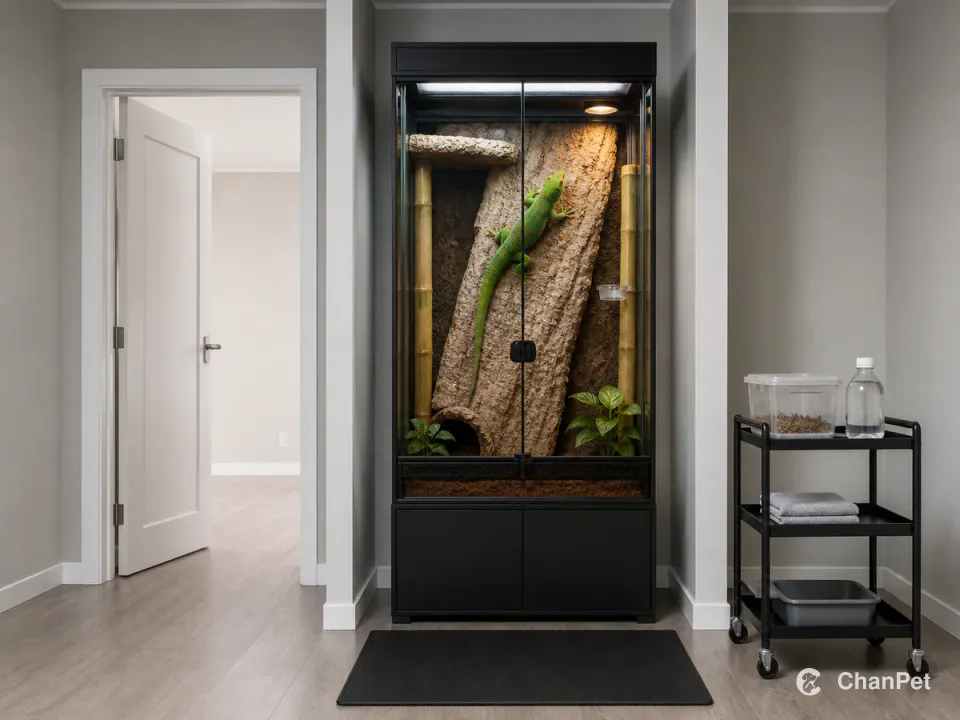
A permanent wall bay, ventilation clearance, and an open cleaning route make the apartment care system workable.[1][2][3]
The best apartment spot is easy to care for
Compare animals around room layout, habitat access, and the cleaning habits you can keep every week.
A tall enclosure needs a practical corner
Common questions
Can I put a giant day gecko enclosure near a bright apartment window?
Where should day gecko cleaning tools live in an apartment?
Keep dedicated care supplies organized away from food-preparation areas. Wash with soap and running water after contact with the gecko or enclosure.[3]
Sources
Sources used in this article
- [1]Madagascar giant day geckoSmithsonian's National Zoo and Conservation Biology Institute
- [2]Management and Husbandry of ReptilesMerck Veterinary Manual
- [3]Reptiles and AmphibiansCenters for Disease Control and Prevention