Build a small map of useful places
Start with the paths people use at breakfast and when they come home. Put a perch, a hide and a resting spot a little outside those paths. Separate food, water, litter and scratching resources give an apartment cat options without filling every corner with gear.[1]
The Exotic's plush coat and rounded body invite a soft, quiet-looking room. Let the cat decide which places work. A broad window perch, a low sturdy platform or a covered bed may each suit a different moment of the day.[2][1]
Make comfort easy to monitor
Get to know the cat when it is resting, playing and coming in from a warm room. A quiet apartment makes it easier to notice a change in breathing effort, energy, appetite or comfort. Contact a veterinarian when something changes from this cat's normal pattern.[3][2]
The GCCF's welfare guidance puts health ahead of exaggerated features. Future owners can use the same rule. Choose a cat for welfare and everyday comfort first. Let an appealing face stay a feature, not the whole focus.[3]
Keep activity close to daily life
Keep a simple wand toy near the chair where you end the day. Short play sessions give the cat movement without turning the apartment into a performance space. Watch when it wants to stop and leave the resting spots clear afterward.[1]
A secure carrier, quiet room and known resting places also help on busy days such as maintenance visits or a move. The home works best when the cat has a few familiar places that remain available as the human schedule changes.[1][2]
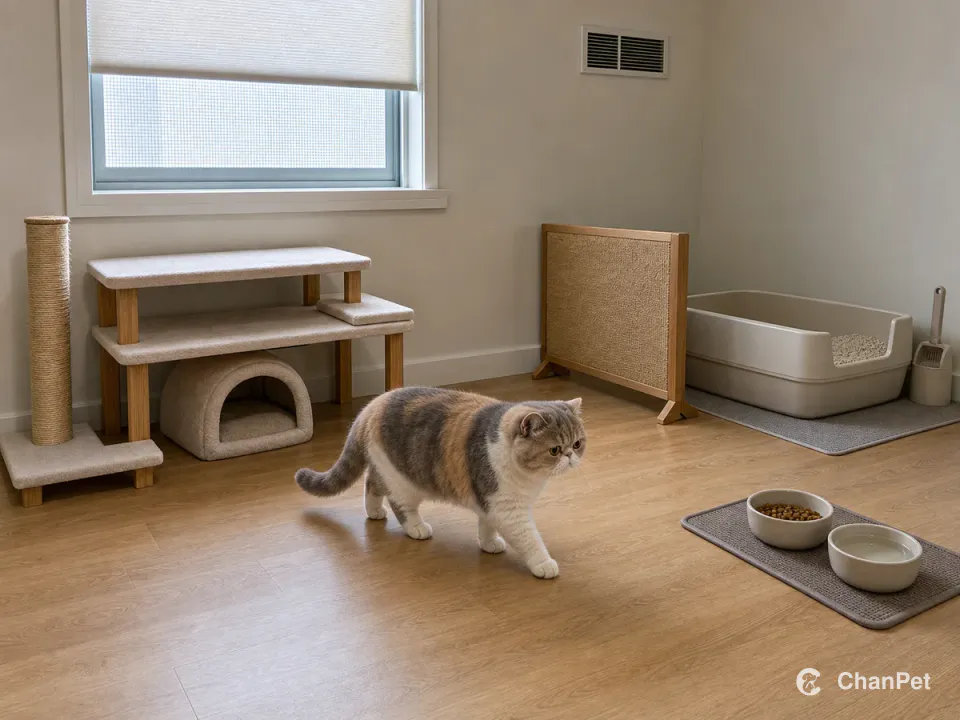
A quiet bed and low platform sit near shaded airflow, litter and food-water resources stay separated, and the clear route lets the cat choose where to settle in a compact room.[2][1][3]
An apartment can work when comfort has a clear place
The best apartment feels easy for the cat to read
Give the cat familiar routes, a quiet place to rest and a home where you can notice small changes. That blend of space and attention gives an Exotic Shorthair more than a pretty indoor backdrop.[2][1][3]
Common questions
Does an Exotic Shorthair need a large apartment?
Sources
Sources used in this article
- [2]ExoticThe Cat Fanciers' Association
- [1]Your Cat's Environmental Needs: Practical Tips for Cat CaregiversFeline Veterinary Medical Association and International Cat Care
- [3]The GCCF says Health and Welfare Come FirstThe Governing Council of the Cat Fancy