Choose a steady corner before choosing a cage table
A hamster home needs more than a spare square of furniture. Pick a spot away from direct sun, drafts, speakers and the busiest route through the apartment. RSPCA guidance emphasizes a safe, suitable environment. A stable corner gives the hamster a chance to settle into a real rhythm.[1][2]
Think about what happens after you switch off the lights. A golden hamster may dig, rearrange bedding and use its wheel while the apartment is quiet. Placing the enclosure beside your pillow can turn a delightful animal into a sleep problem for both of you.[3][1]
Make night sound predictable before it becomes annoying
Choose a stable wheel with a solid running surface and check that it turns smoothly. Bedding beneath the home can soften small vibrations. The goal is not total silence. The goal is a routine sound that does not rattle through a nightstand or shared wall.[1][3]
Avoid trying to tire the hamster out during the day. RSPCA describes hamsters as most active at night and around dawn and dusk. Respecting that pattern protects daytime rest and keeps your own expectations realistic.[3]
When you move, move the hamster's whole world carefully
A new apartment brings smells, temperature changes and unfamiliar noise. Move the hamster in a secure carrier, then rebuild the familiar hide, bedding and food area before adding new things. Merck describes the need for proper housing and careful handling of hamsters.[2][1]
Give the hamster a few quiet evenings to map the new enclosure. Your job is to keep food, water and the closing routine familiar. A calm restart is more useful than opening the cage repeatedly to see whether it has settled yet.[3][2]
An apartment hamster setup needs these answers
- Where can the enclosure stay away from sun, drafts and busy feet?
- Will wheel sound reach a bed, a roommate or a shared wall?
- Can daytime sleep happen without bright light and repeated disturbance?
- Is there a secure carrier and a familiar setup plan for a move?
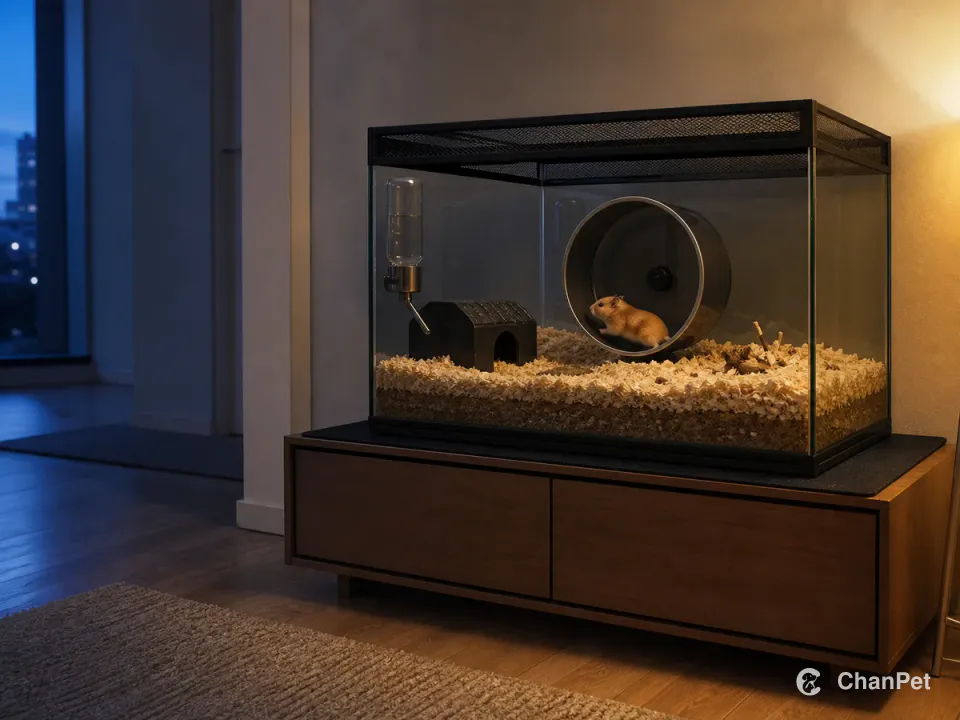
Place the complete habitat on a stable cabinet away from the bed and busy walkways, then use a vibration mat beneath it. The hamster can begin its evening activity on its own schedule.[1][3][2]
The right apartment has room for a private evening life
Find the corner before you bring the hamster home
Want to see whether your apartment rhythm suits a golden hamster? Start a smart match and add your sleeping hours, space and noise tolerance.
Common questions
Can a golden hamster sleep in my bedroom?
Sources
Sources used in this article
- [1]Creating a Good Home for HamstersRSPCA
- [3]Understanding Hamster BehaviourRSPCA
- [2]HamstersMerck Veterinary Manual