Choose a place you can service
A milk snake enclosure needs a stable surface and enough room to reach the lid, water, hides, and equipment. Choose the practical corner, not the most decorative one. You should be able to clean and check the habitat without moving a lamp, chair, or stack of boxes.[1][2]
Milk snakes use cover and sheltered spaces, so the enclosure should feel calm even in a busy apartment. Keep it away from a constantly opening door or a spot that heats and cools wildly. The room around the enclosure becomes part of the snake's environment.[3][2][1]
Make the door routine easy to follow
Place the enclosure where you can stand still and open it deliberately. Prepare water, cleaning tools, or food before you unlock the door. A small habit of closing and checking the enclosure every time avoids a rushed care task turning into an apartment-wide search.[1][2]
Give the climate equipment a clear route too. You need to see readings, check cords and ventilation, and clean around the enclosure. A compact setup works best when every essential piece remains visible and reachable.[1]
Keep food in its own zone
Decide where frozen-thawed prey will be stored, prepared, and cleaned up before the snake moves in. Give those items their own container and keep the process outside regular food preparation. A defined zone keeps a small apartment from feeling like every surface belongs to reptile care.[2][1]
If the enclosure location leaves no room for a door routine, food boundary, or maintenance tools, choose another place or rethink the plan. The right apartment setup makes care feel routine rather than like a puzzle every time you open the habitat.[3][1]
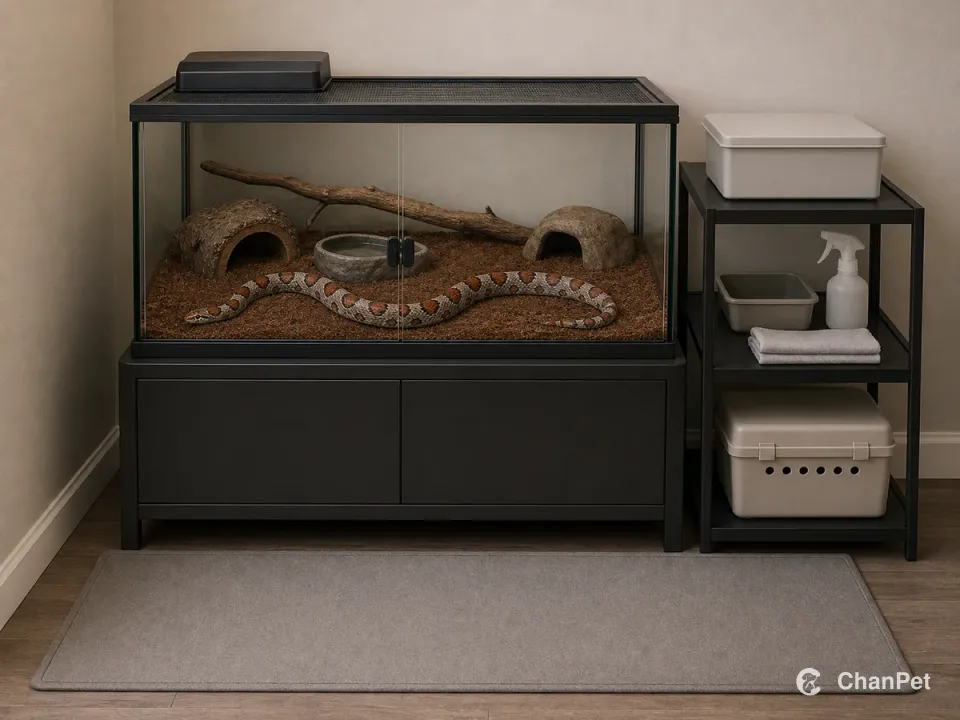
The enclosure, food, cleaning tools, and transport each have a place, keeping apartment care straightforward.[3][2][1]
A small enclosure still needs a well-planned corner
Use Smart Match to compare space, time, budget, and long-term care support before choosing.
Want a pet that fits the room you actually have?
Use Smart Match to compare enclosure needs, cleaning routines, and your apartment layout before you choose a milk snake or another companion.
Common questions
Where should I place a milk snake enclosure in an apartment?
Sources
Sources used in this article
- [3]Eastern Milk SnakeUniversity of Virginia Mountain Lake Biological Station
- [2]Milk snake — Lampropeltis triangulumKansas State University Behavioral Ecology Research Group
- [1]Providing a Home for a ReptileMerck Veterinary Manual