Choose a stable place for the whole setup
An adult common musk turtle is often only three to five inches long. The tank still holds a lot of water and equipment. Put it on furniture that can support it, near safe power and away from a path where bags or elbows will hit it.[1][2]
Choose a spot where you can reach the filter, see the water from more than one side and keep a small bucket nearby. The most photogenic corner is rarely the best one if every water change means moving half the room.[2]
A water tank still needs a genuinely dry area
Aquatic turtles need a dry basking site that they can climb onto safely. It must stay stable when the turtle uses it. In a small home, a wobbly makeshift rock creates more trouble than it saves.[2]
Musk turtles often travel along the bottom, but they also use shallow water, logs and rocks. Their natural habits are a reason to make the tank varied and usable, not a reason to strip it down to bare water.[1]
Keep the cleaning route out of the kitchen
CDC explains that reptiles, tank water and their equipment can carry germs. Keep the tank and its tools away from food preparation spaces. Clean items outdoors when you can, or use a laundry sink or bathtub and disinfect the area afterward.[3]
A compact apartment works better when the bucket, brush, towel and handwashing step always follow the same route. It stops a routine water change from taking over every counter and makes the job easier to start on time.[3][2]
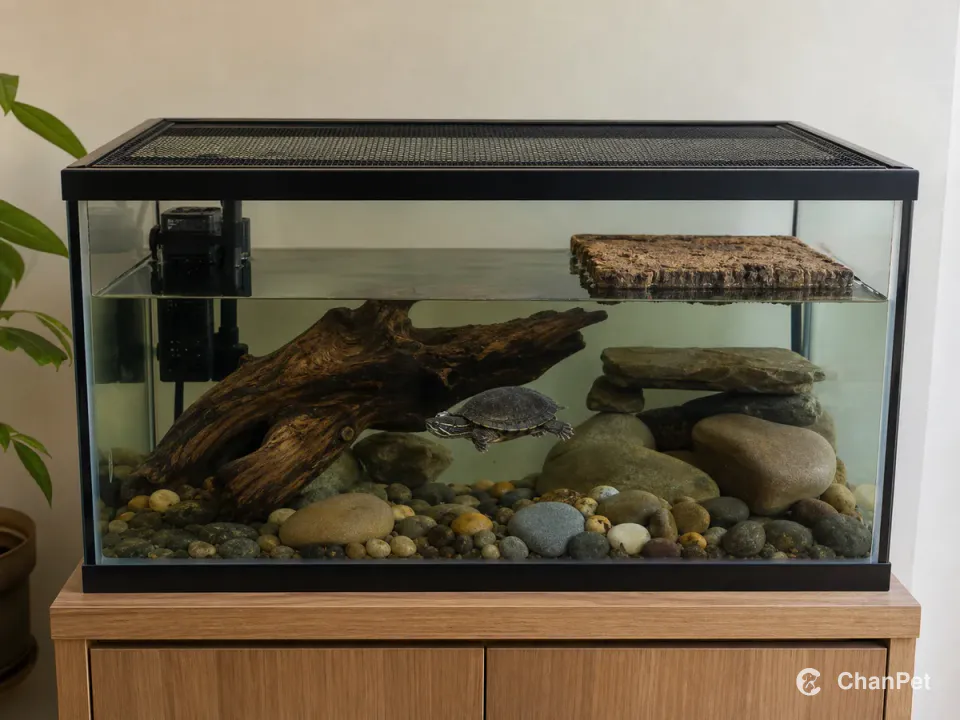
The tank itself is only part of the footprint; filtration, a dry resting area, and a cleaning routine need space too.[1][2]
Leave space for the tank and the work around it
A small apartment can hold a well-run tank
The turtle uses little floor space. The care system does not. Give it a stable location and a clear maintenance route, and apartment life can stay tidy and calm.[2][3]
Common questions
Can the turtle tank sit on a kitchen counter?
Choose another spot. CDC advises keeping reptile homes, water and supplies away from food preparation, storage and eating areas.[3]
Sources
Sources used in this article
- [1]Sternotherus odoratus (Common Musk Turtle, Stinkpot Turtle)Animal Diversity Web, University of Michigan
- [2]Avian, Small Mammal, and Exotics Animal Care and Feeding GuideUniversity of California Davis California Veterinary Emergency Team
- [3]Reptiles and AmphibiansCenters for Disease Control and Prevention