Draw the cat's route before buying decor
Watch the apartment at its busiest. The path from door to kitchen, sofa and bathroom tells you where people will keep passing. Set a bed, shelf, window perch or covered nook a little away from that route. Several resting choices make a compact home easier for a cat to use.[1]
An orange tabby may have stripes, swirls or spots in its coat. Those markings belong to pigmentation pattern genetics, not to a preferred room layout. Let the cat's own early choices show you where a perch or hiding place earns its space.[2][1]
Place scratchers where the cat stretches
Look for the place where the cat wakes up and stretches. Put a stable scratching post or board close by. Add another option near a spot it already investigates. A scratcher works best when it joins a route the cat uses every day.[1]
Start with a simple vertical surface and a flat one if your space allows. The first week will show whether the cat likes a post, a board or both. A chosen surface also gives you something useful to redirect toward when claws head for the sofa.[1]
Give the litter box a quiet address
Choose a litter spot with a clear approach and an easy exit. Keep food and water elsewhere. A laundry machine, slamming door or busy hallway can make the area harder to use. Cornell lists cleanliness, placement, household changes and medical issues among factors linked with litter problems.[3]
Keep the scoop, bags and floor cleaner close to the box. That setup turns a small daily job into a quick one. If a cat suddenly avoids the box, record what changed and contact a veterinary team rather than treating the mess as a personal complaint.[3]
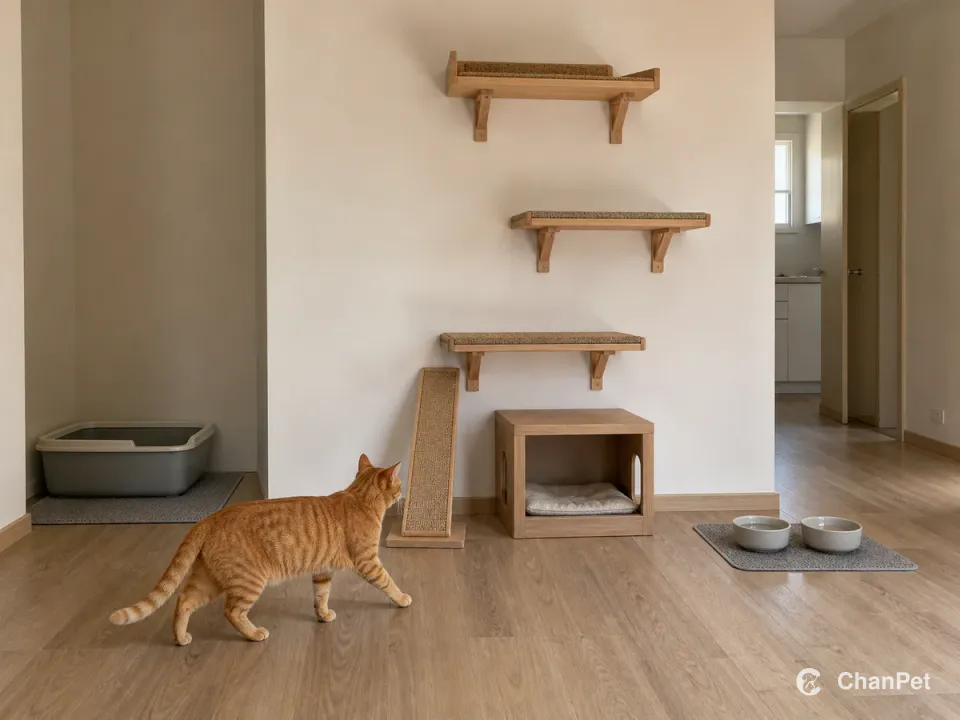
Orange describes coat color. Separate litter and food zones, a scratcher, two-exit hide, supported shelves, and an open floor route let the cat choose where to move and rest.[2][1][3]
A small home can offer a full cat life
Make the apartment easy to read
A cat does not need every corner filled with gear. It needs a clear route, a private box, a reliable scratcher and places to withdraw from the busiest part of the room.[1][3]
Common questions
Where should I put a litter box in a small apartment?
Choose a quiet, accessible location away from food, water and sudden vibration. Keep cleaning supplies close so the box stays easy for you to maintain.[3]
Sources
Sources used in this article
- [2]Specifying and sustaining pigmentation patterns in domestic and wild catsScience / PubMed
- [1]Your Cat's Environmental Needs: Practical Tips for Cat CaregiversFeline Veterinary Medical Association and International Cat Care
- [3]Feline Behavior Problems: House SoilingCornell University College of Veterinary Medicine, Cornell Feline Health Center