Choose a still corner, then leave it alone
Put the enclosure on a stable surface away from bright light and the busiest path through the room. Illinois describes a quiet, dimmer area as less stressful for many tarantulas.[1]
Choose the enclosure shape after confirming the species. Florida Extension explains that tarantulas can be ground burrowers or tree dwellers, and their environmental requirements vary widely.[2]
Treat the lid as a household boundary
A tarantula can climb smooth enclosure walls. Illinois recommends a tight, locking screen top. Check the closure after feeding, water changes and any enclosure work rather than relying on a quick glance.[1]
Keep one person responsible for opening the enclosure. Florida Extension says a terrarium should house one specimen, and it points out that tarantulas are territorial. A single routine keeps the animal and the room easier to manage.[2]
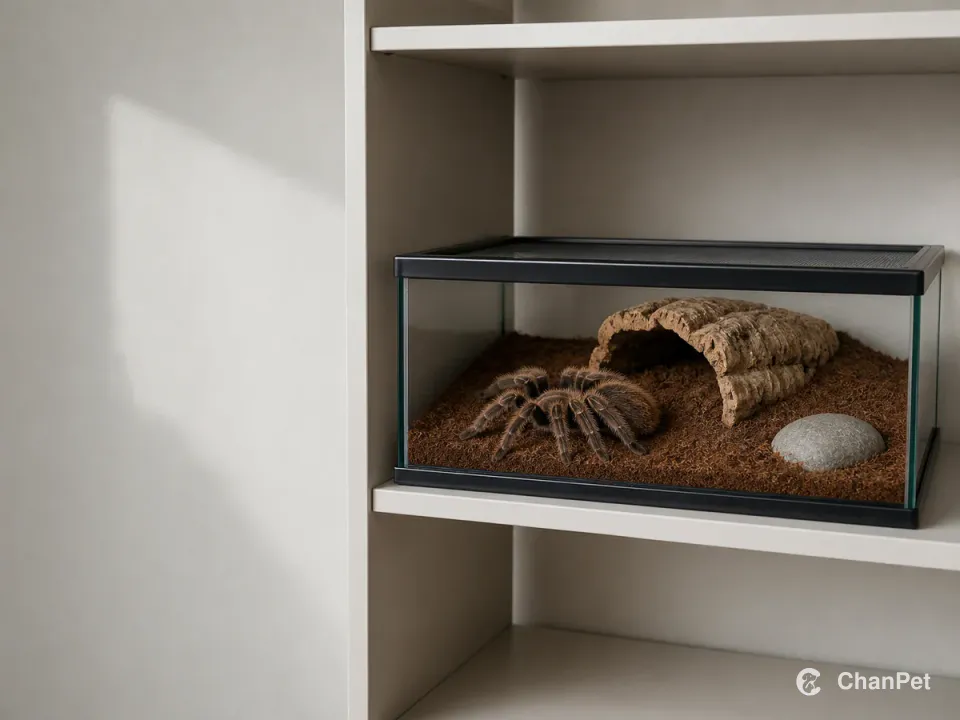
A low, closed habitat set into a fixed shelf keeps daily observation and opening steps consistent.[1][2]
The right spot has a job
Small space works when the boundary is clear
A tarantula does not fill an apartment with sound or fur. Its enclosure still deserves the same respect as any contained animal habitat: one safe place, one informed routine and no casual opening.[1][3]
Common questions
Can I put the enclosure on a bookcase?
Use a surface that stays stable, gives the enclosure room and lets you close the lid securely. Keep it away from a busy edge where a bump could turn routine care into an emergency.[1]
Sources
Sources used in this article
- [1]When Your Pet Has Eight LegsUniversity of Illinois College of Veterinary Medicine
- [2]SpidersUniversity of Florida IFAS Extension
- [3]Tarantula Spider ToxicityNational Library of Medicine, NCBI Bookshelf