The shop trip comes second
Start the aquarium before you choose the frogs. A filter needs time to develop biological filtration. Merck notes that ammonia trouble is common in systems without an established biofilter.[1]
Set the water temperature, dechlorinate the water, and add a place to hide. WWF includes those basics with filtration in African dwarf frog care. The clear goal is a stable place to move into.[2][1]
Learn the quick daily check
Pick one calm time each day to look at the temperature, the filter, and the frogs. African dwarf frogs live fully in water and surface for air. A short regular check teaches you what ordinary behavior looks like.[2]
A first-time keeper often wants to hold the new pet. Watching works better here. Their skin is sensitive, and WWF advises against repeated handling. Food searches and trips to the surface are plenty to watch.[2]
Feed where the frog can find it
The frog may rise for air, while its food belongs lower in the water. Use a suitable sinking food as the foundation. WWF also lists thawed options such as bloodworms, blackworms, and brine shrimp.[2]
Stay by the tank long enough to see the meal reach the frog. Remove obvious leftovers after feeding. Merck explains that uneaten food fouls the water, which makes the next day harder to read.[1]
Make cleaning a routine from day one
Tank water, stones, and filter media are all part of the care job. Wash hands with soap and running water after touching the frogs, their food, or their equipment. CDC gives that advice for amphibian care.[3]
Give the bucket, brush, and towel one fixed home. You will reach for them when a little water spills or the filter needs attention. A simple setup keeps beginner mistakes from turning into a scramble.[2][1]
Save the right veterinary number
Find an amphibian-experienced veterinarian before you bring frogs home. WWF names access to that kind of care as part of responsible preparation. It is much easier to ask for help when you already know whom to call.[2]
Keep water-test results and feeding notes together. If behavior, appetite, or skin appearance changes for more than a day, those notes give the veterinarian a clearer picture of the aquarium.[1][3]
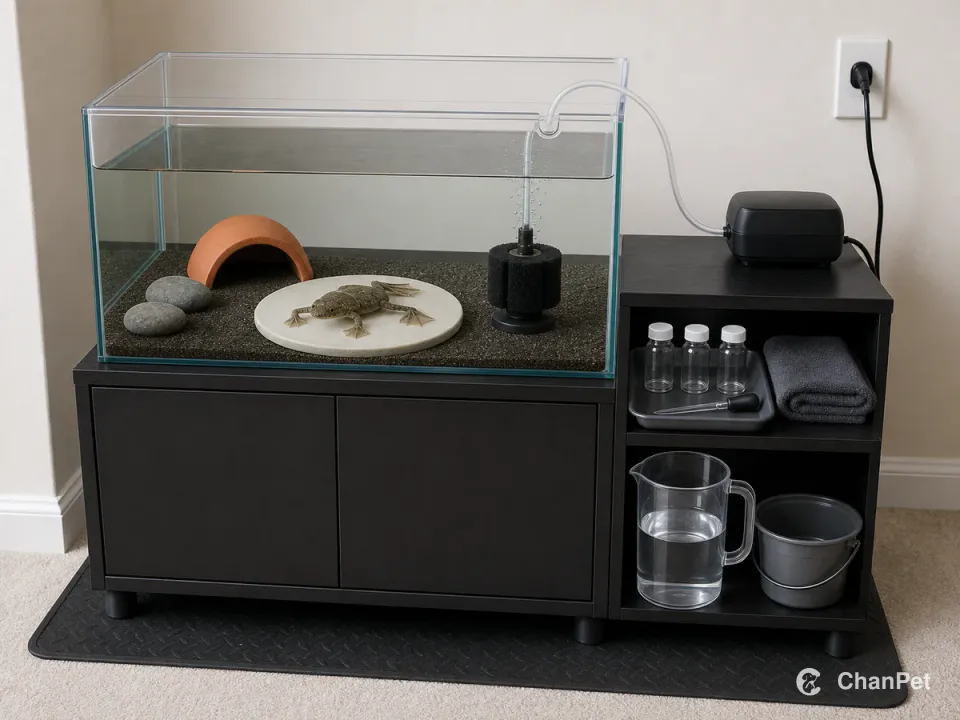
Stabilize the gentle filter and water, then keep samples and small water-change supplies ready for low-disturbance observation.[2][1]
A good first step is learning the water
Want to know whether this aquarium routine fits your life?
Use the smart match to compare your time, space, and care habits before you set up the tank.[2][1]
Common questions
How long should I wait before adding African dwarf frogs?
Wait until the filtration is established and you can test the water. A tank can look clean before the biology inside it is ready for an aquatic animal.[1]
Will I need to handle them often?
Make observation your main way of interacting. African dwarf frogs have sensitive skin, and their feeding and swimming behavior gives you plenty to see from outside the tank.[2]
Sources
Sources used in this article
- [2]African dwarf frogWorld Wildlife Fund
- [1]Amphibians as Laboratory AnimalsMerck Veterinary Manual
- [3]Reptiles and AmphibiansCenters for Disease Control and Prevention