Practice the enclosure first
A corn snake can work for a beginner who wants to tend a secure reptile home as part of daily life. Start by running the empty enclosure until the locks, heat readings, hides, water, and cleaning route feel familiar.[1][2][3]
Check the enclosure as if the snake already lived there: open it, refill water, look at both temperature areas, spot clean, and close every latch. That simple practice makes a tired-day routine much safer.[1][2]
Build the food plan before the snake
Corn snake care includes whole frozen-thawed rodent food. Decide before purchase whether the storage, thawing, feeding tools, cleanup, and your comfort with the food routine all fit the household.[1][3]
Keep a record of meals, temperature checks, sheds, waste, water changes, and unusual observations. A clear record helps you learn the individual snake and gives a reptile veterinarian useful history later.[2][1]
Choose the long relationship
A snake is a long-term animal, so picture the enclosure through moves, changing work hours, veterinary care, and a future backup keeper. The useful relationship grows through steady observation, not frequent handling.[3][2]
Watch the snake's feeding response, sheds, breathing, skin, and movement from outside the enclosure. A lasting change calls for a review of the habitat and reptile-veterinary advice.[2][1]
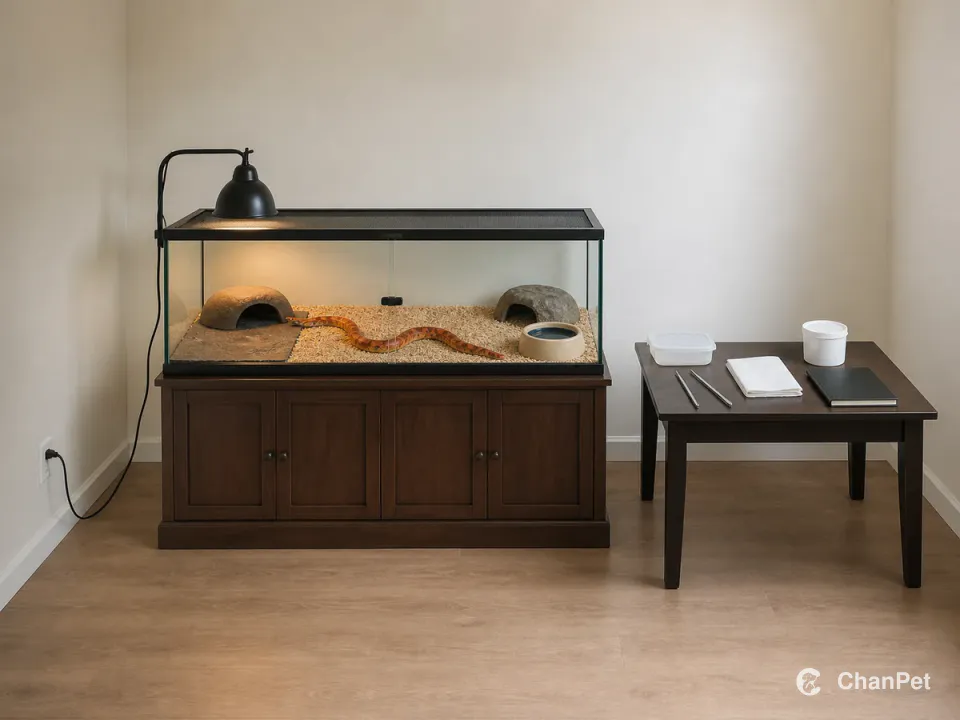
Test security, temperature, hides, frozen-thawed feeding hygiene, and records before bringing home a first corn snake.[1][2][3]
A first corn snake begins with a repeatable setup
Let the empty enclosure teach you first
If secure latches, heat readings, frozen-thawed food, and the care record already feel manageable, a first corn snake can have a more settled start.[1][2][3]
Common questions
What should I do before bringing home a first corn snake?
Sources
Sources used in this article
- [1]Corn Snake (Red Rat Snake)Bowling Green State University Herpetarium
- [2]Management and Husbandry of ReptilesMerck Veterinary Manual
- [3]Snakes as PetsTexas A&M College of Veterinary Medicine and Biomedical Sciences