Run the enclosure before the frogs
Get the enclosure working while it is empty. Check the temperature and humidity at different points in the day, watch how air moves through the tank and see where water settles. A frog should arrive to a system you already know how to read.[1][2]
Humidity does not mean sealing the enclosure into a wet box. Air, water, substrate and plants affect each other. A good beginner setup is one you can clean, monitor and adjust without guessing which change caused the next problem.[1][2]
Make food and clean hands part of the plan
Tiny live food needs a place in the weekly routine. You need to prepare it, keep it well and use feeding time to watch the frogs hunt. Set that up before the frogs arrive, because the food routine keeps returning long after the first exciting week.[2][3]
Dart frogs are observation animals. Keep handling rare and necessary, then use clean hands and tools for enclosure work. The point is simple: respect a small amphibian's skin and let the habitat do the work of giving you a close view.[1][3]
Learn the frog's normal day
Spend a few quiet minutes looking before you tidy the enclosure. Notice where each frog rests, whether it comes out for food and how it uses the leaf litter or climbing surfaces. A normal pattern is the best reference point when something later seems different.[3][2]
Keep notes on environmental checks, food and unusual changes. If you need help, those notes make a better starting point than a photo taken after the enclosure has been changed three times in one day.[1][2]
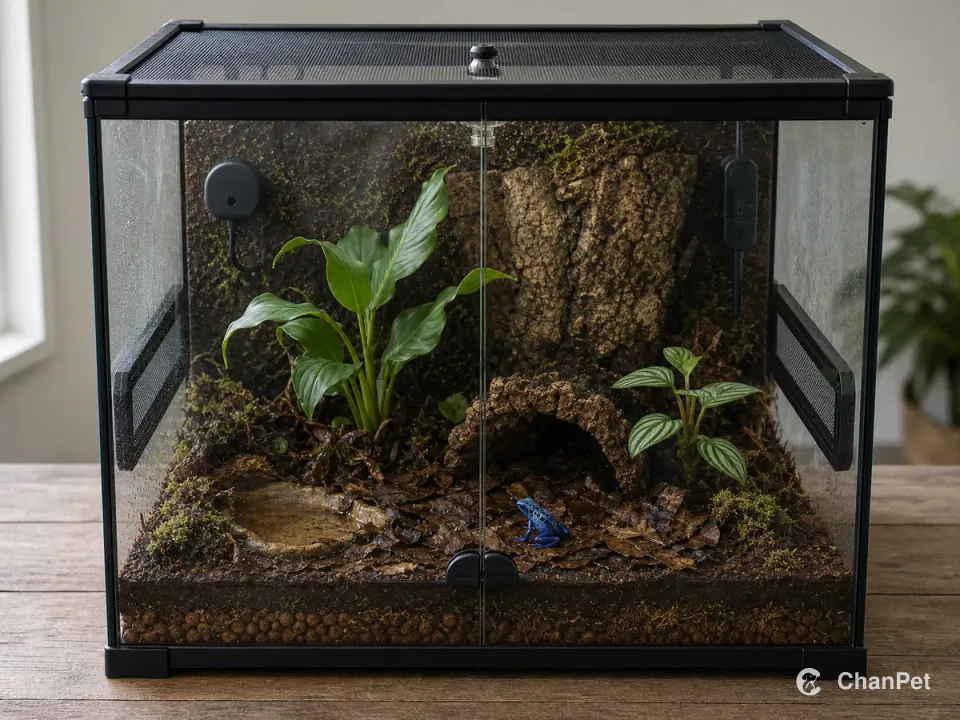
Run the full enclosure until moisture, airflow and drainage stay predictable; the first skill is learning the system before a frog depends on it.[1][2]
Start with a stable little ecosystem
Compare small animals around the habitat work, food routine and interaction style you can confidently support.
A frog needs a stable room within a room
Common questions
Why should a dart frog enclosure run before the frogs arrive?
Sources
Sources used in this article
- [1]Environment and Husbandry for AmphibiansMerck Veterinary Manual
- [2]Poison Dart FrogsBowling Green State University Herpetarium
- [3]Poison frogsSmithsonian's National Zoo and Conservation Biology Institute