Start with the daylight routine
A giant day gecko is awake while the room is awake. That makes it rewarding to watch, but it also means its light cycle and warm climbing spaces must be established from the first day. Run the equipment while the enclosure is empty and see how the room changes it.[1][2]
Watch the enclosure in the morning, at the brightest part of the day, and after the lights change. A setup can look fine during a quick store visit yet behave differently beside a sunny window, air conditioner, or busy doorway.[2]
Height is the gecko's floorplan
This lizard uses glass, trunks, leaves, and high resting places as its everyday routes. Smithsonian and Sacramento Zoo information describes giant day geckos as arboreal animals. Give the enclosure a usable vertical map, with places to climb, pause, hide, and feed.[1][3]
Plan the routes before adding decoration. You need to reach a water dish, remove old food, and inspect the animal without dismantling its world. Easy access makes routine care calmer for the gecko and more likely to happen on time.[2][3]
Food is a living part of the plan
Giant day geckos eat arthropods and may take sweet fruit or nectar. That puts live insect storage, feeding tools, and cleanup into the weekly routine. Decide where those items will live before you bring the gecko home.[1][3]
Feeding gives you a useful chance to observe the gecko in its own space. Note its usual activity, climbing, appetite, and resting places. A short record is much more useful to a reptile veterinarian than trying to recall a vague change later.[2]
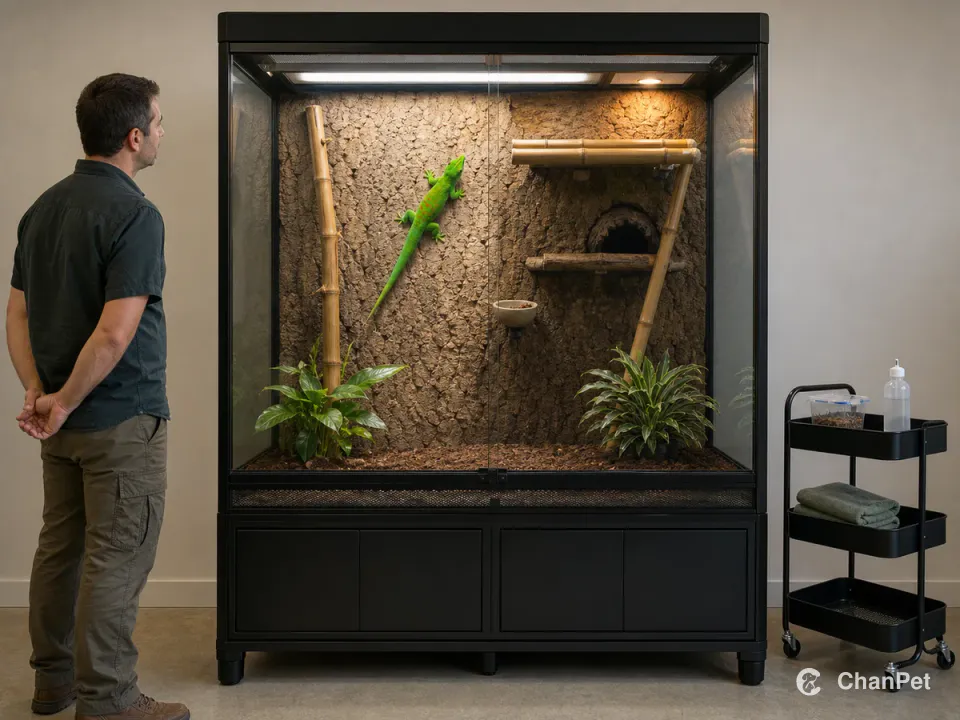
The caregiver checks daylight, climbing routes, and feeder supplies while the gecko stays inside its closed vertical habitat.[1][3][2]
Learn the habitat before choosing the animal
Compare observation animals around the habitat work, food, and daily attention you can comfortably provide.
A good first lesson starts with an empty enclosure
Common questions
Can I set up a giant day gecko enclosure on the day I bring one home?
Sources
Sources used in this article
- [1]Madagascar giant day geckoSmithsonian's National Zoo and Conservation Biology Institute
- [3]Madagascar Giant Day GeckoSacramento Zoo
- [2]Management and Husbandry of ReptilesMerck Veterinary Manual