Small does not mean simple
A two- or three-pound fennec can look manageable in a photo. It is still a wild canid that shelters by day and searches for food at night. A beginner is not meeting a tiny dog. They are meeting a life built around a different clock.[1]
Smithsonian keepers provide sand, hidden spaces, food-searching activities and voluntary training. Each part gives the animal room to move, retreat or take part in care. It takes more than a few care videos to make those choices well.[2]
The hard part happens at night
Fennecs listen below the sand, dig and search for food after dark. Their active hours begin as a home settles for sleep. Waking one through the day or demanding silence at night does not teach it to fit in.[1][3]
Welfare work on managed nocturnal species looks beyond food and water. It considers activity time, enrichment and the animal's control over its surroundings. Those quieter parts of care are exactly what a new owner is likely to miss.[3]
Start with an animal that can share a home
A first pet can teach regular feeding, health observation, cleaning and backup care. Domestic cats, fancy rats and carefully chosen dogs still need effort, but they have a long history of living alongside people.[2]
Fennecs can instead open a door to desert ecology, nocturnal behaviour and animal welfare. Conservation education and responsible zoo visits offer that connection without asking a wild animal to carry a beginner's learning curve.[1][3]
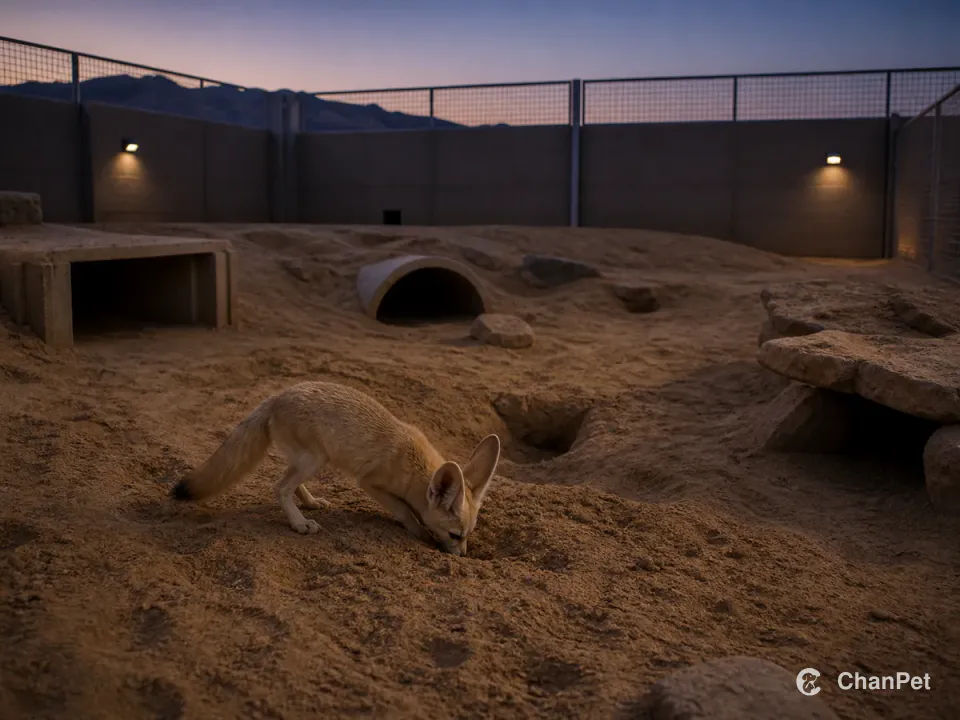
Digging, shelter, and nocturnal activity need a complete specialist environment that a few household supplies cannot provide.[2][1][3]
Give both sides a fair chance
You can love wildlife without owning it
Common questions
Sources
Sources used in this article
- [2]How to Care for Fennec FoxesSmithsonian's National Zoo and Conservation Biology Institute
- [1]Fennec foxSmithsonian's National Zoo and Conservation Biology Institute
- [3]Welfare and Enrichment of Managed Nocturnal Species, Supported by TechnologyAnimals