Make a home that lets them tunnel safely
The enclosure is the useful first purchase. It needs space for bedding that holds tunnels, a secure lid, hiding places, and items that are safe to chew. Gerbils use their teeth and bodies to reshape the place where they live.[1][2]
A shallow layer of bedding can look tidy to people while leaving little for a gerbil to work with. Give the pair material they can push, carry, and nest in. Check the lid and every opening before move-in, because a small gap can become an escape route.[1][2]
Keep handling low, slow, and uneventful
Set up a low transfer route before you need it. A small carrier or cup beside the enclosure gives a gerbil somewhere safe to step into. Open hands close to a low surface are much less alarming than a hand chasing from above.[3][2]
Keep your fingers away from the tail. Support the body with both hands when a move is necessary, then put the gerbil down promptly. A few quiet seconds of chosen contact teach more trust than a long attempt to keep it still.[3]
Watch the pair before rearranging everything
For the first few days, let the new home stay calm. Watch whether both animals reach the food and water, use the bedding, and settle into a nest. That small amount of watching teaches you more than trying a new toy every evening.[1][2]
Add new cardboard, hides, and other enrichment one change at a time. You will quickly see what gets shredded, buried, or ignored. That makes later choices easier and keeps the enclosure familiar while the pair learns the room around it.[1][2]
Have these ready before the pair arrives
- A secure enclosure with a lid that closes firmly.
- Deep bedding, stable hides, and safe materials to chew and shred.
- Food, fresh water equipment, and a low transfer carrier.
- A quiet place to sit beside the enclosure during the first few evenings.
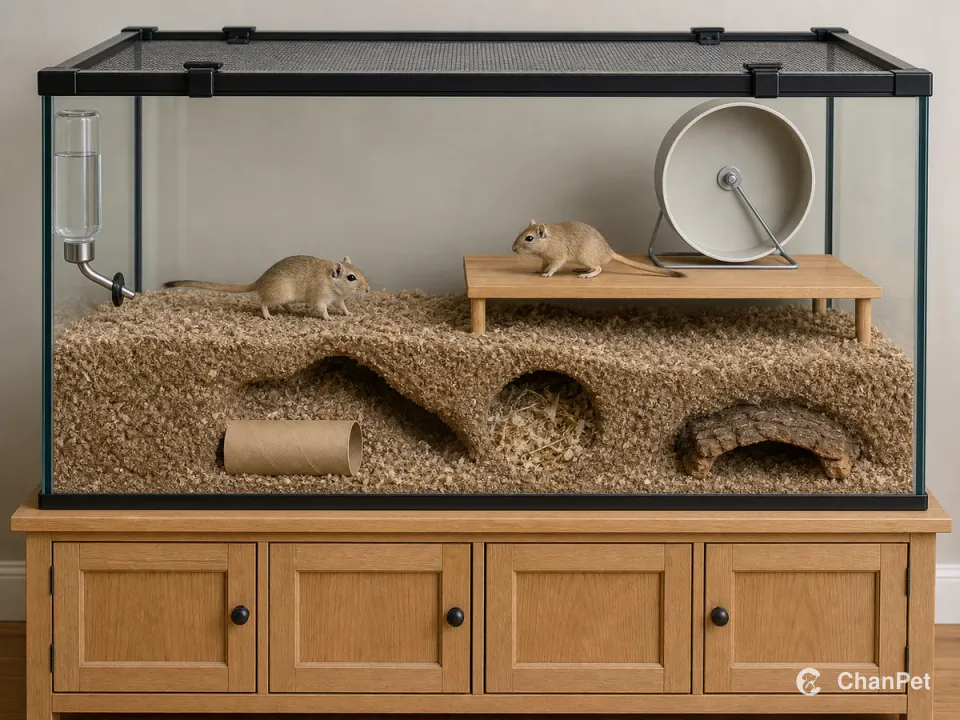
Begin with a settled pair, deep stable bedding, secure ventilation, water and a solid wheel, then observe before handling.[1][3][2]
A good first pet for a patient observer
Give the first week a quiet start
Build the burrow, prepare a safe transfer route, and spend the first evenings watching what the pair chooses to do. That is a solid foundation for a first gerbil home.[1][3]
Common questions
How should I pick up a gerbil?
Sources
Sources used in this article
- [1]Creating a Good Home For GerbilsRSPCA
- [3]Handling your gerbilsRSPCA
- [2]Providing a Home for a GerbilMerck Veterinary Manual