Set up the sleeping place before the hamster arrives
A golden hamster begins by looking for a place to disappear into. RSPCA guidance calls for deep bedding, hiding places and a safe wheel. Put the home together first, then watch it with the lid closed for a few days. A loose latch or wobbling wheel is easier to fix before a small animal lives there.[1][2]
Think from the hamster's height. A wire, a narrow gap or a tall shelf can become a problem fast. Merck advises a secure enclosure with appropriate bedding and furnishings. The best first setup feels plain and safe, then grows as you learn how this hamster uses it.[2]
Work with the evening instead of waking it for play
Golden hamsters rest through much of the day and become active later. Save feeding, watching and gentle contact for the evening. A quiet room and a regular light pattern give the hamster a clearer signal that daytime is for sleep and nighttime is for exploring.[1][2]
The first evenings can be simple. Sit nearby while it comes out, changes nests or runs for a while. Your still voice and familiar sounds will matter more than trying to create a quick handling milestone. Trust often begins with the hamster choosing to approach.[1]
Use a quiet evening check to notice changes
While the hamster is awake, glance at its coat, eyes, movement, food and water. You are looking for a change from its usual pattern, not trying to inspect every inch of it. Merck recommends regular observation as part of routine hamster health care.[3]
Find a veterinary practice that treats hamsters before you need one. Keep a note of what the hamster normally eats and how its enclosure is set up. Clear information makes a health conversation much easier when something changes quickly.[3][2]
Have these ready before the first evening
- A secure home with deep bedding, a hide and a stable wheel.
- A quiet place away from bright daytime activity.
- A simple opening and cleaning routine with a safe transfer container.
- A veterinary contact and a way to note food, water and behavior changes.
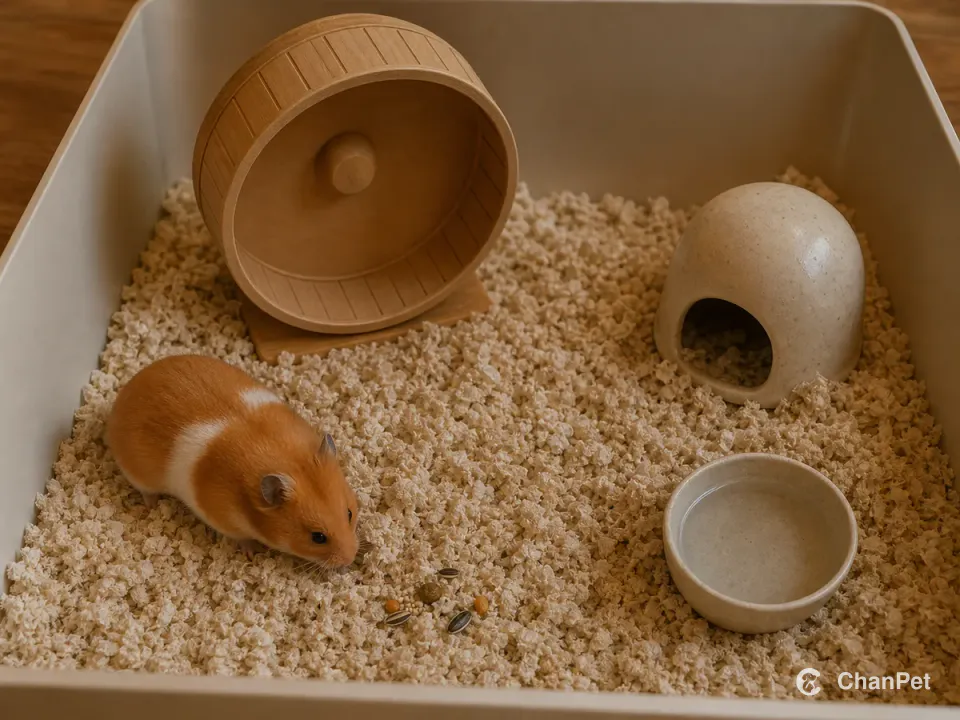
Set deep bedding, a suitable wheel, and a hide in place before arrival so the hamster can explore on its own evening schedule.[1][2]
A great first pet for someone who likes a quiet evening ritual
Try picturing the hamster's evening in your home
Want to see whether that rhythm suits you? Start a smart match and add your quiet hours, space and preferred kind of pet contact.
Common questions
Should I wake a golden hamster during the day to play?
What should a beginner check each day?
Check food, water, the wheel and bedding, then watch the hamster's coat, eyes and movement while it is awake. Call a veterinarian when a clear change persists or seems urgent.[3]
Sources
Sources used in this article
- [1]Creating a Good Home for HamstersRSPCA
- [2]Providing a Home for a HamsterMerck Veterinary Manual
- [3]Routine Health Care of HamstersMerck Veterinary Manual