Start with a route you can repeat
Goldens were developed as retrievers, and the FCI standard describes a willing, intelligent dog with an aptitude for work. A young dog may greet a walk as a chance to carry, sniff and investigate. That energy is easier to guide when the same short route and exit routine happen often.[1]
Put the lead on before the front door opens. Reward a check-in, a loose lead or a quiet pause as it happens. Those tiny repetitions matter more than saving every lesson for a weekend class. They also give a first-time owner a clear job when the puppy gets excited.[2]
Make training part of ordinary life
A Golden puppy will soon become a strong adolescent, so teach the useful household habits while the dog is still easy to guide. Practice waiting at a doorway, coming away from a dropped sock and settling on a bed while dinner is made. Reward-based training gives the dog a clear picture of what earns good things.[2][1]
Keep the people in the home on the same page. If one person invites jumping and another asks for four paws on the floor, the dog gets mixed messages. Choose a few simple cues and agree on the rewards before visitors or school runs make the room busy.[2]
Take the puppy out in small pieces
Puppy socialization is more useful when the puppy stays comfortable. AVSAB recommends safe, positive exposure to people, places and experiences during early development. A few calm minutes watching a bus from a distance can be a good outing for a young Golden.[3]
Watch the dog's body language instead of chasing a long checklist. Step back when the puppy freezes, pulls away or stops taking food. End while the dog can still recover and try another easy version another day. This gives confidence room to grow.[3][2]
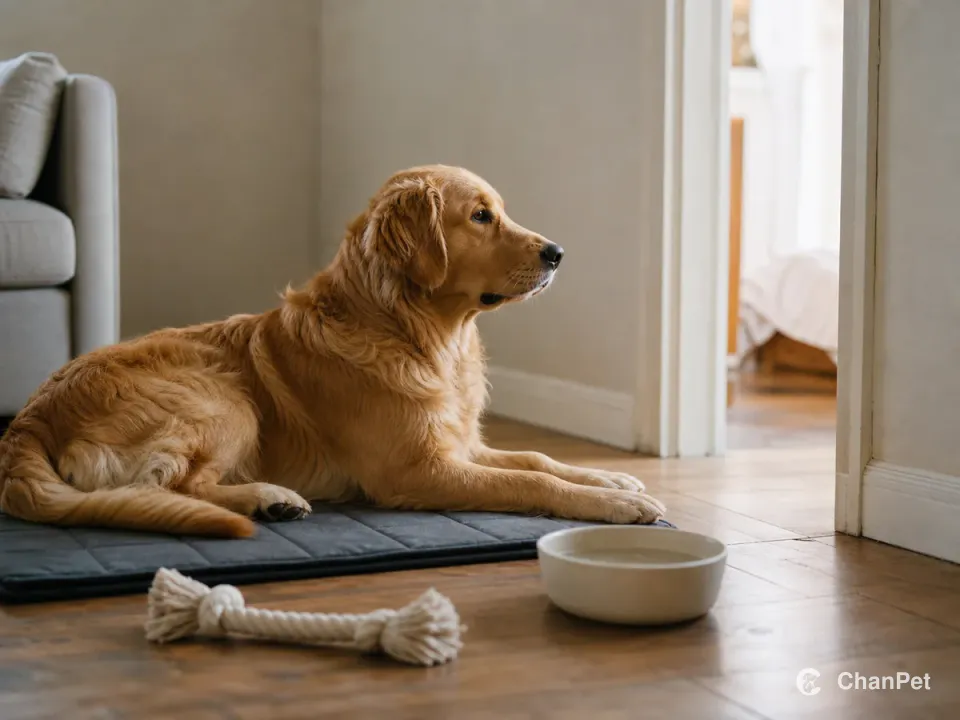
Practising calm waiting in the middle of everyday routines is easier to keep than occasional long training sessions.[2][3]
Choose this dog if practice sounds enjoyable
See whether the weekday has room
Thinking about a Golden Retriever as your first dog? Use the match to test your walk time, training experience and home routine before you start looking for a puppy.
Common questions
How much formal training does a Golden Retriever puppy need?
Short practice during everyday moments is a useful start. Build door manners, lead skills, recalls and calm settling into meals, walks and visitors. Reward the behavior you want to see again.[2]
Should every puppy outing be busy?
Choose gentle, positive exposure and give the puppy room to observe. A comfortable outing teaches more than an event that leaves the dog worried or overloaded.[3]
Sources
Sources used in this article
- [1]FCI Standard No. 111: Golden RetrieverFédération Cynologique Internationale
- [2]AVSAB Position Statement on Humane Dog TrainingAmerican Veterinary Society of Animal Behavior