Begin with the whole habitat
A quiet tortoise still asks a new keeper to run a small environment every day. Light, heat, UVB, water, food, waste, and a place to move all affect one another. The animal may look settled while one part of that system slips.[1][2][3]
The useful first question is practical: can you explain who checks each part before breakfast and again before bed? A first keeper learns fast when those jobs have names. A small enclosure, a lamp, and a bag of food are supplies; the routine is the care.[2][3]
Light is a system, not a bulb
Hermann's tortoises use warm and cool parts of their space to regulate themselves. They also need appropriate ultraviolet light. Natural sunlight must be unfiltered, and indoor care needs reptile-suitable UVB, a safe heat source, and readings taken where the tortoise actually sits.[3][2]
Set up a warm area, a cooler area, shade, and a hide before the tortoise arrives. Check the equipment with reliable thermometers. Timers make a routine easier, yet they never replace looking at the temperatures, the equipment, and the tortoise itself.[3][2]
Food and floor space teach the routine
A Hermann's tortoise needs safe horizontal room to walk, feed, rest, and choose a comfortable area. Its food is plant-based, yet feeding takes thought rather than a casual handful of leaves. Keep the diet suitable for the species and ask an exotic veterinarian how to handle supplements or a change in appetite.[1][2][3]
Use the first weeks to learn the tortoise's normal pace. Note when it eats, where it basks, how it moves, and what its droppings look like. Those small notes help a new keeper spot a change without treating every quiet afternoon as an emergency.[2][3]
What to arrange before the tortoise comes home
- Finish and test the secure habitat, including light, temperature range, hide, water, and safe walking space.
- Choose an exotic veterinarian and learn the clinic's transport and appointment process.
- Write a short food, cleaning, and observation routine that another adult can follow.
- Name a backup carer for illness, travel, or a delayed return home.
- Keep basic observations in one place so a veterinary conversation starts with facts.
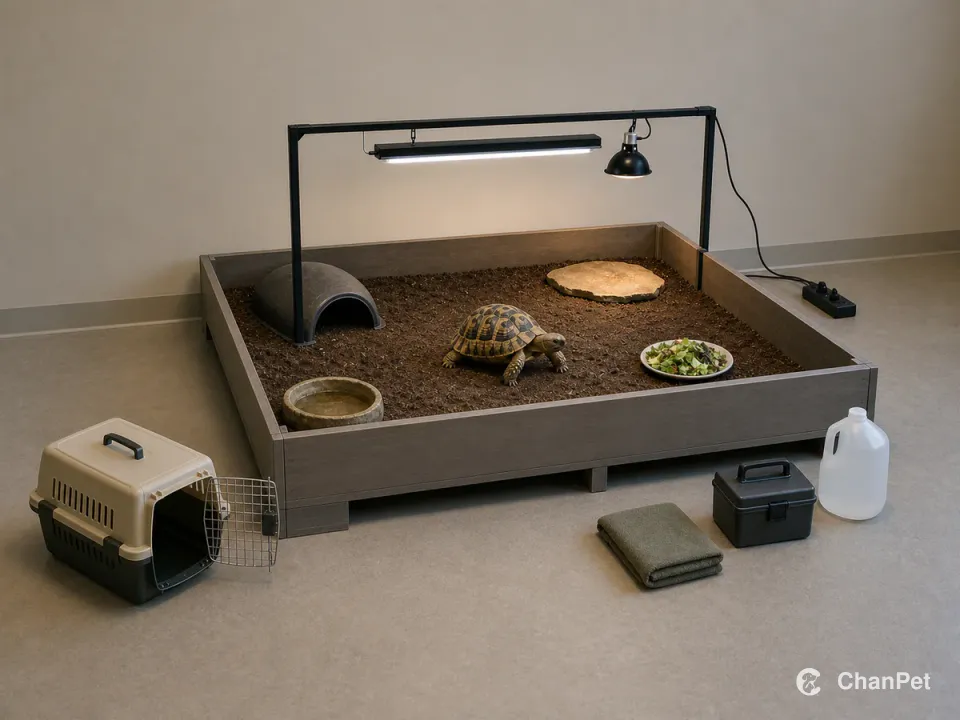
Prepare the long-term floor space, lighting, food, cleaning route and veterinary transport before bringing the tortoise home.[1][2][3]
A first reptile deserves a prepared first week
Use Smart Match to compare space, time, budget, and long-term care support before choosing.
Put the habitat on your calendar first
Thinking about a first Hermann's tortoise? Use Smart Match to check whether your space, time, and support can carry the care routine from day one.[2][3]
Common questions
Is a Hermann's tortoise easy because it is quiet?
Sources
Sources used in this article
- [1]Care of The Hermann's Tortoise (Testudo hermanni)British Chelonia Group
- [2]Mediterranean tortoise care and adviceRoyal Veterinary College, Beaumont Sainsbury Animal Hospital
- [3]Management and Husbandry of ReptilesMerck Veterinary Manual