Judge the weekday
For a first dog owner, the question is not whether a small dog fits the room. The real question is whether a lively working terrier fits an ordinary weekday with enough activity, guidance, and recovery.[1][2]
Try the rhythm before you bring a dog home. Put a morning outing, an evening outlet, a few short training moments, and a quiet finish into a calendar for seven days.[2][3]
Begin with the safety skills
A terrier's interest in movement makes doors, gates, and outdoor distractions worth planning early. Decide who holds the leash, who opens the door, and where the dog waits before an exciting moment begins.[1][2]
Teach a pause, a check-in, and a turn toward you with rewards. The American Veterinary Society of Animal Behavior recommends reward-based training and advises against aversive methods.[3]
Give energy a job
Build activity around real life: a sniffing walk, a simple food search, a practiced settle, or a short play session with a clear finish. The dog needs a routine you can repeat after work as well as on a sunny Saturday.[2][1]
Keep a small reward budget and a few familiar cues ready for the moments that happen most often. Repetition in daily scenes is what turns training into management you can use.[3]
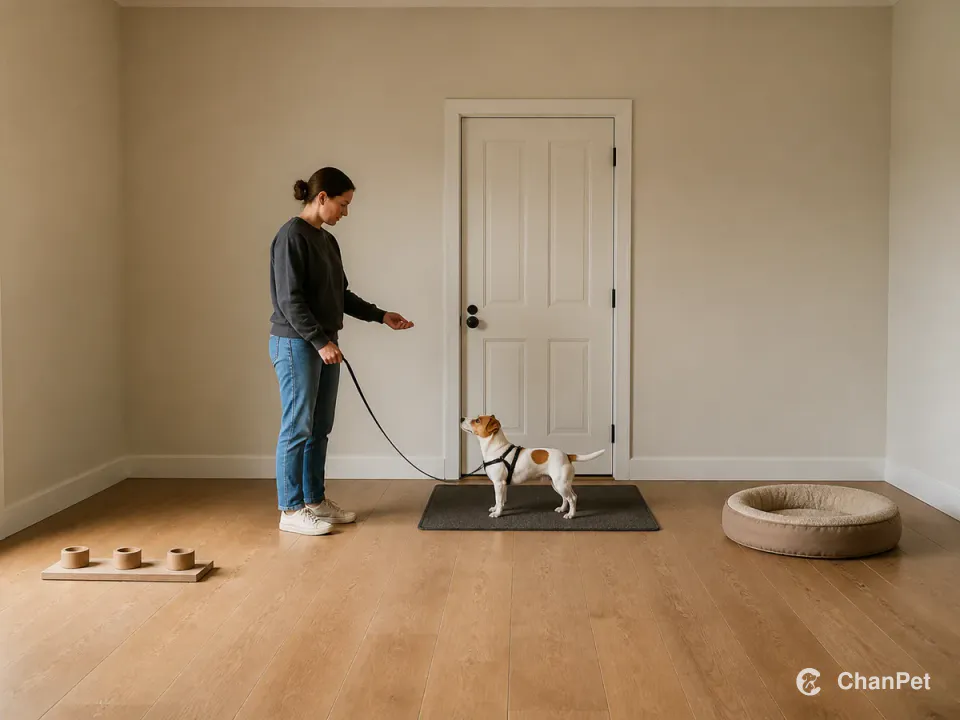
Door waiting comes first, a short scent task follows, and the dog bed gives this lively terrier a clear place to recover.[1][2][3]
Choose the terrier for the routine you can repeat
Let a normal week answer the question
If the active parts, door habits, and short training sessions feel good on ordinary days, you have a better basis for choosing a Jack Russell Terrier.[1][2][3]
Common questions
Should a first owner choose a Jack Russell Terrier because it is small?
Sources
Sources used in this article
- [1]Jack Russell Terrier, FCI Standard No. 345Fédération Cynologique Internationale
- [2]Jack Russell Terrier Club of AmericaJack Russell Terrier Club of America
- [3]Humane Dog Training Position StatementAmerican Veterinary Society of Animal Behavior