Use the empty enclosure first
Before the spider arrives, open and close the empty enclosure once or twice. Find where your hands go, where a small transfer cup would sit and how you will close the room. This simple rehearsal takes the panic out of a fast animal.[1][2]
Jumping spiders hunt by sight and pounce on prey. That alert movement is part of their appeal, but it also makes a loose lid or an open doorway a real issue. Your first skill is making escape unlikely.[3][1]
Let the silk retreat be a private room
A Phidippus uses a small silk nest for resting, molting and egg laying. When you see a fresh retreat, resist the urge to peel it away for a better look. A quiet corner is more useful to the spider than a perfectly tidy display.[1]
A beginner does not need to interpret every pause. Notice where the spider is, whether the enclosure remains secure and whether it has a normal place to climb. A few clear observations are better than constant interference.[1][3]
Keep the first feeding simple
A jumping spider eats suitable small live prey, not a bowl of pellets. Watch whether it notices the feeder, then leave the animal space to decide. Feeding is more useful when you can actually see what happened.[3][1]
If the spider ignores food, do not keep adding insects. Remove a remaining feeder when it is safe to do so and note the date. A short record gives you something concrete to discuss with an experienced exotic-animal professional if a concern develops.[1][2]
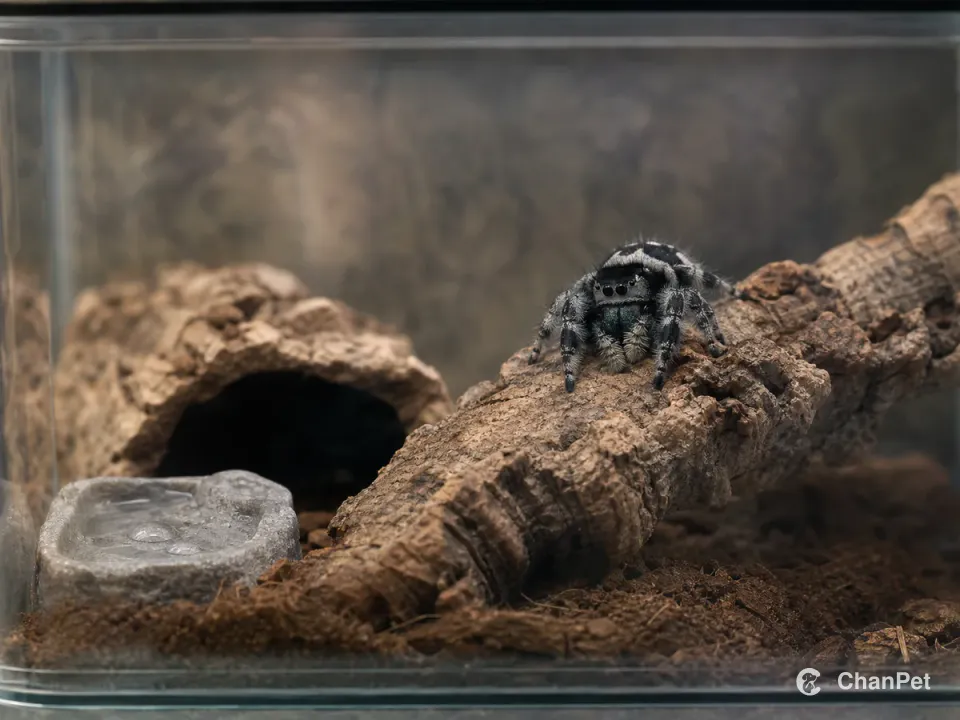
Clear places for a climbing branch, hide, and water area make quiet observation easier for a beginner.[1][2]
Start with curiosity, not a handling goal
Have the routine ready before the animal
A secure enclosure, a calm opening routine and a feeder plan are the useful beginner checklist. Once those are ordinary, the spider can be the interesting part of the day rather than a sudden problem to solve.[1][2]
Sources
Sources used in this article
- [1]Regal Jumping Spider, Phidippus regius C. L. KochUniversity of Florida IFAS Extension
- [3]SpidersUniversity of California Statewide Integrated Pest Management Program
- [2]Jumping spidersWashington State University Extension