Build the system before the turtle arrives
Common musk turtles spend much of their time moving along the bottom in slow, shallow water. A starter tank needs room for that behavior, not a decorative bowl with a few inches of water.[1][2]
UC Davis advises a dry basking area, a temperature gradient and regular monitoring for aquatic turtles. Run the filter and heat equipment before you bring the turtle home. It gives you time to spot a leak, rattle or bad placement without an animal in the tank.[3]
A few daily checks beat constant handling
Look at the water level, filter outflow and basking area as part of your normal routine. Then notice whether the turtle is moving and eating in its usual way. A short, calm check gives better information than repeatedly lifting the turtle out.[3]
Musk turtles are often more active from dusk onward. Their chin and throat barbels help them find food along the bottom. Once you know that rhythm, you are less likely to read a quiet afternoon as a problem.[1]
Let observation do most of the work
A musk turtle may release a strong-smelling musk when frightened. That is a useful cue to keep handling brief and purposeful. Move it only when you need to clean, examine or transport it.[1]
The rewarding part of turtle keeping is seeing a stable environment support ordinary behavior. Get the water, heat and dry area working first. Extra décor can wait until the essentials feel routine.[3][2]
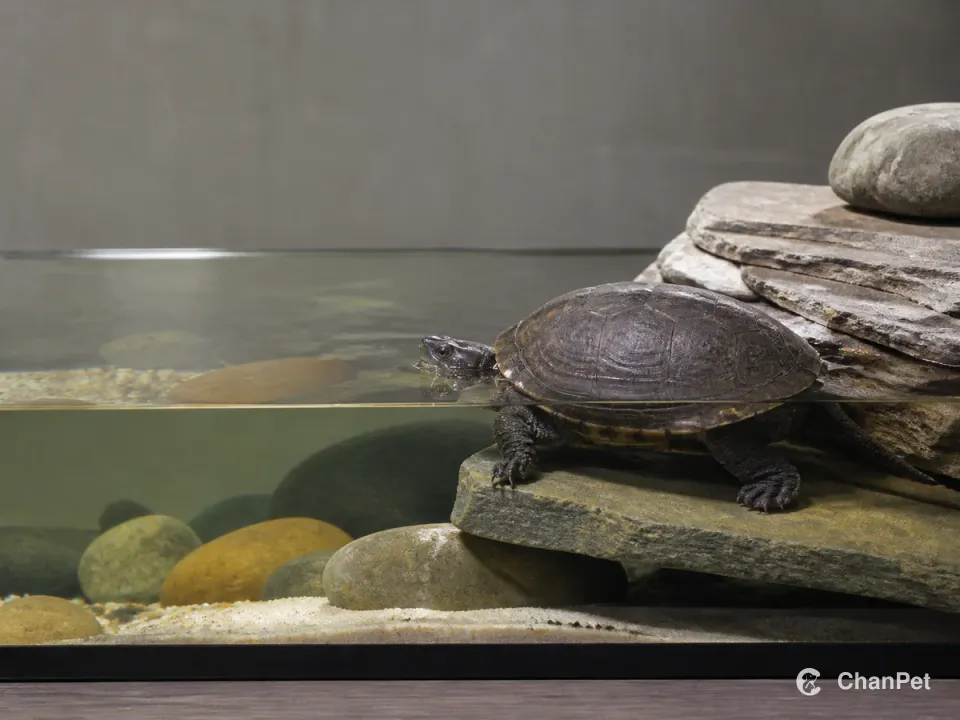
A stable dry area lets the turtle choose its own place to pause.[1][3]
Start with a working water system
The beginner skill is keeping the habitat steady
A small turtle still needs a well-run aquatic home. Learn that first, and you can enjoy the musk turtle's bottom-walking life without turning every small change into an emergency.[2][3]
Common questions
Sources
Sources used in this article
- [2]Sternotherus odoratus (Common Musk Turtle, Stinkpot Turtle)Animal Diversity Web, University of Michigan
- [1]Common Musk TurtleConnecticut Department of Energy and Environmental Protection
- [3]Avian, Small Mammal, and Exotics Animal Care and Feeding GuideUniversity of California Davis California Veterinary Emergency Team