Choose furniture for the grown cat
A Norwegian Forest kitten grows into a substantial, slow-maturing adult. Buy the cat tree, carrier, bed, and litter box for that future cat instead of the kitten in the photo. Stable height and a wide landing surface are daily equipment for this climbing breed.[1][2]
Trace the route upward before the cat arrives. Look for loose cords, open windows, wobbly shelves, and fragile objects near the likely landing spots. Then give the cat a safe way down, because a high view works best when it comes with an easy return route.[3][1]
Treat the coat as a seasonal routine
The Norwegian Forest Cat carries a dense, weather-ready coat with an undercoat that changes through the year. Comb in small, relaxed sessions, then spend extra time on the coat when seasonal shedding picks up. Under the front legs, along the belly, and behind the back legs deserve a deliberate look.[1][2]
Keep the comb where you actually sit with the cat. A few calm minutes after a meal or beside the sofa are easier for a new owner than saving every tangle for Saturday. The same routine helps you learn what the coat and skin normally feel like.[2][3]
Make company a choice
Norwegian Forest Cats often enjoy being near their people while keeping some say over the distance. Put a perch near the room where you read or work, and let the cat use the view. A nearby bed can create more companionship than repeated attempts to hold a cat in place.[1][2][3]
Begin with a quiet base area that includes food, water, litter, a hiding place, scratching, and a resting spot. Expand the home as the cat settles into those resources. A clear first map helps a beginner notice ordinary eating, sleeping, and litter habits.[3]
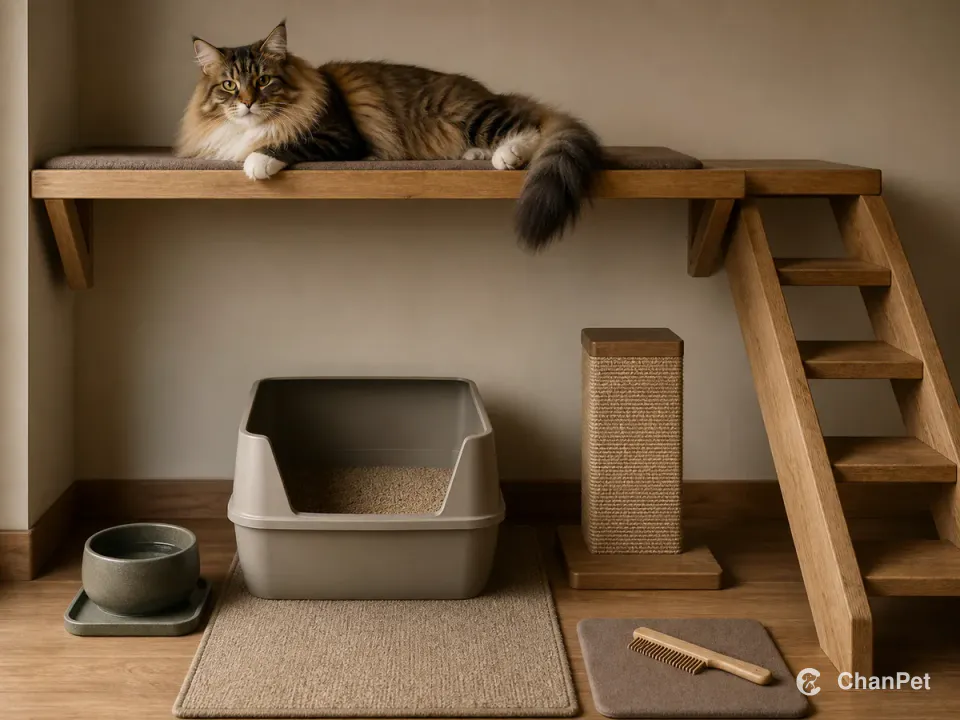
Sturdy height for a large cat, a roomy resource route and a fixed grooming spot help a new guardian set up for the adult home from day one.[1][2][3]
A first cat for someone who likes a home with altitude
Check the adult home, not just the kitten phase
Use Start Smart Match to compare your space, grooming habits, and daily routine with a Norwegian Forest Cat's long-term needs.
Common questions
Does a Norwegian Forest Cat need a tall cat tree?
Sources
Sources used in this article
- [1]Norwegian ForestThe International Cat Association
- [2]Norwegian Forest CatThe Cat Fanciers' Association
- [3]Your Cat's Environmental Needs: Practical Tips for Cat CaregiversFeline Veterinary Medical Association and International Cat Care