Start with one known animal, not a surprise hatch
An egg case can look like an easy beginning. It is really a group project waiting to happen. Extension sources describe many nymphs emerging at once, followed quickly by dispersal and cannibalism if they remain crowded together.[1][2]
One mantis with a known life stage gives you room to learn. Ask what it has been eating, whether it is still molting and how large it is right now. Those answers tell you more than a colourful species name on a listing.[3][1]
Treat vertical room as safety equipment
A mantis needs somewhere solid to hang from. University of Kentucky care guidance calls for a container taller than the animal and a secure branch that will not topple while it climbs or molts. Get that right before thinking about a dramatic display.[3]
Put the enclosure where sudden drafts, sunlight and heat swings will not keep changing the day. A settled location also makes it easier to notice a real change in behavior instead of guessing whether the room caused it.[3][2]
Use the first feeding as a careful check-in
Watch what happens after you offer suitable live prey. Does the mantis track it, catch it or ignore it? Are any feeder insects still in the enclosure the next day? The care guidance specifically recommends removing prey that remains uneaten.[3]
If a molt is near, resist turning feeding into a test. Leave the climbing area clear and wait for the animal to settle. The useful beginner habit is learning when observation helps and when handling only adds pressure.[3][1]
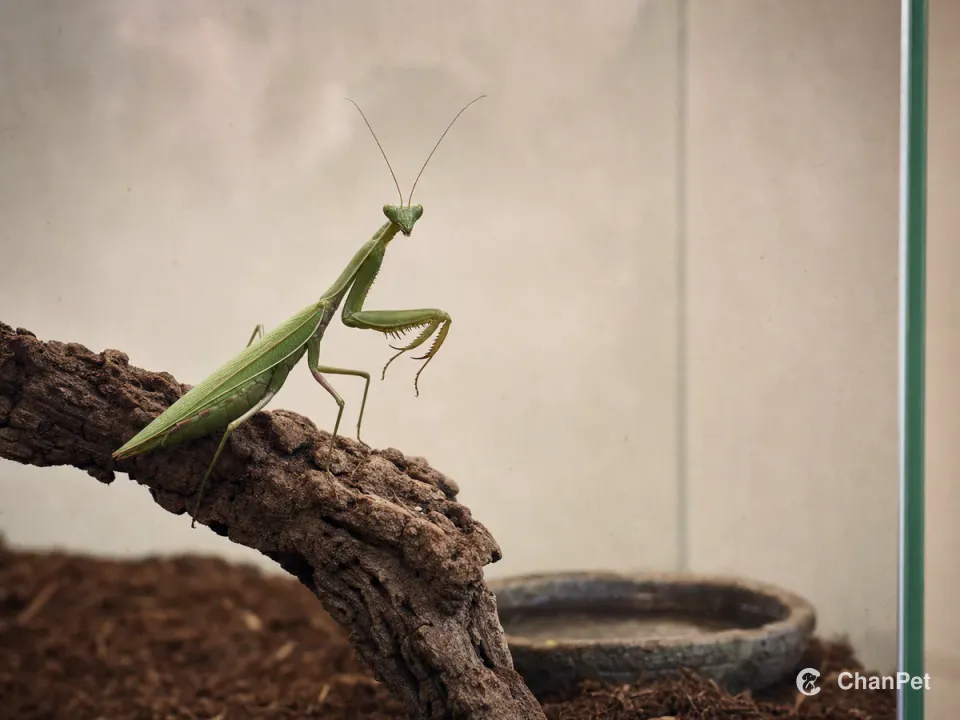
When the branch and water area have clear places, a beginner can observe the mantis more quietly and disturb it less.[3][2]
A good first pet for a patient observer
Let the first few days stay simple
Bring home one known individual, give it a secure upright perch and watch before changing anything. That quiet start teaches you much more than constant handling will.[3][2]
Common questions
Sources
Sources used in this article
- [3]Kentucky Bugs: Care and FeedingUniversity of Kentucky Entomology
- [1]Praying Mantis MantidaeConnecticut Agricultural Experiment Station
- [2]Manual of praying mantis morphology, nomenclature, and practicesZooKeys