Start with a sheltered world
The red eye ring and textured scales draw people in for a close look. The skink needs a covered space where it can choose when to emerge. Build a humid, sheltered habitat rather than a bare display box.[1][2]
Set up hides, water, substrate, and ventilation before the skink arrives. Run the enclosure for several ordinary days and notice how moisture and air behave. A first keeper learns useful lessons while the habitat is empty and no animal depends on it yet.[1][3]
Keep moisture and air in the same conversation
The right habitat feels damp and fresh, with ventilation as well as moisture. Check the water, substrate, and airflow as parts of one small environment. Adjust from your observations rather than chasing a single reading.[3][1]
Make every key area visible from the enclosure door. You should be able to see water, cover, food remains, and the skink without stripping out the décor. Easy observation lets the animal keep its cover while you learn its ordinary pattern.[2][1]
Observe more than you handle
Treat contact as a necessary care activity, not the reward at the end of the day. Watch the skink use its own routes, inspect food, and settle under cover. That is where its most interesting behavior happens.[1][2]
Keep notes on food, water, skin, waste, and activity. A shy reptile may show change quietly, so a few factual notes are valuable. They give an experienced reptile veterinarian something more useful than a vague memory if you need help.[1][3]
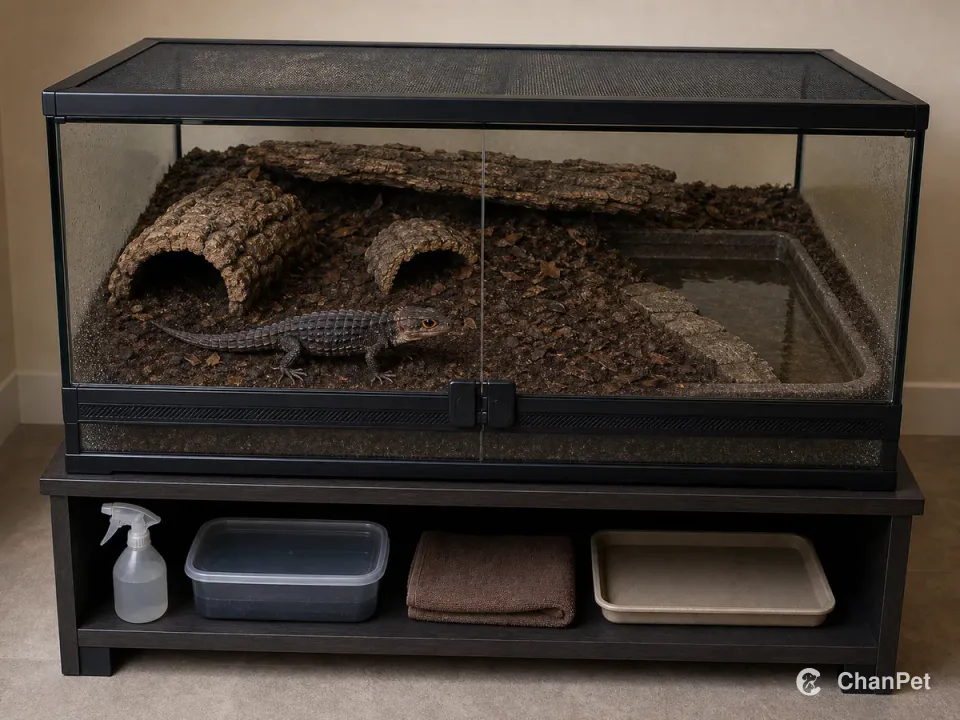
Stable moisture, water, cover, and ventilation come first; the beginner observes from outside and leaves the skink undisturbed.[1][2][3]
Choose the habitat work before choosing the skink
Compare reptiles around habitat complexity, interaction style, food, and the time you can steadily give.
A good start leaves the skink undisturbed
Common questions
Can a beginner handle a red-eyed crocodile skink often?
Sources
Sources used in this article
- [1]Red-eyed Crocodile SkinkRoyal Veterinary College Exotics Service
- [2]Crocodile Skink Species ProfileThe Maryland Zoo in Baltimore
- [3]Management and Husbandry of ReptilesMerck Veterinary Manual