Expect a cat that answers back
Siamese cats are known for being vocal, affectionate and active. A call from the next room can be part greeting, part request and part invitation to join what you are doing. That feels lively to people who like a responsive cat. It can feel tiring when a household wants long, silent evenings.[1]
Meet the individual cat before you promise yourself a certain personality. Sit nearby, offer a short play session and watch how it approaches. Cornell recommends asking about the cat's previous care and health history. Those details help a first-time owner begin with the actual cat rather than an imagined version of the breed.[2][1]
Make the first room easy to read
Give the new cat one quiet room with food, water, a litter box, a scratching surface, a bed and a hiding place. Spread these resources around the room. FelineVMA guidance treats separation and choice as useful parts of a cat's environment, so the litter box does not have to share a crowded corner with every other need.[3]
Keep the carrier open and let the Siamese decide when to step out. Save introductions for later. A low-key first evening gives you a chance to notice the cat's normal appetite, litter use and interest in play. Those ordinary details become useful reference points at the first veterinary visit.[2][3]
Make contact part of the routine
A short play session before breakfast or after work gives an active Siamese a clear moment with you. Follow it with a meal or a quiet place to settle. Simple patterns are easier to keep than a dramatic weekend plan, and they help the cat learn when attention is likely to arrive.[1][3]
Keep scratching choices close to the places where people actually spend time. Put one near a favorite resting spot and another near an entrance or window if the cat uses those areas. A cat who has useful things to scratch, climb and investigate gets more from an indoor home than one surrounded by unused toys.[3]
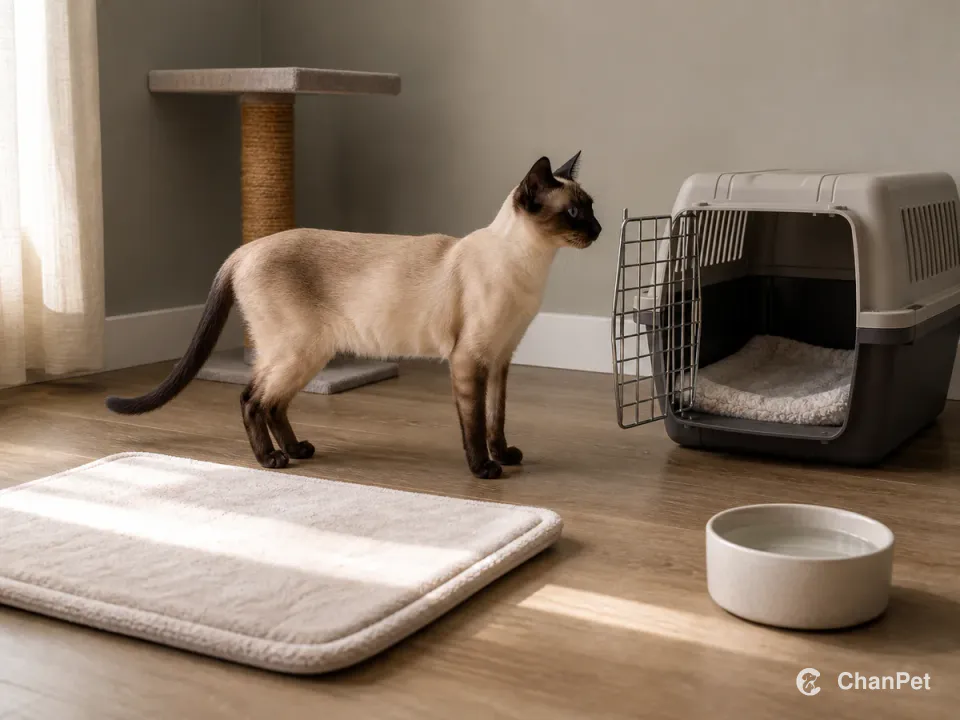
For the first week, keep the carrier, water and resting place in one quiet room.[2][3]
Choose a Siamese when conversation sounds appealing
Start with a calm room and an honest expectation
A Siamese brings energy and conversation into a home. If that sounds like the company you want, make the room ready before the cat arrives and let the relationship build through ordinary meals, play and rest.[1][3]
Common questions
Should I invite friends over during the first week?
What should I ask for before choosing a Siamese?
Ask for the cat's medical history, current food, litter habits and any records the rescue or breeder holds. Bring that information to an early veterinary visit so the care plan begins with a useful history.[2]
Sources
Sources used in this article
- [1]SiameseThe Cat Fanciers' Association
- [2]Choosing and Caring for Your New CatCornell University College of Veterinary Medicine, Cornell Feline Health Center
- [3]Your Cat's Environmental Needs: Practical Tips for Cat CaregiversFeline Veterinary Medical Association and International Cat Care