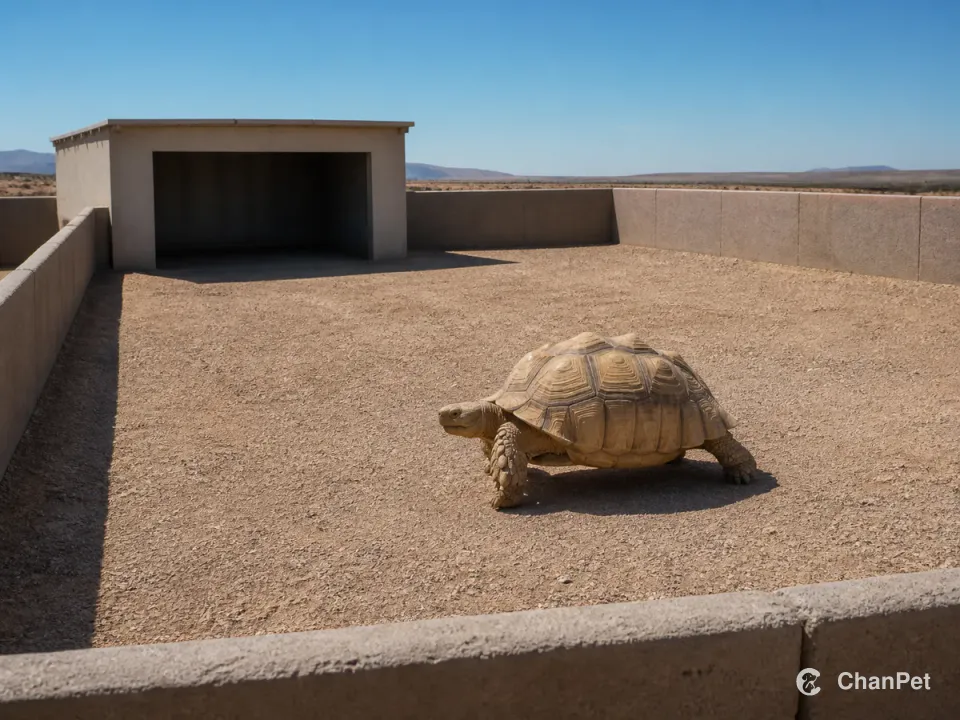
Why it can work
- Docile
- Handleable
- Cheap diet (grass)
- Mini-dinosaur looks
Beginner fit · 🦎 Reptile/amphibian
Short answer: Sulcata Tortoise is a conditional fit for a first-time owner — 3.6/5. It needs little training, which really helps here. Below, the per-metric score, monthly cost and a checklist help you decide.
This page breaks “easy pet?” into minimum setup, first-week execution and risk handling. Sulcata Tortoise scores 3.6/5 for beginners.
You are not only asking whether Sulcata Tortoise is easy. You are asking whether inexperience could lead you to fail a living animal.
You may want companionship, but worry about buying the wrong setup, overreacting in week one, or trusting casual “easy pet” advice that does not fit your home.
So this page breaks Sulcata Tortoise into minimum setup, stable routines and risk handling.
For Sulcata Tortoise, confirm this before deciding: A cute juvenile does not make an apartment pet; adult size and lifespan are hard thresholds.
1 · Direct verdict
Verdict: Sulcata Tortoise is a conditional fit for first-time ownership, but the real question is not abstract ease; it is whether you can handle Space pressure 5/5, Budget pressure 3/5, Cleaning load 2/5.
If you can sustain this setup: Plan for giant adult size, outdoor space, sunlight/UVB, grazing diet, winter heat and legality, keep reading; if not, pause first.
2 · Minimum setup
This separates must-haves from later upgrades so budget and attention do not get swallowed by cosmetic purchases.
3 · Correct order
Many failures are not from lack of love; they come from doing things in the wrong order.
Prepare the minimum setup, vet contact, food and an observation/quarantine space.
Keep handling low and let the environment settle first.
Track temperature/humidity or water quality, feeding, shedding, waste and hiding.
Build a repeatable routine before buying upgrades or adding complexity.
4 · Common failure points
These failures are usually not a lack of care; one link in setup, budget, rhythm or judgment was not made stable early enough.
More options for the same scenario
Sulcata Tortoise stands out because it needs little training; the trade-off is that it needs real room. These are the most useful next comparisons, not random links.
Cost and time visuals
This page breaks “easy pet?” into minimum setup, first-week execution and risk handling. Sulcata Tortoise scores 3.6/5 for beginners.
The first-pet pressure is usually not the purchase price; it is week-one workload and hidden cost.
Check heat/humidity or water, lighting, hides and feeding.
Clean the main setup, refill supplies and review odor, water or bedding.
Check budget, equipment wear, body condition and emergency plan.
Pre-arrival checklist
The first three are hard requirements. Do not start with “I’ll fix it later.”
Safety boundaries
For reptiles and amphibians, manage temperature/humidity/water quality, lighting, feeders, escape and Salmonella hygiene separately.
Educational pre-adoption screening only; not a substitute for veterinary, trainer, medical or local legal advice. Consult a professional for allergies, immunocompromise or child-safety risks.
FAQ
Africa's third-largest tortoise — cute juvenile, 150lb+ adult. For this page, the verdict is “Conditional fit” (3.6/5), not a blanket recommendation; the main trade-off is 60-100 year lifespan.
60-100 year lifespan is the underestimated issue. Plan for giant adult size, outdoor space, sunlight/UVB, grazing diet, winter heat and legality If that trade-off is not acceptable long term, appearance alone is not a good reason to proceed.
Typical lifespan is about 60-100 years. Plan budget, travel care, moves and senior care across the full life, not just the purchase stage.
Site reference: $40–$90/month (China reference ¥200–¥500/month). Real cost changes with location, food, supplies, equipment replacement, boarding and emergency reserve, so purchase price is not enough.
Sulcata Tortoise should be planned around high-fibre grasses, weeds or leafy greens, not fruit-heavy treats. UVB, calcium and adult size matter as much as the menu.
Plan for giant adult size, outdoor space, sunlight/UVB, grazing diet, winter heat and legality. Start with: Thermostat, thermometers/hygrometer, lighting or UVB/water-quality plan and escape-proof housing; Feeders, supplements and cleaning tools kept separate from kitchen items.
Sulcata Tortoise has cleaning load 2/5. Keep feces, substrate or water work on a schedule, track heat/humidity, and keep reptile/amphibian cleaning tools out of kitchen areas.
Africa's third-largest tortoise — cute juvenile, 150lb+ adult. Handling should be limited and calm. Many reptile or amphibian problems come from wrong heat, humidity, water or stress, not from needing companionship.
Most reptiles and amphibians should not be co-housed. Shared enclosures increase competition, stress, injury and disease transfer; stabilize a single-species setup first.
Sulcata Tortoise's main watch items are: 60-100 year lifespan, Adults 100-150lb, Needs large outdoor space and UVB lighting essential. Heat, humidity, UVB or water-quality errors can look like appetite, shedding or lethargy problems.
In week one, verify heat zones, humidity or water quality, hides, feces, shedding and feeding. Do not rush frequent handling, and keep cleaning tools away from kitchen areas.