Ask for a real name before you choose a setup
Tarantula is a broad shop label. Some species live in ground burrows, while others use trees and webbed retreats. Ask for the scientific name, age and present care notes before you choose a home for the spider.[1][2]
That first question prevents a common mismatch. Illinois veterinary guidance gives a general enclosure baseline, yet the final layout must follow the species' movement, hiding style and environmental needs.[3][1]
Finish the enclosure before the spider arrives
Use one secure enclosure for one spider. Illinois recommends a quiet area with a locking screen top, room to move and a hide. Kentucky also stresses ventilation and an escape-proof lid.[3][2]
Run the enclosure before pickup. Check that the lid closes the same way every time, the water dish is shallow and reachable, and every heavy item stays put. A quiet, usable hide matters more than decorative clutter.[3][1]
Make observation the interaction
A first keeper does not need to practice holding a tarantula. Kentucky Entomology advises people not to pick up, pet or hold tarantulas because they can bite and some have irritating urticating hairs.[2]
The useful skills happen at the enclosure door: add water, offer an appropriate feeder, remove leftover prey and close the lid without rushing. Illinois advises removing uneaten feeders because they can injure the spider.[3]
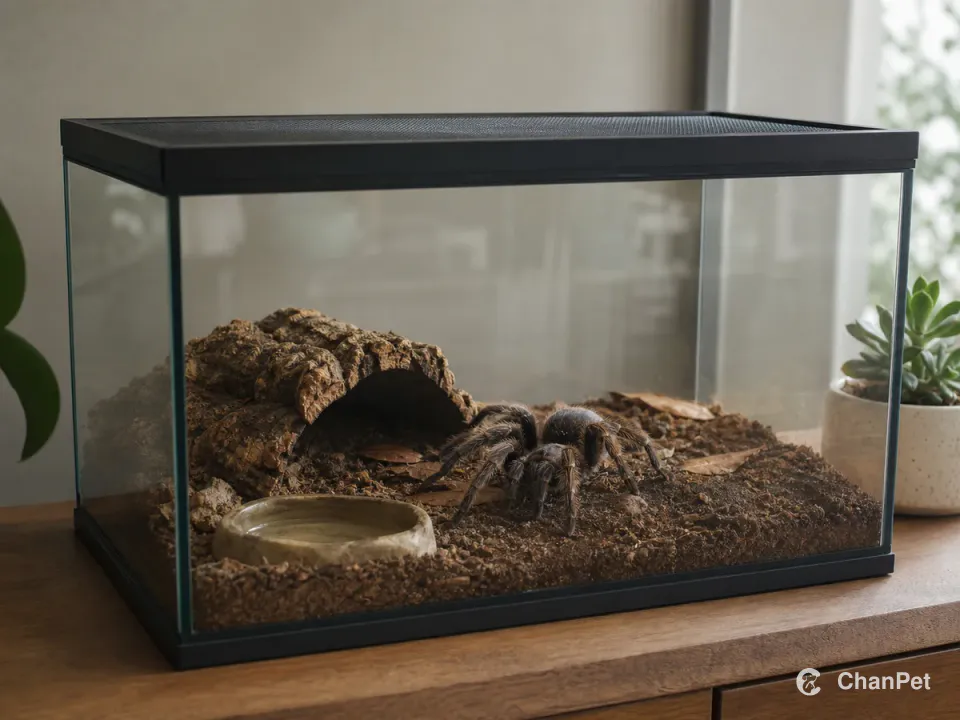
For a beginner, getting the lid, hide and water dish right matters more than rushing to handle the animal.[3][2]
Choose the routine before you choose the animal
A calm start is a safe start
The spider does not need to be passed from hand to hand to be interesting. A stable enclosure gives you the best view of its webbing, hiding and feeding behavior while keeping its boundaries clear.[2][1]
Common questions
Should I buy a sling because it costs less?
A young tarantula can need more precise care and may take years to reach adult size. Kentucky Entomology suggests that a beginner may find an adult easier to care for.[2]
Sources
Sources used in this article
- [3]When Your Pet Has Eight LegsUniversity of Illinois College of Veterinary Medicine
- [2]Exotic Bugs: Care and FeedingUniversity of Kentucky Department of Entomology
- [1]TarantulaSan Diego Zoo Wildlife Alliance