Begin with a comb and a calm pause
A Toy Poodle may shed very little, yet its curly coat keeps growing. Put the brush on the coffee table, not in a cupboard, and spend a few quiet minutes on the easy parts first. The goal is to make hands, tools and short handling sessions feel like ordinary life.[1]
Reward a calm pause, brush for a moment, then stop before the puppy loses patience. Build toward the legs, feet and ears over several days. This gives you a workable coat-care habit and makes later grooming appointments feel less surprising for the dog.[1][2]
Teach the small house rules early
Toy Poodles are quick to notice what gets a reaction. Decide on a few useful patterns before the puppy settles in. Wait before a door opens, keep four paws on the floor for greetings, and rest on a mat while someone cooks. Small dogs still need clear manners.[1]
AVSAB supports reward-based methods for learning and behavior. Catch the choice you want, mark it right away and give the reward. Short practices beside the food bowl, front door or sofa are easier to repeat than a long lesson you keep postponing.[2]
Show the world in small pieces
Safe socialisation can be very ordinary: a lift door opening, a child rolling a suitcase, a calm person in a hat, a short car ride. AVSAB recommends giving puppies safe exposure during their early development. You are building calm familiarity, not collecting the biggest possible day out.[3]
Let the puppy's body language guide the next step. Curiosity and a loose body mean you can stay a little longer. If the puppy backs away or goes still, give it distance and try something easier another day. The point is confidence, not endurance.[3][2]
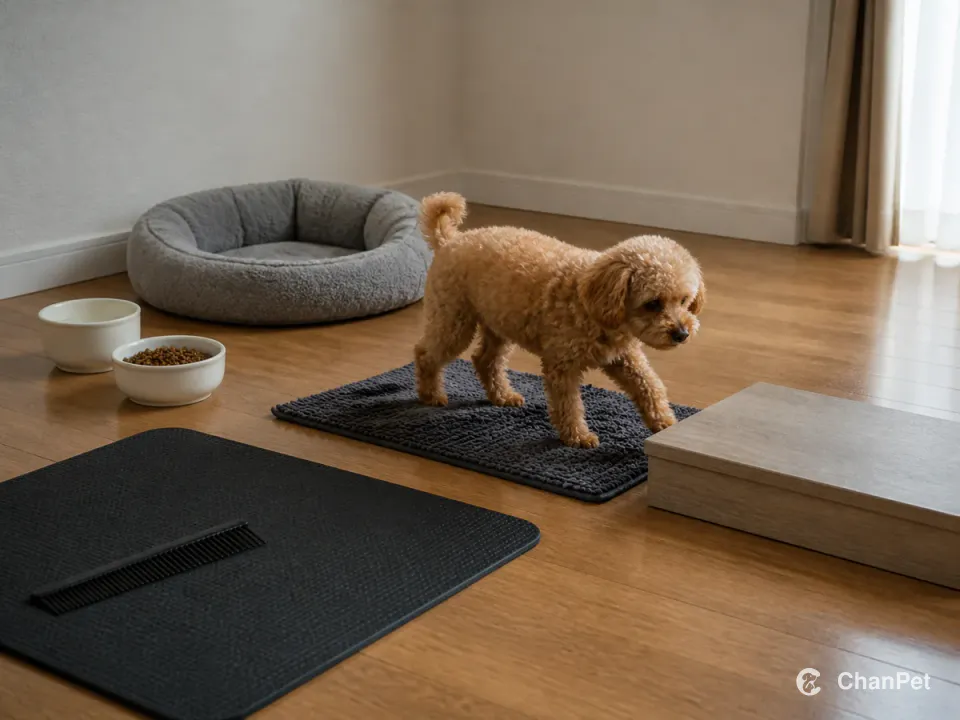
A grooming mat, short training mat, low step, food and water, and resting place each have a fixed role. They turn coat care, practice, and movement into small daily habits that a beginner can repeat.[1][2]
A first dog for people who enjoy the details
Choose the small routine before the small dog
Want to see whether your schedule suits a Toy Poodle's grooming and training? Start a smart match and compare the everyday fit before you choose a puppy.[1][2]
Common questions
When should I start brushing a Toy Poodle puppy?
Does puppy socialisation mean meeting everyone?
No. Choose safe, manageable experiences and let the puppy stay comfortable enough to learn. A few calm encounters are better than a packed day that overwhelms the dog.[3]
Sources
Sources used in this article
- [1]Poodle (Toy) - Dog Breed InformationAmerican Kennel Club
- [2]Humane Dog Training Position StatementAmerican Veterinary Society of Animal Behavior