Test the habitat while it is empty
Build the habitat before you choose the animal. It needs usable height, secure branches, cover, lighting and a way to manage the climate without taking the enclosure apart. Run it for ordinary days and notice what changes when the room warms, cools or gets busy.[1][2]
The lighting plan deserves the same care as the enclosure itself. Research on juvenile veiled chameleons has examined ultraviolet exposure, diet and metabolic bone disease together. That makes light and nutrition a health system, never a one-time shopping decision.[3]
Water is something to watch
A veiled chameleon needs a dependable drinking setup that fits the whole habitat. Learn how you will provide water, where it drains and how you will clean the relevant surfaces. The answer needs to work on a rushed Tuesday as well as a free Saturday.[1][2]
Your daily check should have a short list: where the chameleon is resting, how it climbs, whether it takes food and whether its eyes and grip look usual. A notebook gives an avian or reptile veterinarian a much clearer picture than an uncertain memory.[1][2]
Watching beats making it perform
A veiled chameleon is most interesting when it can use its own branches and cover. Learn from the animal in its habitat rather than lifting it out for every visitor. Necessary care can stay calm and brief, while the ordinary day belongs to the chameleon.[1][2]
Find a reptile-experienced veterinarian before a concern develops. Keep notes on lights, feeding, water and behavior with the contact details. Good records turn a technical conversation into one someone can actually help with.[3][2]
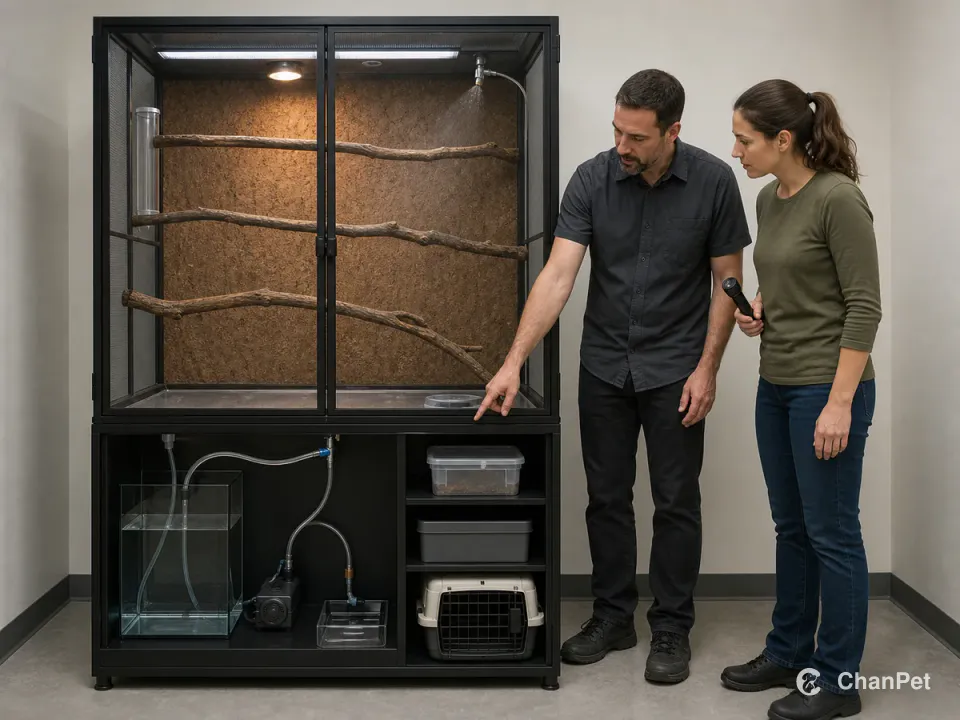
Running the empty habitat first turns lighting, water, drainage and backup care into a routine before the animal arrives.[1][3][2]
Start with a setup you understand
Compare companions around the time, technical care and interaction style you can realistically provide.
A good beginning starts before the animal arrives
Common questions
Why should I run the veiled chameleon habitat before buying the animal?
Why do lighting and diet need continued attention?
Research on juvenile veiled chameleons examined ultraviolet exposure and dietary factors alongside metabolic bone disease. Lighting and nutrition belong in the ongoing husbandry plan.[3]
Sources
Sources used in this article
- [1]Captive Care, Raising, and Breeding of the Veiled Chameleon (Chamaeleo calyptratus)Journal of Herpetological Medicine and Surgery / PubMed
- [3]Nutritional Metabolic Bone Disease in Juvenile Veiled Chameleons (Chamaeleo calyptratus) and Its PreventionThe Journal of Nutrition
- [2]Management and Husbandry of ReptilesMerck Veterinary Manual