Adults own the whole routine
Children can help fill a water bowl or scatter a few rewards during a calm training session. An adult still needs to own the walks, feeding decisions, veterinary appointments and safety calls. That keeps the Beagle's day stable when school, sports and moods change.[1]
Keep the dog's health information where the adults can find it. The National Beagle Club highlights several breed health concerns, including epilepsy, allergies, hypothyroidism, hip dysplasia and back problems. Records help the veterinary conversation start from facts rather than family memory.[2]
Teach children the dog's boundaries
Give the Beagle a bed or quiet corner that belongs to the dog. Children can learn to leave that space alone, especially during meals, sleep and rest. RSPCA guidance frames safe child-and-dog relationships around careful adult supervision and giving each individual room.[1]
Choose interactions that stay easy to supervise. A child can toss a treat, help find a toy in the garden, or read nearby while an adult watches. Games become harder when hands chase the dog, reach into the bowl, or compete over an object.[1]
Make hygiene a family habit
CDC recommends handwashing after contact with dogs, their food, waste and supplies. Put soap within reach, wash hands before meals, and let children see the habit modeled every day. It is simple, practical family care.[3]
Keep the lead, outdoor shoes, waste bags and dog bowls in their own places. A clear home for each item makes it easier for children to help without carrying outdoor mess across the kitchen or play area.[3]
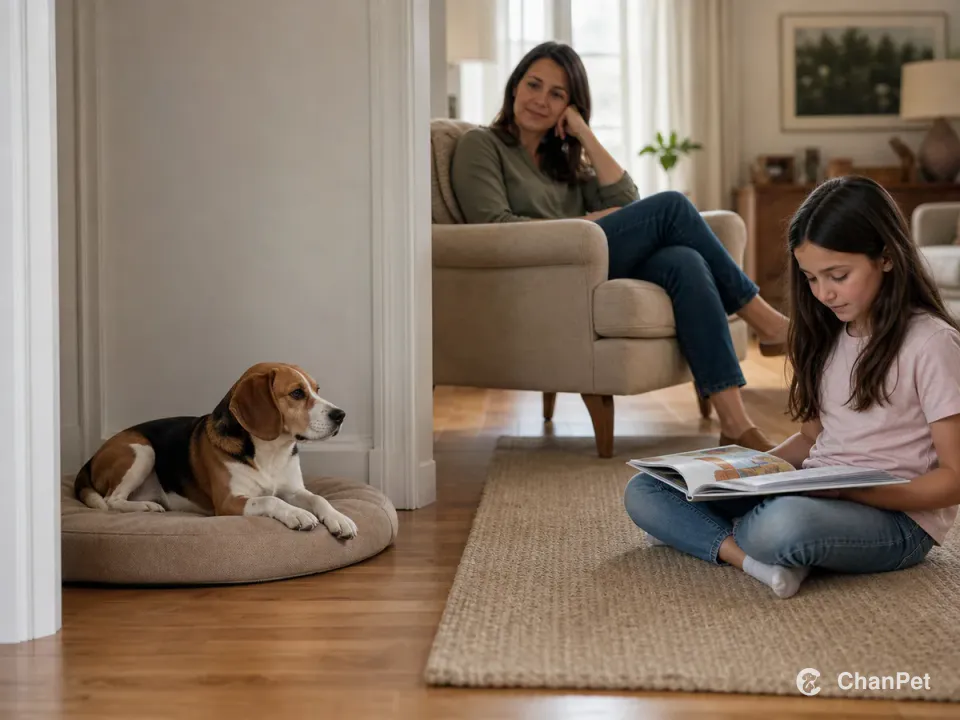
A quiet bed gives the Beagle room to rest while the family shares the room.[1]
Choose a Beagle when the adults can keep the day steady
Make the family plan clear before the dog arrives
Wondering whether everyone in the household has a workable role? Start a smart match with your children's ages, adult support and home routine, then compare family-friendly care plans.
Common questions
Can a child be the Beagle's main carer?
What is the simplest hygiene rule for children?
Wash hands after handling the dog, food, waste or supplies, and before eating. Keep dog equipment away from food-preparation areas so the routine is easy to follow.[3]
Sources
Sources used in this article
- [2]National Beagle Club Health StatementThe National Beagle Club of America, Inc.
- [1]Children & Dogs - How They Can Live TogetherRSPCA
- [3]Dogs | Healthy Pets, Healthy PeopleCenters for Disease Control and Prevention