Adults set the contact boundaries
A large boa needs a secure enclosure and careful adult-led handling. Children can learn by observing, while adults make decisions about contact, locks, feeding, climate, cleaning, and health.[1][2]
The household boundary is clear: a heavy snake is not a toy or a shared prop. Its welfare depends on predictable handling, a calm environment, and a secure place to rest.[1]
Hygiene has to fit family life
Wash hands after contact and keep snake equipment, waste, and enclosure cleaning away from places used to prepare human food. Frozen-rodent preparation needs the same clear separation.[3][1]
Homes with young children, older adults, or people with weakened immune systems need to treat this hygiene routine as central. The household plan must protect people while maintaining proper boa care.[3]
Family interest does not replace care
The enclosure still needs heat, humidity, water, substrate, cleaning, and safety checks around the family's ordinary routine. Food, handling, and observation remain adult duties throughout the boa's long life.[1]
Experienced exotic-veterinary support must be reachable when appetite, movement, breathing, skin, or behavior changes. Adults need to notice those shifts and act without waiting for a child to raise the concern.[1][2]
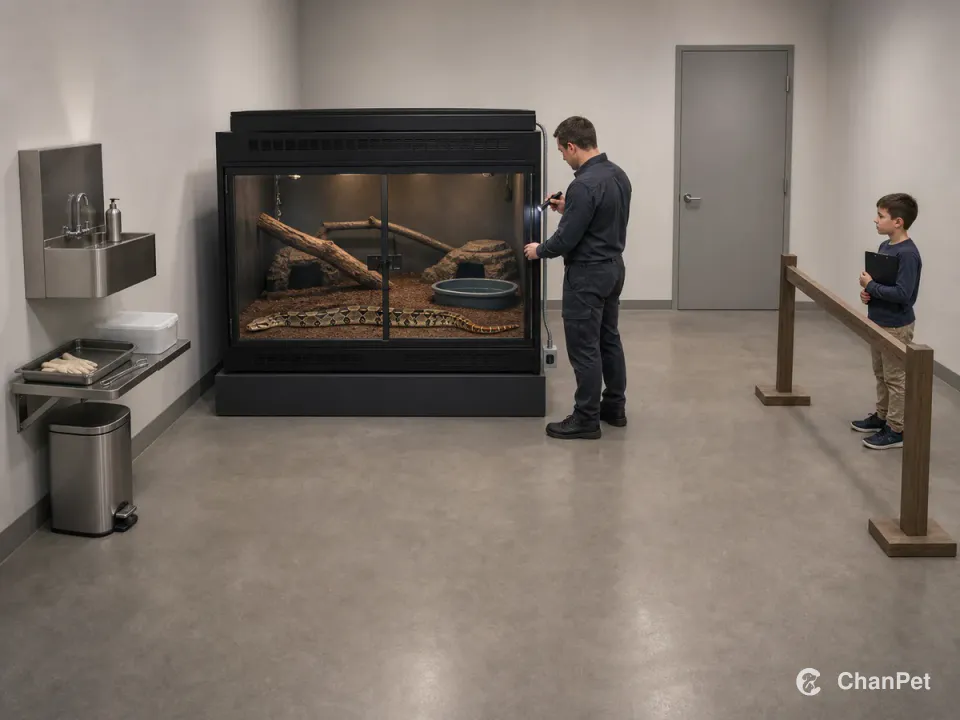
Adult-led enclosure, climate, hygiene, and access boundaries come first; children learn from the separated observation area.[3][1][2]
Choose the care system the family can truly lead
Explore companions whose everyday care better suits your space, routine, and access to support.
Let adult care set the family boundary
Common questions
Can children be responsible for a boa constrictor?
Sources
Sources used in this article
- [3]Reptiles and AmphibiansCenters for Disease Control and Prevention
- [1]Boa ConstrictorBowling Green State University Herpetarium
- [2]UF Researchers Develop New Screening Test for Fatal Snake DiseaseUniversity of Florida College of Veterinary Medicine