Adults own the care decisions
Adults should handle the secure enclosure, food, cleaning, climate checks, and early handling sessions. A California kingsnake needs a calm, predictable routine rather than a series of hurried handoffs.[1][2]
Children can learn by helping an adult check water or observe a shed. Feeding, enclosure opening, and direct handling need clear adult rules and calm supervision.[2][1]
Give hygiene a fixed place
Wash hands after touching the snake, food, water bowl, substrate, waste, or enclosure equipment. Keep those care tasks and supplies away from areas used to prepare or serve human food.[3][2]
Choose one cleaning spot, one handwashing step, and one place for snake supplies. A simple route lets every family member follow the same safe sequence.[3]
Make curiosity calm and structured
A kingsnake may be interesting to watch because it moves quietly and uses hides. Give children a chance to observe feeding notes, sheds, and enclosure checks without turning every visit into handling time.[1][2]
Adults also need an exotic-veterinary contact and a plan for changes in appetite, skin, breathing, movement, or behavior. Clear responsibilities keep the family routine calmer when a concern appears.[2]
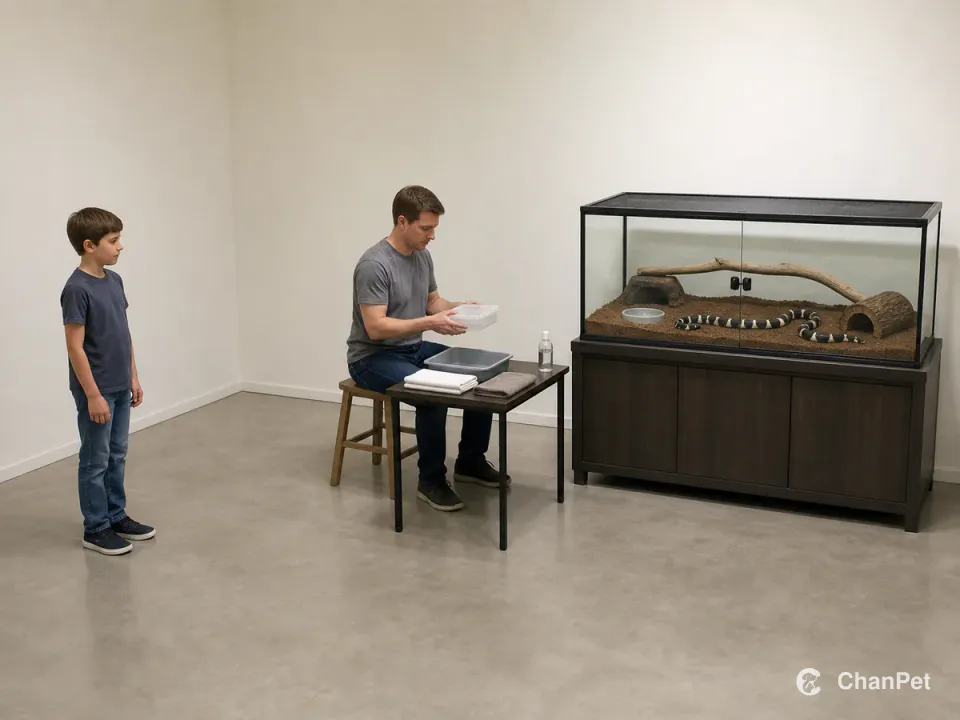
The adult owns food and hygiene while the child joins through calm observation.[1][3][2]
A family fit starts with adult-led routines
Use Start Smart Match to compare your family roles, cleaning routine, food setup, and support with a California kingsnake.
Give every person a calm, clear role
When adults lead the secure setup and hygiene routine, children can enjoy learning about a California kingsnake without carrying care responsibilities beyond their age or skill.[1][3][2]
Common questions
What jobs can children safely help with?
Sources
Sources used in this article
- [1]Lampropeltis getula (Common Kingsnake)University of Michigan, Animal Diversity Web
- [3]Reptiles and AmphibiansCenters for Disease Control and Prevention
- [2]Avian, Small Mammal, and Exotics Animal Care and Feeding GuideUniversity of California, Davis Veterinary Medicine