Turn feeding into one small ritual
Cherry shrimp can make everyone stop for a minute and look closely. Put the food with one adult, measure the small amount and let a child help watch what the shrimp do. That keeps feeding useful rather than turning it into a handful of snacks from several people.[1]
Ask simple questions at the glass. Which shrimp appeared first? Where are the smallest ones hiding? Did the food stay on the bottom? A child learns patience by noticing the answers instead of demanding a big reaction from a tiny animal.[1]
Give children a real observation job
Keep a small notebook or a dry-erase card near the tank. Children can draw the layout, note a shed shell, or mark a water-change day after an adult completes it. The goal is not to turn the aquarium into homework. It is to make ordinary care visible.[1]
If something looks unusual, adults should add the water, feeding and maintenance details to that record. Research on a dwarf-shrimp disease event found several factors involved. A careful history helps you avoid guessing from one odd-looking shrimp or one algae patch.[2]
Adults keep the shrimp in managed care
Adults own water tests, filter work, tank additions and any decision to rehome shrimp. The U.S. Fish and Wildlife Service has identified ecological risk from cherry shrimp outside managed aquariums. A child should never be left to decide what happens to extra shrimp.[3]
If the colony grows or the family loses interest, find a responsible aquarium keeper or group. Keep the shrimp in managed care and out of outdoor water. That is a simple family rule with a real environmental purpose.[3]
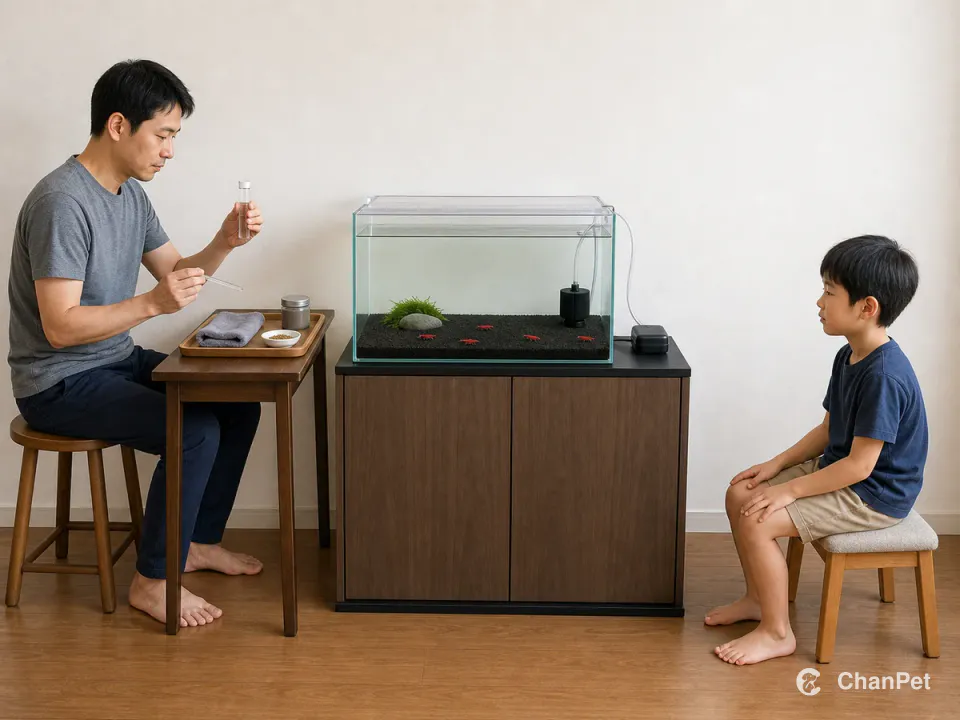
The adult owns water and feeding decisions while the child observes calmly beyond the equipment boundary.[1][3][2]
The best family tank has clear jobs
Let curiosity do more than food does
A cherry shrimp tank gives children plenty to notice when adults keep the water and future plans steady. Use it as a quiet lesson in observation, gentle routines and caring for an animal's whole environment.[1][3]
Common questions
How can children help with cherry shrimp care?
What should a family do with extra cherry shrimp?
Keep them in managed aquarium care or arrange responsible rehoming. Do not release them into outdoor water.[3]
Sources
Sources used in this article
- [1]Cherry Shrimp Neocaridina davidi (Bouvier 1904)University of Florida IFAS Extension
- [3]Ecological Risk Screening Summary: Cherry Shrimp (Neocaridina davidi)U.S. Fish and Wildlife Service
- [2]Association of the alga Cladogonium sp. with a multifactorial disease outbreak in dwarf shrimp (Neocaridina davidi)Journal of Fish Diseases (peer-reviewed research)