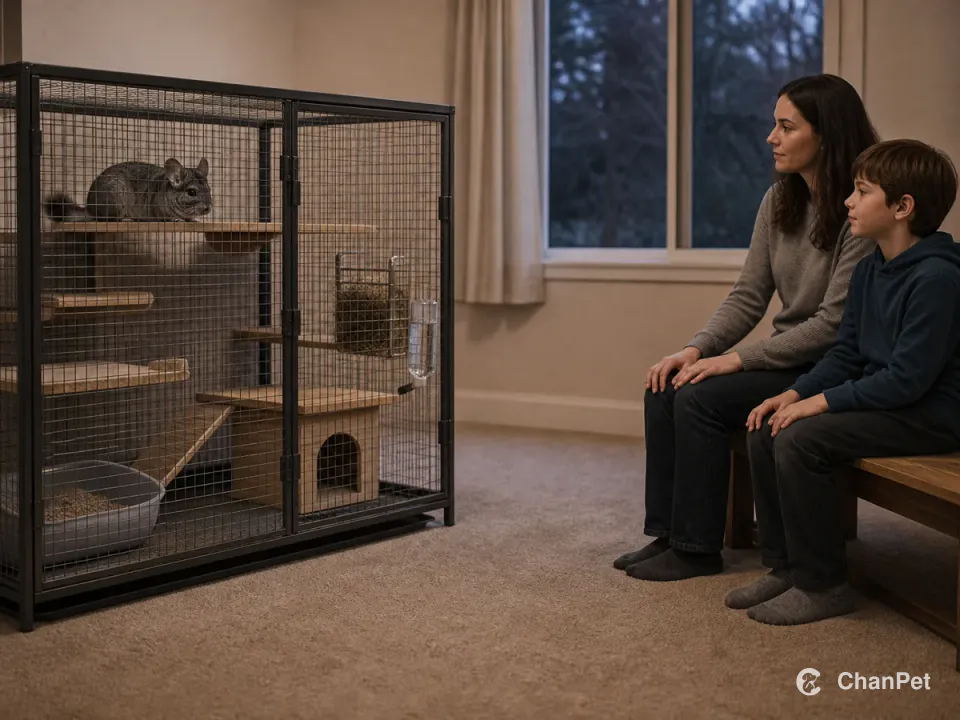
Family & kids fit · 🐹 Small pet

Is a Chinchilla suitable for families with children?

Short answer: Chinchilla is a stretch for families with kids — 3.3/5. The main catch: it means regular cleanup. Below, the per-metric score, monthly cost and a checklist help you decide.

Children can participate, but adults must own the outcome. Chinchilla scores 3.3/5 for family and kid fit.

Kid-friendly score3/5Not permission for solo child care
Adult responsibilityNon-negotiableCleaning, health calls and risky tasks
Hygiene risk3/5Higher-risk people need caution
Interaction rulesSet firstNo grabbing, scaring or kissing
Get My Report100% Free • No sign-up
Open full profile
Category🐹 Small pet
Lifespan12–18 yrs
Monthly cost$50–$110/month (China reference ¥200–¥500/month)
Care focusSpace & cleaning

You may want Chinchilla to teach care and observation, while also worrying about bites, allergies, hygiene and an adult-only workload.

Family decisions are more complex than one person wanting a pet.

This page separates what children can help with from what adults must own.

For Chinchilla, confirm this before deciding: Chinchillas are heat- and humidity-sensitive; air conditioning and outage planning are hard requirements.

1 · Direct verdict

Is it actually suitable for families with children?

Verdict: Chinchilla is a needs careful planning for families with kids, but the real question is not abstract ease; it is whether you can handle Cleaning load 3/5, Space pressure 3/5, Time need 3/5.

Why it can work

  • Incredibly soft
  • Long-lived
  • Clean

Where it can fail

  • AC needed in summer
  • Tall cage required
  • Dust bath, no water

The decision hinge

If you can sustain this setup: Keep the environment cool and dry with dust bathing, chew items, shelves and low humidity, keep reading; if not, pause first.

2 · Minimum setup

Buy what keeps the pet safe before what looks nice

This separates must-haves from later upgrades so budget and attention do not get swallowed by cosmetic purchases.

Must have

  • Adults handle cleaning, health judgment, risky tasks and final responsibility.
  • Children only observe, record and help with low-risk feeding under supervision.
  • Adequate activity space, hides, bedding, food/water and escape-resistant housing.
  • Species-specific dental wear, temperature, companionship or solitary rules and exotic-vet access.
  • Keep the environment cool and dry with dust bathing, chew items, shelves and low humidity.
  • Confirm warning signs, veterinary/rescue access and temporary isolation plans for Chinchilla.

Can wait

  • Child-themed décor, extra interaction toys and learning journals can wait.
  • Children may observe and help under adult supervision, but should not grab, kiss or scare the pet.
  • Separate pet rest, child activity and cleaning zones; child friendliness is 3/5.

3 · Correct order

In week one, aim for stability before closeness

Many failures are not from lack of love; they come from doing things in the wrong order.

  1. 01

    Teach rules first

    No grabbing, chasing, kissing, surprise feeding or disturbing rest.

  2. 02

    Create safe zones

    Separate pet rest, child activity and cleaning areas.

  3. 03

    Low-risk first week

    Children observe and record; adults clean and make health decisions.

  4. 04

    Add interaction later

    Increase tasks only after the pet is stable and children follow rules.

4 · Common failure points

The outcome usually turns on these underlying factors

These failures are usually not a lack of care; one link in setup, budget, rhythm or judgment was not made stable early enough.

A child is made responsible

Owner pattern
Use the pet as a responsibility lesson and hand over care.
Consequence
When enthusiasm fades, hygiene and health risks fall on the animal.
Better move
Adults own the care plan; children handle low-risk tasks only.

No interaction boundaries

Owner pattern
Grabbing, chasing, kissing, scaring or surprise feeding.
Consequence
Bites, scratches, stress and accidental ingestion become more likely.
Better move
Teach rules before interaction.

Hygiene zones overlap

Owner pattern
Cleaning tools, food, housing and toys sit in the child’s play zone.
Consequence
Allergy, germ and family-conflict risk rises.
Better move
Separate pet, child and cleaning zones.

Species-specific needs get ignored

Owner pattern
Chinchillas are heat- and humidity-sensitive; air conditioning and outage planning are hard requirements.
Consequence
The problem often grows during the first week or first maintenance cycle.
Better move
Keep the environment cool and dry with dust bathing, chew items, shelves and low humidity.

More options for the same scenario

How Chinchilla compares with nearby options

Chinchilla stands out because it needs little training; the trade-off is that it means regular cleanup. These are the most useful next comparisons, not random links.

Cost and time visuals

Cost and time: adult responsibility must be explicit

Children can participate, but adults must own the outcome. Chinchilla scores 3.3/5 for family and kid fit.

Key takeaway$50–$110/month (China reference ¥200–¥500/month)

Children can participate in care, but they cannot replace adult responsibility.

Cost split

Rhythm or risk

Feeding help
Observation log
Cleaning
Health judgment
Risky tasks

Dark bars show adult responsibility; light bars show child participation.

Next: if the monthly cost, daily time and highest risk are acceptable, move to the checklist.

Pre-arrival checklist

Check first, then decide

The first three are hard requirements. Do not start with “I’ll fix it later.”

Check items to get a live next-step suggestion.

Authority summary

Small-pet authority summary

For Chinchilla, this means environment, hygiene, veterinary access and legal boundaries come before looks, price or interaction.

  • RSPCA guidance for rabbits and guinea pigs emphasizes space, hiding places, exercise and compatible companionship; “small pet” does not mean “small cage.”
  • Guinea pigs, rabbits, hamsters, chinchillas and hedgehogs differ in schedule, temperature, dental wear, bedding and social needs, so one generic low-maintenance assumption is unsafe.
  • Households with children under 5, older adults, pregnant people or immunocompromised members should review hygiene and bite risks for rodents, hedgehogs and similar pets.

Safety boundaries

Accept the boundary before the preference

Small pets differ widely; check legality, temperature, dental wear, bedding, companionship and veterinary access by species.

Educational pre-adoption screening only; not a substitute for veterinary, trainer, medical or local legal advice. Consult a professional for allergies, immunocompromise or child-safety risks.

FAQ

Questions readers search for

Is Chinchilla easy to keep for beginners?

Softest pet around. 15-year lifespan, heat-sensitive. For this page, the verdict is “Needs careful planning” (3.3/5), not a blanket recommendation; the main trade-off is AC needed in summer.

What is the most underestimated problem with Chinchilla?

AC needed in summer is the underestimated issue. Keep the environment cool and dry with dust bathing, chew items, shelves and low humidity If that trade-off is not acceptable long term, appearance alone is not a good reason to proceed.

How long does Chinchilla live?

Typical lifespan is about 12-18 years. Plan budget, travel care, moves and senior care across the full life, not just the purchase stage.

How much does Chinchilla cost per month?

Site reference: $50–$110/month (China reference ¥200–¥500/month). Real cost changes with location, food, supplies, equipment replacement, boarding and emergency reserve, so purchase price is not enough.

What does Chinchilla eat, and how should I feed it?

Chinchilla should be planned around species-appropriate hay or roughage, measured pellets and safe fresh foods. Sudden diet changes and sugary treats are common mistakes.

How much space and setup does Chinchilla need?

Keep the environment cool and dry with dust bathing, chew items, shelves and low humidity. Start with: Adequate activity space, hides, bedding, food/water and escape-resistant housing; Species-specific dental wear, temperature, companionship or solitary rules and exotic-vet access.

Does Chinchilla smell, make noise, shed or create mess?

Chinchilla has cleaning load 3/5. Bedding, urine, feces, leftover food, humidity and escape checks need a fixed routine, not occasional deep cleaning only.

Is Chinchilla affectionate or handleable?

Softest pet around. 15-year lifespan, heat-sensitive. Handling tolerance varies by species and individual. Start with observation and short, calm contact; do not treat small body size as permission for constant holding.

Can Chinchilla live with others, kids, cats or dogs?

Chinchilla can be kept in same-sex pairs/groups or neutered mixed pairings, but introductions need time and a backup cage. It is shy and fragile, so it is usually better for older/adult observers than for children who want to hold it; keep cats/dogs separate.

What health problems or warning signs matter for Chinchilla?

Chinchilla's main watch items are: AC needed in summer, Tall cage required, Dust bath, no water and Chinchillas are heat- and humidity-sensitive; air conditioning and outage planning are hard requirements. Appetite, stool, weight, teeth, skin/coat and temperature tolerance are the routine warning checks.

What should I do in the first week with Chinchilla?

In week one, stabilize temperature, bedding, food/water, hiding and elimination. Track weight or appetite where practical, and do not rush frequent holding or mixing.