Make watching the main event
A giant day gecko offers a good reason to slow down and look. Its daytime climbing and hunting behavior gives children plenty to notice through the glass. They can follow its routes, spot a favorite perch, and watch an adult place food.[1]
Set one simple household boundary: adults open the enclosure for care, and children watch from outside. The gecko keeps control of its space, and a child never has to judge whether an animal has had enough handling.[1][2]
Give children a real role without transferring care
Children can help make a small observation chart. They might record where the gecko was seen, which feeder insects arrived, or when an adult refreshed the enclosure. Those notes teach attention while adults remain responsible for decisions.[1]
Keep the daily jobs visible. An adult should manage light, habitat conditions, food, cleaning, and any concern about the animal's health. Clear ownership prevents a technical task from becoming a last-minute argument between family members.[1]
Make handwashing an automatic finish
Reptiles and their enclosure can carry germs even when the animal appears healthy. Everyone who touches the enclosure, a food container, or a care tool should wash with soap and running water afterward. Put the rule beside the enclosure, not in a distant conversation.[2][3]
Keep feeding and cleaning items in a dedicated care bin away from human-food preparation. FDA advice supports that separation. It helps adults finish a quick task without leaving a cup or tool where a child might use it for something else.[3]
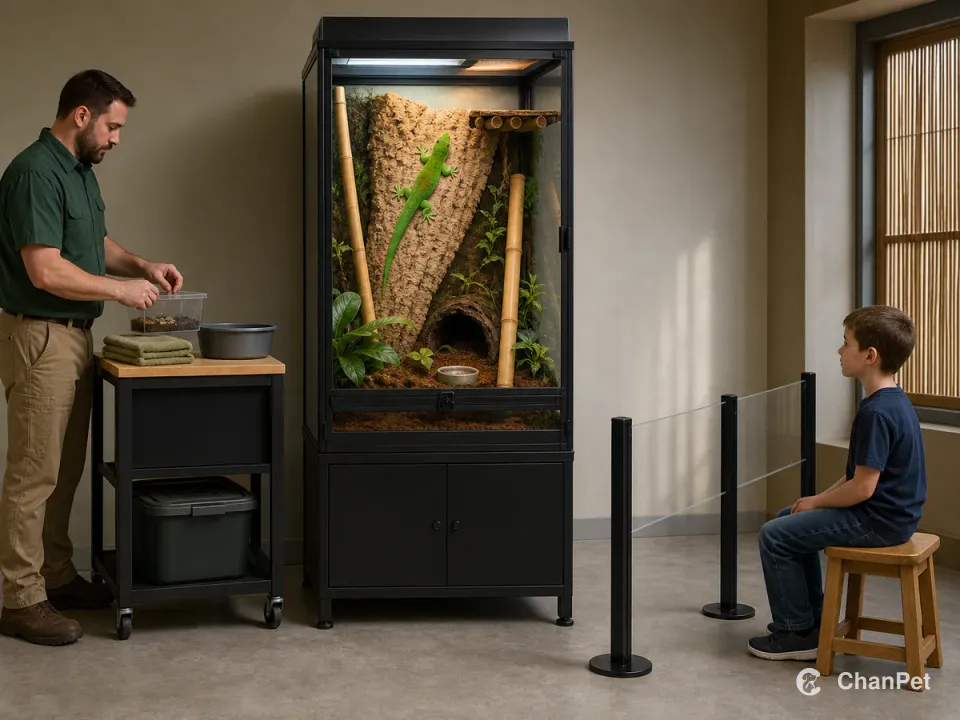
The adult manages feeder insects and hygiene while the child observes quietly behind a complete barrier.[1][2][3]
Choose this gecko for observation, not handling
Compare animals around the interaction your children want and the adult care your household can sustain.
The family value is in the looking
Common questions
Can children hold a giant day gecko?
Sources
Sources used in this article
- [1]Madagascar Giant Day GeckoSacramento Zoo
- [2]Reptiles and AmphibiansCenters for Disease Control and Prevention
- [3]Salmonella, Feeder Rodents, and Pet Reptiles and AmphibiansU.S. Food and Drug Administration