Teach an invitation, not a chase
Show children how to sit nearby, offer a quiet hand and let the cat decide whether to come closer. A child can help toss a toy along the floor or offer a calm stroke when the cat asks for it. Chasing a retreating cat turns the living room into a place the cat has to escape.[1][2]
Give the cat a bed, shelf or quiet room where children leave it alone. That space is part of the family rule, not a punishment corner. Cats choose interaction more freely when they have a reliable route out of noise, visiting relatives and energetic games.[1]
Give claws a better job
Scratching is a normal cat behavior, so make the acceptable target easy to use. Place a stable post or board near the cat's chosen route and reward it there. Cornell recommends redirecting the cat toward a suitable surface rather than making scratching a loud family conflict.[2]
Keep hands and ankles out of games. Use a toy that creates space between a child and the cat, then end the session before excitement gets too high. This gives the cat a clear outlet and makes it easier for children to recognize when it has had enough attention.[2][1]
Let adults own the health routine
Children can refill a supervised water bowl, help with a gentle play session or remind an adult that the cat needs food. Adults clean the litter, arrange veterinary care and decide what a new symptom means. CDC notes that cats and their supplies can carry germs even when a cat looks healthy.[3]
Make soap-and-water handwashing the last step after litter, food bowls, toys and close cat contact. Keep cat-care tools away from family food preparation. These habits protect the routine from becoming a stream of reminders, especially when several people join in.[3]
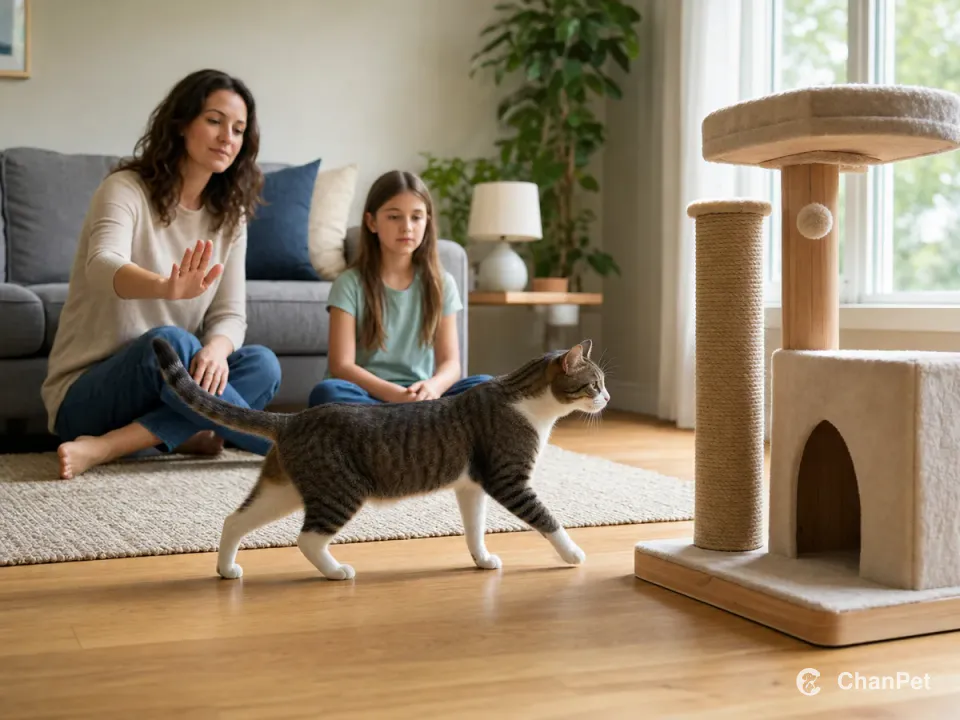
Giving people and cat their own space lets contact happen on the cat's terms.[1][2]
A good family cat when the family respects a cat's choices
Give children a role and the cat a retreat
A few clear rules work better than a long list: let the cat approach, play with toys, leave the resting space alone, and wash hands afterwards. Adults carry the care decisions so children can enjoy the relationship without being asked to manage it.[1][2][3]
Common questions
What should we do if a child gets scratched by the cat?
Sources
Sources used in this article
- [3]CatsCenters for Disease Control and Prevention
- [2]Feline Behavior Problems: Destructive BehaviorCornell University College of Veterinary Medicine, Cornell Feline Health Center
- [1]Choosing and Caring for Your New CatCornell University College of Veterinary Medicine, Cornell Feline Health Center