Turn watching into a family habit
A goldfish aquarium gives children a close view of another kind of animal life. Invite them to notice which fish comes to food first, where each one spends time, and whether swimming looks familiar. That is a much better first job than tapping the glass or chasing a fish with a net.[1][2]
Keep a small family notebook beside the tank. A child can draw a fin, mark a feeding, or tell an adult that a fish looks different. Adults can turn those observations into useful decisions about water, feeding, or veterinary advice.[2][1]
Give children small, clear jobs
A child can help measure food with an adult and watch it disappear. They can also help check that the aquarium lid is in place and that the area around the tank is dry. These tasks teach care without asking a child to manage the water system alone.[2][3]
Adults make the bigger calls. They manage water changes, decide whether the filter needs attention, arrange fish-health advice, and leave the aquarium layout stable while the fish settle. Royal Veterinary College goldfish guidance keeps the focus on the habitat as well as the fish.[1][2]
Make handwashing a real endpoint
CDC advises washing hands with soap and running water after feeding fish or touching aquarium water, gravel, or equipment. Give every tank visit the same ending: step back, put tools away, and wash hands before snack time or another activity.[3]
Keep buckets, nets, siphons, and cleaning cloths for aquarium use only. Store them away from food-preparation spaces. Clear boundaries help children see that the aquarium is a living habitat, not a toy chest.[3][2]
Adults take changes seriously
A fish that stops eating, swims strangely, holds its fins differently, or develops a new mark needs adult attention. Take a photo or video, check the water routine, and seek fish-health advice when the change continues. Children can help by describing when they first noticed it.[2]
Good family care keeps wonder and responsibility together. The children get to know the fish as individuals. The adults make sure that curiosity turns into gentle observation, clean water, and prompt help when the aquarium needs it.[1][2][3]
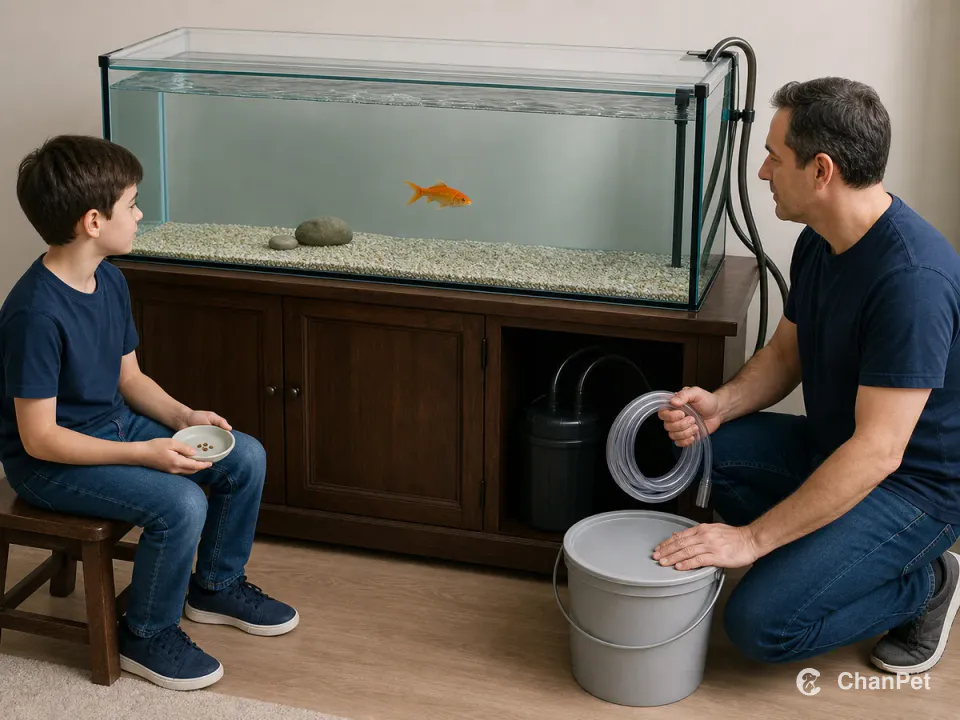
The child prepares a small food portion and observes under supervision while the adult owns filtration, water changes, hygiene and health decisions. Dividing tasks by risk keeps family participation steady.[3][1][2]
A family pet when grown-ups own the aquarium system
Let children join the wonder; let adults keep the promise
Look at who feeds, who cleans, who records changes, and who calls for help. Smart Match can help your family compare this kind of care with other pets.[2][3]
Common questions
Can a child feed a family goldfish?
What hygiene rule matters most around an aquarium?
Wash hands with soap and running water after fish, aquarium water, gravel, or equipment. Keep dedicated aquarium tools away from places where people prepare food.[3]
Sources
Sources used in this article
- [3]FishCenters for Disease Control and Prevention
- [1]Goldfish CareRoyal Veterinary College
- [2]Pet Fish HealthRSPCA