Children can observe; adults run the system
A child can enjoy watching a tortoise choose a basking spot or investigate a leaf. Adults need to set the light and temperature routine, buy appropriate food, clean the habitat, notice change, and make veterinary decisions. These jobs need the same reliability on school days and weekends.[1][2]
Give children a small, real role instead of handing them the whole responsibility. They can help check off a food list, point out where the tortoise rested, or help an adult refresh water. An adult should handle the equipment, health decisions, and any task involving waste or cleaning products.[1][2]
Gentle observation beats turning the tortoise into a plaything
A Hermann's tortoise is an animal to observe at its own pace. Children should let it walk, rest, eat, and retreat without being chased, passed around, or lifted for a game. The family learns more by watching how the habitat supports normal behavior.[1]
Make a simple family rule: hands stay calm, faces stay away from the animal, and an adult is present for handling. That protects the tortoise from stress and helps prevent scratches, dropped animals, and avoidable contact with germs.[2][3]
Hygiene belongs in the family routine
Reptiles can carry Salmonella even when they appear healthy. Finish every reptile task at the sink, using soap and running water after handling the animal, its feed, enclosure, or tools. Keep those items away from kitchens and places where food is prepared or served.[2][3]
Young children, older adults, and people with weakened immune systems face a higher risk from reptile-related germs. Families in that situation should decide on handling and cleaning roles before the animal arrives. A good family plan protects people and keeps the tortoise's care consistent.[2][3]
Put veterinary care and backup care on the family calendar
Choose an exotic veterinarian and keep the transport plan where all adults can find it. The parent who knows the habitat best should also show another adult the light, food, cleaning, and observation routine. One person may be away when a problem appears.[1][2]
A wall chart can hold food, cleaning, and health observations without turning the tortoise into a school project. Use it to see patterns and to leave clear notes for the backup carer. Children can learn careful observation while adults keep the decisions where they belong.[1][3]
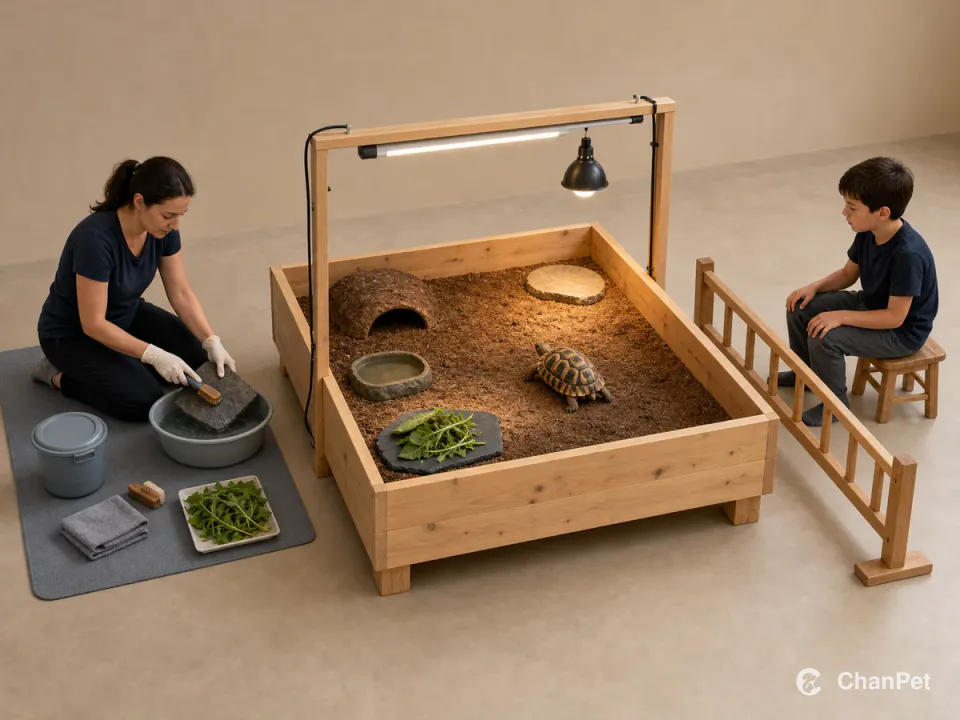
The child watches behind a clear rail while an adult owns habitat care, food preparation, cleaning, and hygiene.[1][2][3]
A family pet still needs one accountable adult
Use Smart Match to compare space, time, budget, and long-term care support before choosing.
Give the tortoise adult-level care
Use Smart Match to check whether the adults, space, hygiene routine, and backup support in your home can carry the care together.[1][2]
Common questions
Can a child be the main carer for a Hermann's tortoise?
Sources
Sources used in this article
- [1]Mediterranean tortoise care and adviceRoyal Veterinary College, Beaumont Sainsbury Animal Hospital
- [2]Reptiles and AmphibiansCenters for Disease Control and Prevention
- [3]Salmonella in Reptiles and Amphibians: Veterinary GuidelinesAssociation of Reptile and Amphibian Veterinarians