Adults run the small-dog traffic plan
RSPCA recommends that adults stay present during child-and-dog interactions and preserve a retreat zone for the dog. Give the Maltese a mat or quiet room and teach children that the space stays undisturbed.[1]
Adults should look down before opening doors, moving chairs, or carrying food through a busy room. A tiny Maltese benefits when family traffic has a predictable route and an adult decides when the dog is picked up.[2][1]
Give children gentle jobs inside adult boundaries
Children can place a toy, bring the comb, or offer a reward while an adult leads the activity. Short walks and calm indoor games can give a Maltese attention without turning family play into uncontrolled rushing.[2][1]
Keep lifting, furniture transitions, and high-energy moments under adult control. Clear starts and ends make each interaction easier for children to understand and give the dog a predictable route back to rest.[2][1]
Make clean hands the end of every care task
Handwashing belongs after handling the Maltese, its food, bowls, coat tools, or waste. CDC includes these contact points in healthy-pet guidance, so the family sink can become the last stop after care.[3]
Store dog food, treats, combs, and cleanup supplies in dedicated spots away from family meal preparation. Adults can check the supply area while children complete an age-appropriate step, such as returning the brush.[3][2]
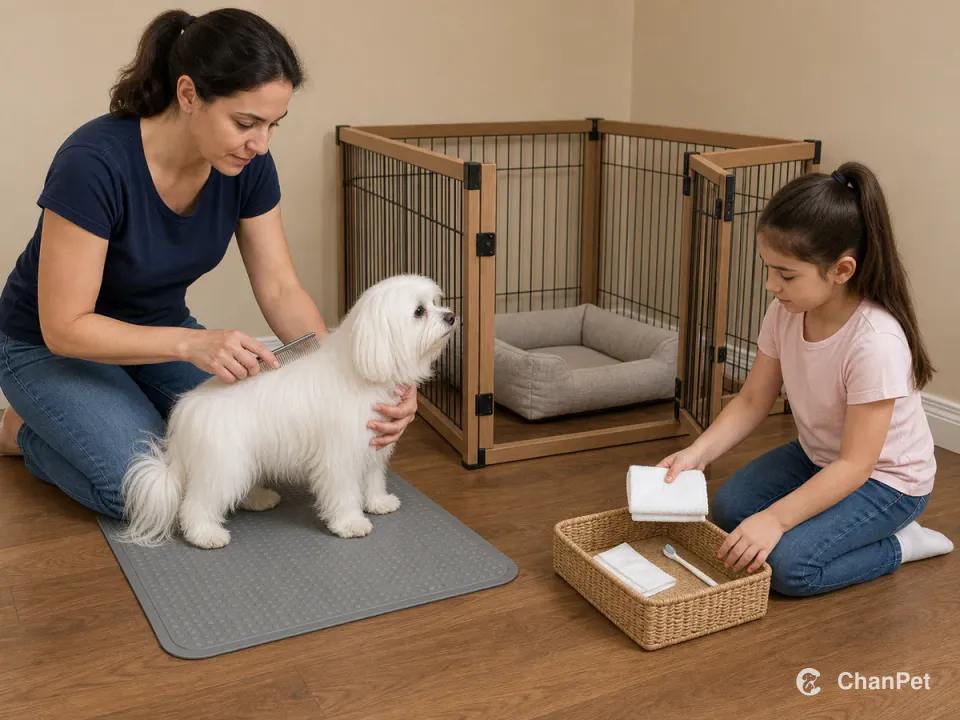
The adult handles grooming while the child returns a clean towel from a respectful distance; the open pen keeps the Maltese's resting bed available.[2][1][3]
A Maltese can become a family companion when adults protect the small details
Hold a family meeting around the smallest moments
Decide who leads lifting, where the Maltese rests, how children help, and where hands get washed. A family that can repeat those details has a stronger plan for daily small-dog care.[1][3]
Common questions
Can children help care for a Maltese?
Which hygiene habit should every Maltese family use?
Wash hands after contact with the dog, food, bowls, coat tools, or waste, and keep dog supplies away from family meal preparation. Adults can make the steps simple and consistent.[3]
Sources
Sources used in this article
- [2]Maltese Dog Breed InformationAmerican Kennel Club
- [1]Children & Dogs - How They Can Live TogetherRSPCA
- [3]DogsCenters for Disease Control and Prevention