Make watching the main interaction
A musk turtle is most interesting when you watch it move across the bottom, search for food and choose a resting spot. That gives children a real animal to observe without turning the turtle into a toy that gets passed from hand to hand.[1]
Keep the rule easy: an adult moves the turtle, children watch, and everyone washes hands afterward. CDC says reptiles and their environments can carry germs. Children younger than five need especially close protection from exposure.[2]
One adult should own the routine
Food, water changes, equipment checks and veterinary decisions need one named adult. A child can help log feeding or check that a light is on. An adult needs to decide what a change in water or behavior means.[3]
A short checklist by the tank can make shared care feel clear instead of bossy. Check the water, check the dry area, remove leftover food, then wash hands. Children learn the rhythm while the adult keeps the system safe.[1][3]
Keep tank gear out of food spaces
Store the bucket, brush, filter media and towels together and away from the kitchen. CDC recommends keeping reptile water and equipment out of food spaces. Outdoor cleaning is useful when possible; a laundry sink or bathtub can work indoors with cleanup afterward.[2]
After a water change, put the tools away and wash hands before anyone returns to snacks or dinner. A family rule that follows the same order each time is easier for children to remember.[2]
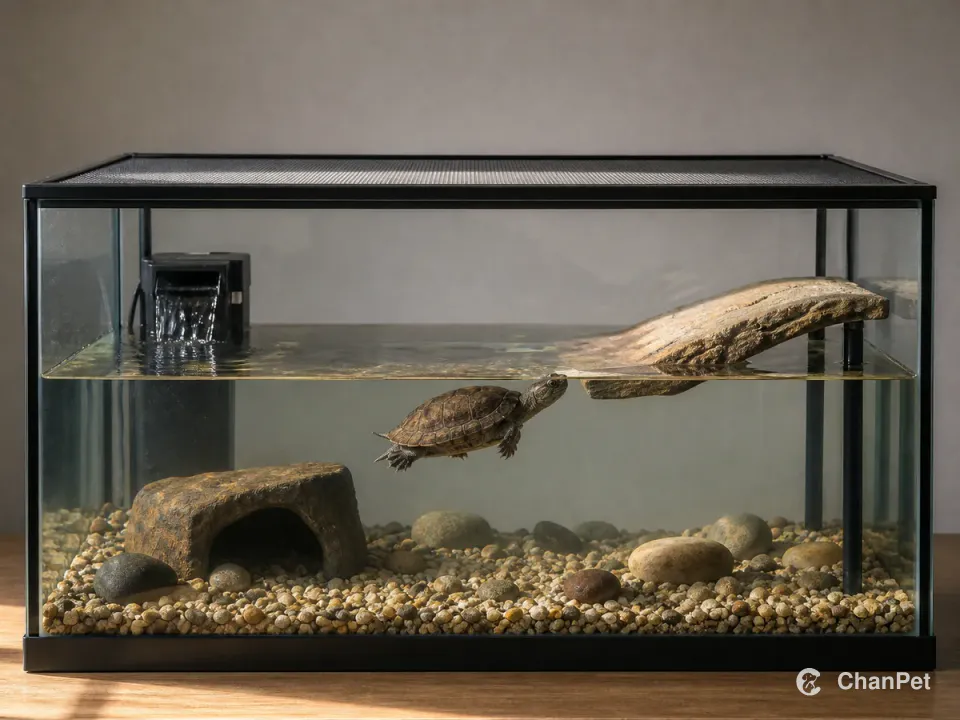
Clear water, fixed filtration and a safe basking platform stay inside a closed tank. Family members can observe while an adult manages the system.[1][2]
Children can observe; adults carry the care
The family reward is shared observation
Children get to notice how an aquatic turtle lives. Adults protect the water, the hygiene routine and the long-term plan. That division makes the experience calmer for everyone.[1][2]
Common questions
Sources
Sources used in this article
- [1]Sternotherus odoratus (Common Musk Turtle, Stinkpot Turtle)Animal Diversity Web, University of Michigan
- [2]Reptiles and AmphibiansCenters for Disease Control and Prevention
- [3]The Tortoise and Its CareUniversity of Illinois College of Veterinary Medicine