Adults direct the big-dog routine
Adults should manage doors, the leash, vehicles, and full-grooming work. A large shaggy dog's movement can change a family moment quickly, so responsibility stays with a capable person.[1][2]
Children can carry a brush, help prepare a treat, or join a quiet game. Those roles create connection without giving a child control over the dog's body or route.[2]
Teach contact that respects space
Invite children to wait for the dog to approach, then stroke a shoulder or chest lightly. Pulling coat, leaning over the dog, or holding it in place can create pressure.[2][1]
Leave resting, eating, or moving-away dogs alone. Adults can make this rule easy to remember by pausing the game every time the dog chooses to step out.[2]
Keep outdoor decisions with adults
Before leaving, adults secure the leash and read the space beyond the door. Children can stand behind the adult, notice landmarks, or offer a reward once the dog is settled.[1][2]
After the walk, adults handle paw and coat checks. Children can hang the leash or fetch a towel after the dog has reached its resting area.[1]
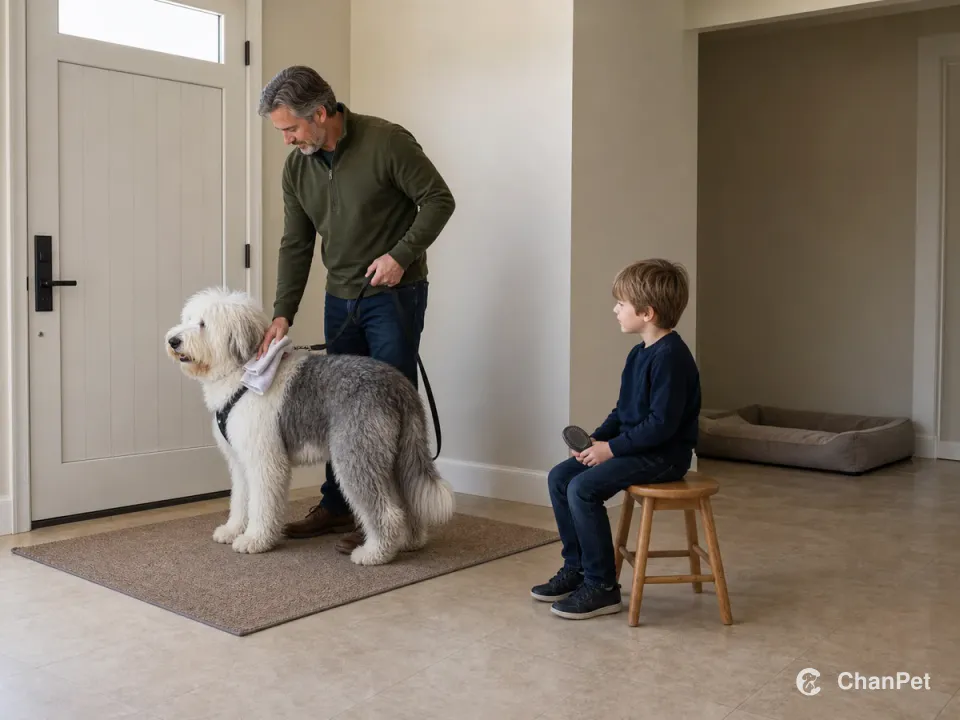
The adult owns the doorway, lead, and cleanup while the child waits with one brush task and the dog keeps a clear route to rest.[1][2][3]
A family OES needs calm adult-led boundaries
Agree on the rules before the dog arrives
Adults handle the leash, children give resting dogs space, and everyone washes hands after care. Repeated rules make safety feel ordinary.[2][3]
Common questions
Can a child walk an Old English Sheepdog alone?
What should children do when the dog walks away?
Let the dog leave. Explain that moving away can mean it needs rest, and let an adult help choose a better moment to interact.[2]
Sources
Sources used in this article
- [1]Is the Old English Sheepdog a Good Fit for You?American Kennel Club
- [2]Children & Dogs - How They Can Live TogetherRSPCA
- [3]DogsCenters for Disease Control and Prevention