Let the tank start conversations
A ranchu gives a family something quiet to notice together. Its rounded body, absent dorsal fin and split tail make it easy for children to identify one individual fish. Sit beside the tank and watch it search for food or move through the water. That is a better first lesson than asking a child to hold it.[1][2]
Goldfish are omnivores, and feeding can become a simple observation game. An adult can ask children what they see: Did the ranchu come over? Did it finish its food? Is the water clear? Small questions teach careful attention without turning the fish into a toy.[2]
Give children jobs that fit
Children can help an adult measure out a planned portion of food, tick off a daily observation or carry a clean towel. Adults should manage water changes, equipment and decisions about the fish's health. The aquarium stays safer when each family member has a job that matches their age and skill.[3][2]
Put a simple family rule beside the tank: look with your eyes first. Tapping glass, chasing the fish around with a finger or dipping hands into the water adds stress and makes the tank harder to keep clean. Calm watching helps everyone see more.[3][2]
Keep hygiene with the adults
CDC advises washing hands after touching aquarium water, fish or tank equipment. It also advises families to keep aquarium cleaning away from areas where food is prepared. Adults can make that routine automatic: feed, tidy up, wash hands, then move on to the next part of the day.[3]
CDC gives extra caution for children under five and for people with weakened immune systems. Talk with a healthcare professional when someone in the household has a higher risk of illness. The aim is a family tank that feels calm and predictable for people as well as the ranchu.[3]
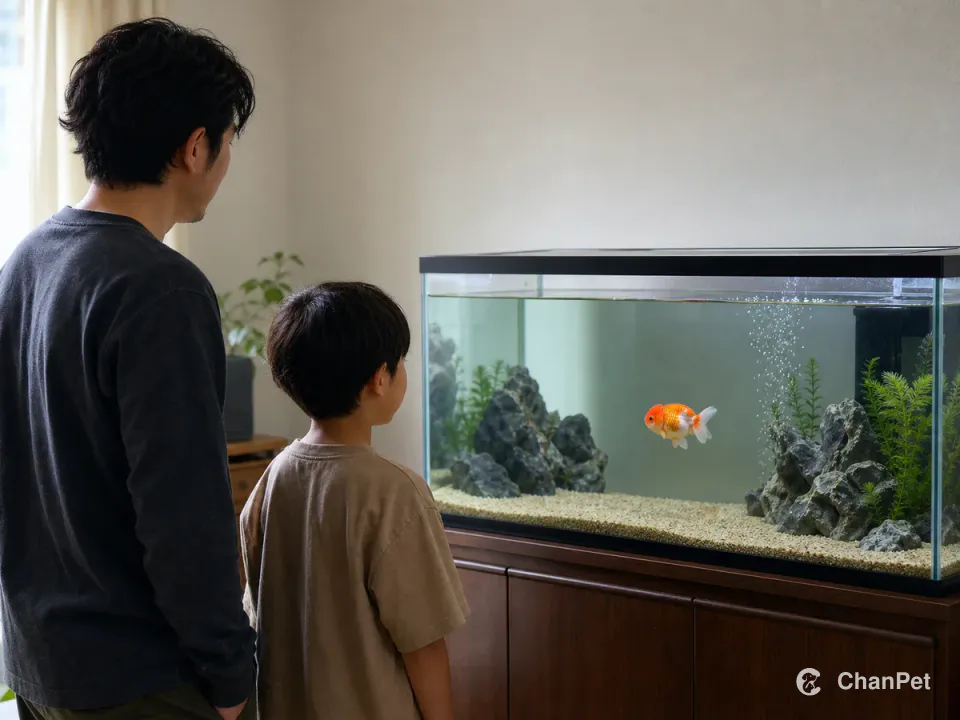
Quiet observation gives children a useful role without making the fish part of a game.[2][1]
Make the aquarium an adult promise
The best family aquarium feels calm to everyone
Children remember the fish that they were allowed to watch closely and care for kindly. A simple adult-led routine keeps the ranchu's home steady and makes those moments easy to enjoy.[3][2]
Common questions
Can young children help with a ranchu tank?
Yes, with close adult supervision and simple jobs such as observing or helping measure food. Adults should handle the water, equipment and hygiene routine, including handwashing afterward.[3]
Sources
Sources used in this article
- [2]Carassius auratusBioKIDS, University of Michigan
- [3]FishCenters for Disease Control and Prevention
- [1]Pleiotropic functions of chordin gene causing drastic morphological changes in ornamental goldfishProceedings of the National Academy of Sciences