Give everyone a role that fits
Adults own the promise behind the cat. They buy food, manage litter, arrange veterinary care, and decide what happens when the routine changes. Say this plainly before the Russian Blue arrives, so the care stays steady during school events, illness, and busy evenings.[1][2]
Children can help in ways that make them observant rather than overwhelmed. They can fill a water bowl with an adult, take part in a wand-toy game, or notice that the cat chose a new nap spot. A small role can still be meaningful.[3][1]
Let the cat leave the action
TICA describes Russian Blues as affectionate with their families and sometimes reserved around strangers. Each cat has its own threshold for noise and contact. A raised bed, a quiet room, or a familiar box gives the cat a graceful way to opt out of a loud game.[3][1]
Teach children to invite rather than chase. Sit down, offer a toy, and let the cat walk over. A cat that leaves has made a clear choice. Respecting that choice makes the next interaction more likely to be calm and friendly.[1][3]
Make handwashing part of the visit
Wash hands with soap and running water after handling the cat, its dishes, litter, or cleaning tools. CDC also advises adults to supervise handwashing for young children. Put the sink routine at the end of every cat visit, before snacks or homework.[2]
Adults should handle litter cleaning. Keep the litter area away from food preparation, then keep the scoop and cleaning supplies in one place. That simple division reduces arguments and makes daily upkeep more likely to happen on time.[2][1]
Keep the health story current
Families can learn the ordinary signs together: a cat eats, drinks, uses the litter box, and moves with its usual ease. Adults should make the call when appetite, breathing, behavior, or litter use changes in a worrying way. Young children can help describe what they saw.[2][1]
Keep the clinic number where every adult can find it. Bring the cat's usual routine and any recent changes to regular visits. Feline life-stage care adjusts as a cat grows older, so an old note is less useful than a current picture.[1][2]
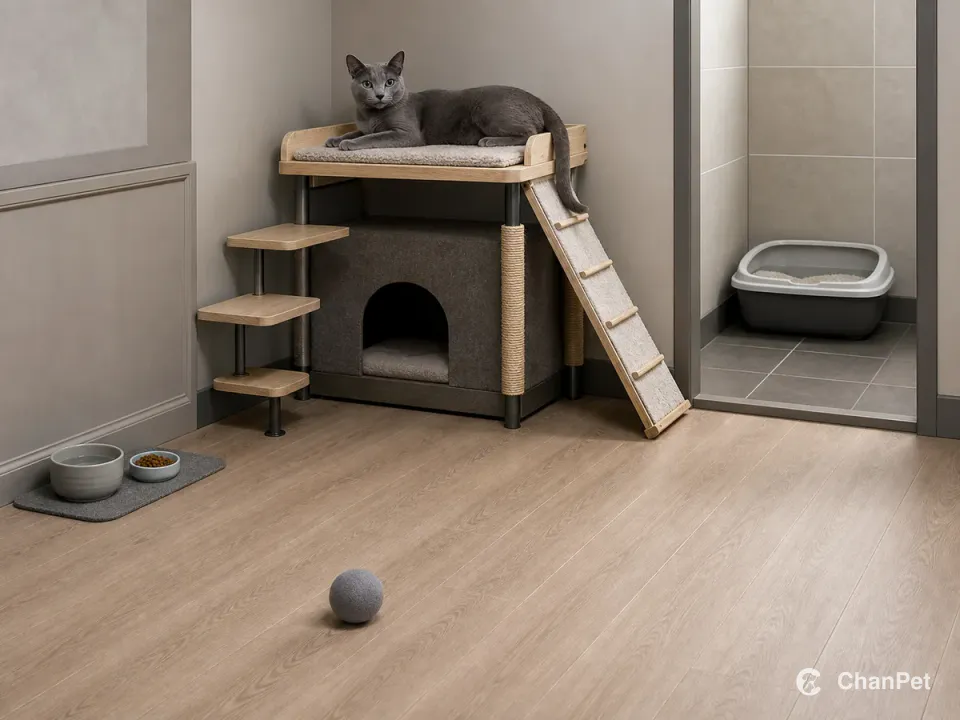
An elevated resting platform and sheltered cubby let the cat leave floor activity while adults maintain separate food and litter zones.[3][1][2]
A family cat when adults hold the daily thread
Choose a cat routine the adults can keep
Look at mornings, dinner time, litter cleanup, and the next veterinary visit. Smart Match can help you compare Russian Blue care with the rhythms of your family.[1][2]
Common questions
Can children hold a Russian Blue?
What hygiene rule matters most in a family cat home?
Wash hands with soap and running water after cat contact or litter tasks, and keep litter equipment away from food areas. Adults should supervise young children's handwashing.[2]
Sources
Sources used in this article
- [3]Russian BlueThe International Cat Association
- [1]Feline Life Stages: Veterinary Checkups at All AgesFeline Veterinary Medical Association
- [2]CatsCenters for Disease Control and Prevention