Make interaction quiet and predictable
A sun conure can draw every child in the room toward the cage. That interest is understandable, but the bird needs a calm pattern more than a series of excited greetings. Choose an adult who opens the cage, decides when activity is safe and shows children how to wait for a quiet moment.[1]
Give children jobs that build observation instead of pressure. They can help notice a fresh-food bowl, draw the bird's posture or remind an adult about a cleaning task. The adult still decides about handling, food, safety and when the bird has had enough activity.[1][2]
Keep hygiene routines simple
Make hand washing automatic after contact with the bird, cage, dishes or cleaning tools. Keep the cage-care materials separate from family food preparation. The CDC recommends basic hygiene around pet birds, and clear routines are easier for children to remember.[2]
Adults should do the deeper cleaning and deal with droppings. That keeps the work consistent and lets the family see when the cage or food area needs attention. A clean setup protects the bird's living space and makes the household feel more comfortable around it.[2]
Talk about health without making it scary
A healthy-looking sun conure is not automatically a health risk to the family. CDC guidance explains that psittacosis is linked to infected birds. Use that fact to support good hygiene and prompt professional advice, not to assume every parrot carries an infection.[3][2]
If the bird seems unwell, contact an avian veterinarian. If a person becomes ill after bird exposure, a healthcare professional should know about the contact. Calm, accurate information is more useful than a frightening family story built around one disease name.[3][2]
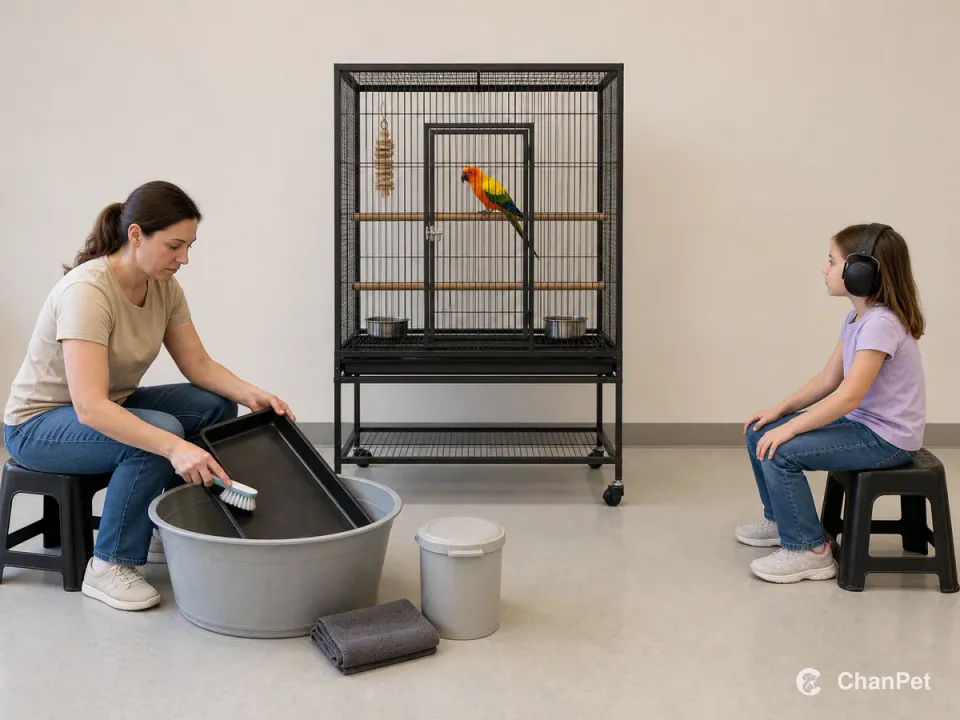
The adult owns cage security, cleaning, sound, and health decisions; the child observes quietly with both hands outside the closed cage.[1][2][3]
Choose a family pet for the family you actually have
Compare animal care needs around the time, interaction style and household structure your family can sustain.
The bird needs clear family rules, not more attention
Common questions
Can children clean a sun conure cage?
Adults should manage deeper cleaning and waste. Children can help with supervised observation and simple reminders, then wash hands after contact with the bird or its supplies.[2]
Sources
Sources used in this article
- [1]Sun ConureHonolulu Zoo Society
- [2]BirdsCenters for Disease Control and Prevention
- [3]About PsittacosisCenters for Disease Control and Prevention