Make viewing the family activity
A chameleon moving along a branch can hold a child's attention without anyone needing to touch it. Help children notice how the animal chooses a perch, changes position or looks for food. That creates a better lesson than a queue of hands reaching into the enclosure.[1]
Set one simple house rule: the enclosure belongs to the chameleon, and adults open it for necessary care. Visitors do not need a turn. Children can ask questions from outside the habitat and learn that giving an animal space can be part of being kind.[1][2]
Let adults own the care loop
Adults need to own feeders, water, cleaning, equipment checks and decisions about professional care. These jobs rely on noticing details and doing them even when the household is busy. A child can help with a simple observation note, but should never carry the system alone.[2][1]
Think through the family calendar before the animal arrives. A birthday party, renovation or weekend away changes traffic around the enclosure. Someone should know how to keep the chameleon calm and the habitat routine steady when the rest of the house is unusual.[2]
Make hygiene an easy habit
Put hand washing into the routine after contact with the reptile, its habitat, water items or feeder supplies. Keep those supplies away from food preparation. The CDC recommends basic hygiene around reptiles, and simple routines are easier for a whole family to keep.[3]
Adults should handle enclosure cleanup and any task involving waste. That is not about making reptile care mysterious. It keeps the work consistent, protects the family kitchen and lets children take part in safer ways.[3][2]
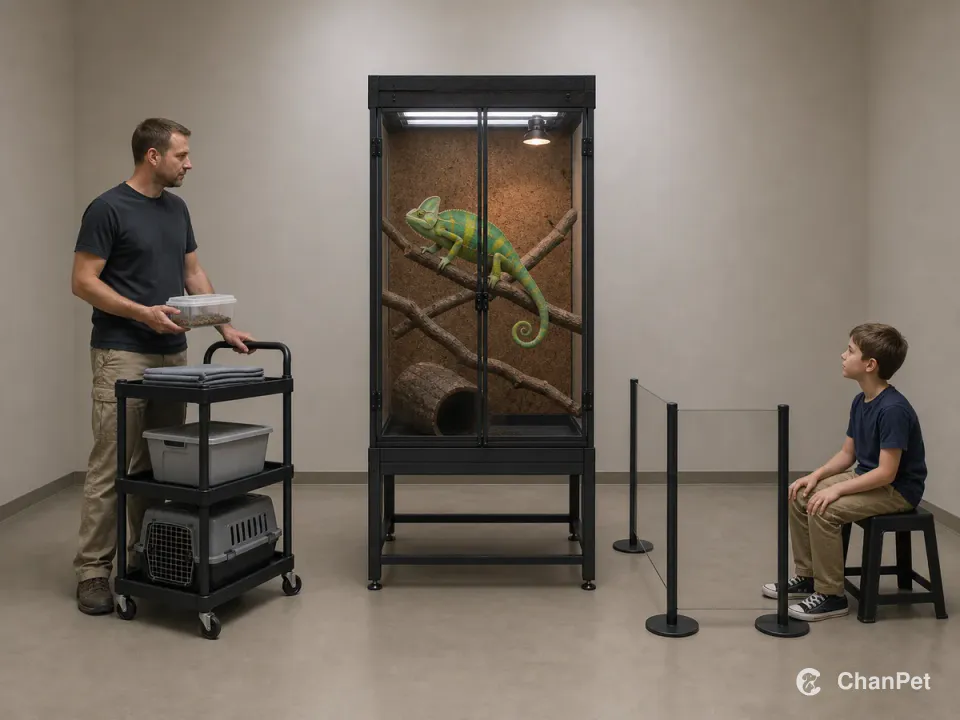
The adult owns the specialized routine, the child observes from a clear boundary, and the chameleon keeps a private low-disturbance space.[1][3][2]
Choose a family pet for the contact your family wants
Compare animal care and interaction styles against the way your family actually spends time together.
A quiet family rule can protect a private animal
Common questions
Can children hold a veiled chameleon?
Keep handling limited to necessary care and let children learn through calm viewing. A veiled chameleon needs a private habitat with places to climb and retreat instead of frequent changes of hands.[1]
Why does reptile care need clear family hygiene rules?
Hand washing after contact and keeping reptile equipment away from food preparation reduce everyday health risks. Adults should manage enclosure cleanup and related waste tasks.[3]
Sources
Sources used in this article
- [1]Do Veiled Chameleons Make Good Pets?World Wildlife Fund
- [3]Reptiles and AmphibiansCenters for Disease Control and Prevention
- [2]Selecting a ReptileMerck Veterinary Manual