Give children an observer's role
Children can read the meter, note how many insects the frog ate or spot the favorite resting branch. Those are real jobs that let them participate without passing the frog from hand to hand.[1][2]
Adults run the door, water, food, cleaning and health decisions. VCA advises that most frogs should remain in their enclosure. A larger White's tree frog still has skin and stress needs that deserve gentle handling.[2][1]
Make washing hands the next step
Put soap and a towel on the route away from the habitat. CDC advises washing after touching animals, their food, habitats and supplies. The sequence is easy for a child to remember: watch, close the door, wash hands, then have a snack.[3]
Keep habitat and feeder tools away from places where people prepare food. Clear boundaries are easier to follow than repeating a new rule every time the family is curious about the frog.[3][2]
Make night watching a small family event
You do not need to keep children up every night. On an occasional weekend, watch quietly as the frog comes out, chooses a perch or takes prey. That makes the animal interesting without asking it to perform.[1][2]
If the frog keeps hiding, looks different or refuses food, end the interaction. An adult can check the habitat and seek advice. Children learn a useful lesson: caring for an animal includes respecting its need for space.[1]
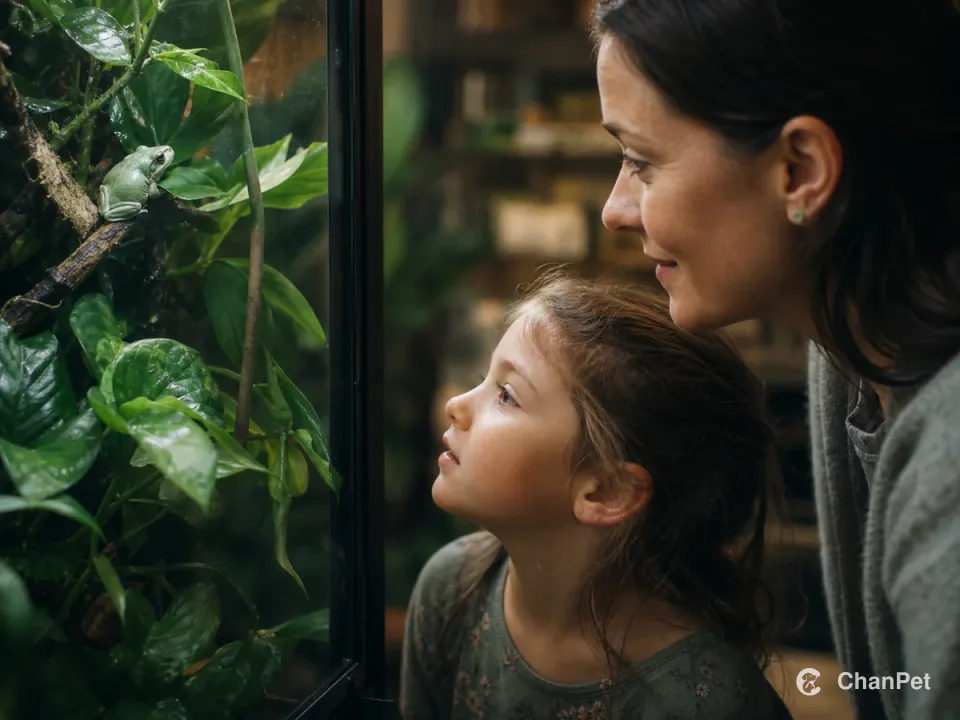
Watching through glass lets a child stay curious without making handling the activity.[1][2]
Clear roles make the family experience better
A comfortable frog makes the best family experience
Adults run a stable habitat; children learn observation, patience and handwashing. That is more than enough shared life with a White's tree frog.[1][3]
Common questions
Sources
Sources used in this article
- [1]White's Tree Frog care sheetRoyal Veterinary College
- [3]Hygiene Practices Around AnimalsCenters for Disease Control and Prevention
- [2]Frogs as PetsVCA Animal Hospitals