Buy the system before the scenery
Write the short essentials list first: an escape-proof enclosure, safe heat and monitoring, hides, water, substrate and cleaning supplies. RSPCA places those elements at the center of ball python care. They make the animal's home work from day one.[1]
A welfare study of the ball python trade found that basic provisions such as hygiene, movement, shelter, substrate and water were often missing. That is a useful shopping lesson. Fund the things the snake uses before you fund the things that look impressive.[2]
Keep frozen prey in the ongoing plan
Whole prey is part of ball python care. Leave room for safe frozen storage, feeding tongs and cleanup supplies. University of Illinois veterinarians recommend pre-killed prey because live prey can bite and injure a snake.[3]
Food, substrate, cleaning supplies and replacement equipment are smaller recurring costs. Put them on the same list as the enclosure. A budget becomes more honest when it includes the ordinary months after the first purchase.[1][3]
Wondering what a ball python could cost to keep? Use our cost calculator to separate habitat setup, recurring supplies and a veterinary reserve, then refine the range with local quotes.[1][3][2]
Save room for the ordinary surprise
Keep a buffer for a failed thermostat, a replacement bulb or a reptile-veterinary visit. The money may sit there for a while. Its job is to protect the stable environment you have already built.[1]
Add branches, background panels and more elaborate decor later if you want them. A ball python benefits first from temperature choice, cover, clean water and a secure enclosure. The practical setup gives every later upgrade a solid base.[1][2]
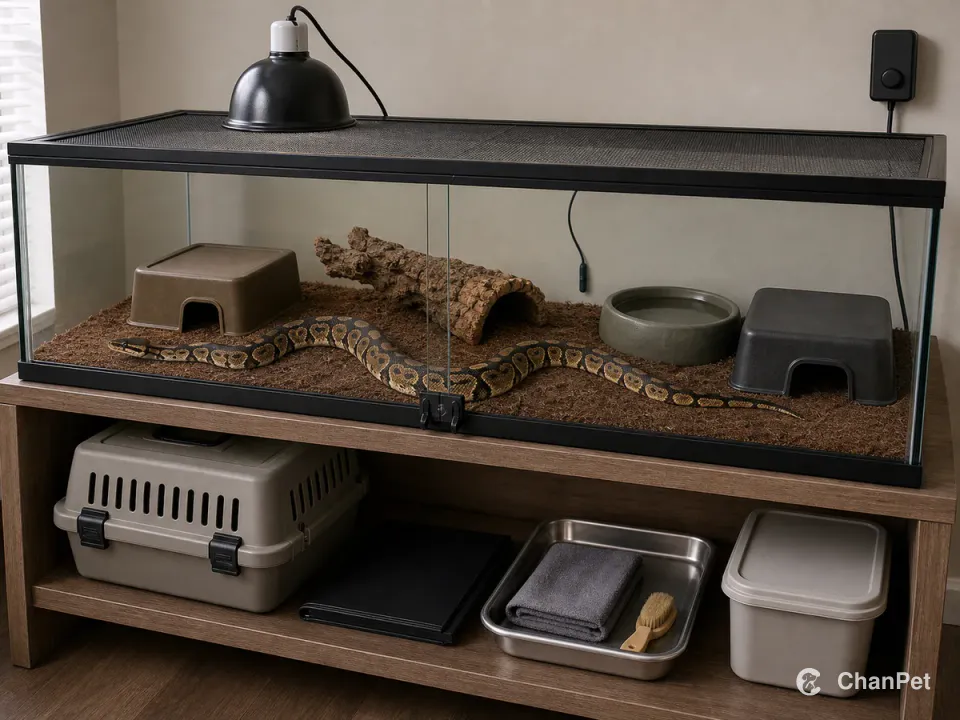
A limited budget first protects the secure enclosure, temperature control, two hides, and water, then keeps cleaning, feeding, transport, and veterinary preparation ready.[1][3][2]
A tight budget needs a clear order of work
Spend first on the care that happens every day
Unsure whether your current budget leaves enough room? Start a smart match, then decide when the habitat is ready to become a real home.[1][3]
Common questions
Can I begin with a temporary enclosure and upgrade later?
A safer plan is to set up a suitable, stable enclosure before the ball python arrives. Temperature control, hides and escape prevention belong in the first setup.[1]
Is live prey a way to lower feeding costs?
University of Illinois veterinarians recommend pre-killed prey. Live prey can injure the snake and makes the feeding process harder to control.[3]
Sources
Sources used in this article
- [1]How To Care For a Royal PythonRSPCA
- [3]Your Pet Snake’s Diet: Dead or Alive?University of Illinois College of Veterinary Medicine
- [2]Dropping the Ball? The Welfare of Ball Pythons Traded in the EU and North AmericaAnimals