Pay for the ground route first
A blue-tongued skink is not a small-box lizard. Smithsonian reports that northern blue-tongued skinks can reach about 22 inches. Spend first on enough ground space for ordinary movement, basking and retreating.[1]
Texas A&M points to warm temperatures, humidity, special lighting and food as real needs for blue-tongued skinks. Put the pieces that operate every day on the first shopping list. Decorative pieces can come after the system works.[2]
Delay looks, not routine
Backgrounds, display wood and elaborate décor can wait. Food dishes, fresh water, substrate, heating and lighting cannot. Blue-tongued skinks eat a varied omnivorous diet, so the budget also needs room for regular food preparation.[1]
Hygiene deserves its own small line in the budget. CDC recommends keeping reptile supplies out of food spaces and washing hands after contact. A dedicated brush, towel and storage bin make that boundary easier to keep.[3]
Wondering what it costs to keep a blue-tongued skink? Use our calculator to separate the enclosure, lighting, food and emergency fund, then refine the range with local quotes.[1][2]
Protect the budget after checkout
Blue-tongued skinks can live about 15 years in human care. The first enclosure is only the opening purchase. Leave space for food, substrate, replacement equipment and veterinary care instead of spending every dollar on move-in day.[1]
A low-cost plan works when it stays workable through normal months. If the core habitat strains the budget before the skink arrives, wait until routine care has a reliable place in it.[2]
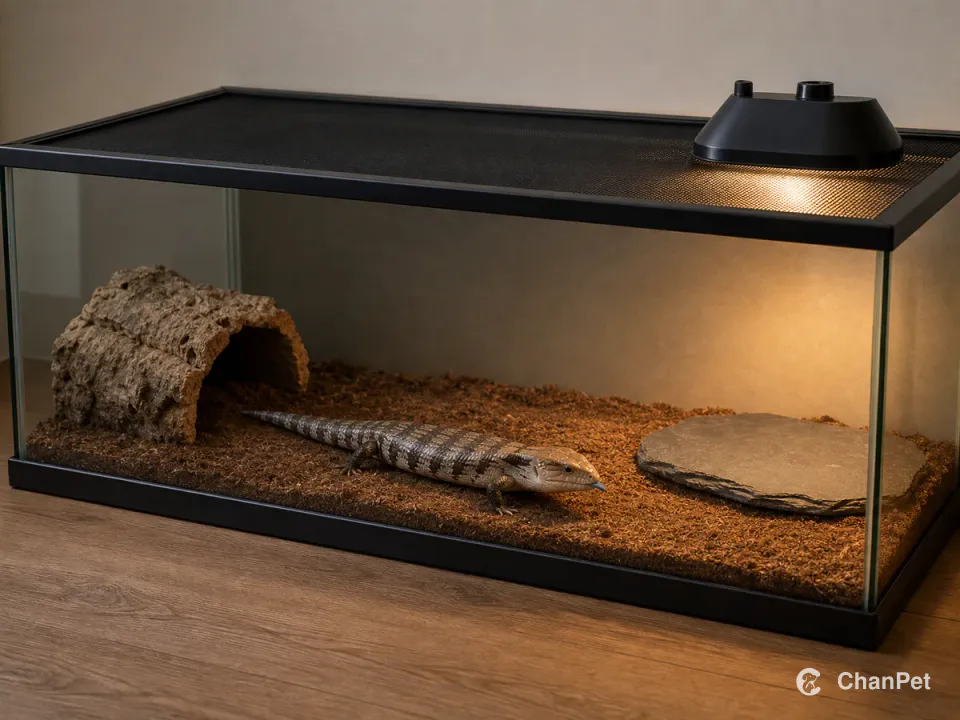
Put ground space, reliable light and a hide in place first; décor can grow slowly.[1][2]
Buy fewer extras and protect everyday care
A good budget keeps ordinary care going
Give the skink usable space, reliable light and consistent food first. Décor can grow slowly. The daily routine should never have to wait for it.[1][2]
Common questions
Sources
Sources used in this article
- [1]Northern blue-tongued skinkSmithsonian's National Zoo and Conservation Biology Institute
- [2]Living with LizardsTexas A&M College of Veterinary Medicine & Biomedical Sciences
- [3]Reptiles and AmphibiansCenters for Disease Control and Prevention