Separate care from the shopping list
Write the recurring needs in one short list: food, litter and the supplies that keep the box clean. Add a carrier, a scratcher and the veterinary care you plan to maintain. This list lets you see whether the cat fits before a matching bed or photo-ready bowl enters the cart.[1][2]
Silver shading belongs to the British Shorthair coat standard. It does not make the cat's food, litter or health needs ornamental. A practical setup often starts with sturdy, plain objects that are easy to clean and easy for the cat to use.[2]
Make food use visible
Choose food with the cat's age and health needs in mind, then use measured meals as advised by a veterinary team. A scoop or scale and a note on the refrigerator give you a clearer picture than filling a bowl whenever it looks low.[1]
Keep treats in the same note as meals. The record helps you see what is being used, who is feeding the cat and what questions to bring to a checkup. It also prevents well-meant extras from quietly becoming the whole food plan.[1]
Check body condition with a veterinary team
The World Small Animal Veterinary Association offers a nine-point body-condition tool for cats. Ask your veterinary team to show you how they use it at a regular visit. It gives you shared language for a conversation about food, activity and a changing body shape.[3]
A British Shorthair's rounded outline and dense coat can make a casual glance less useful than a regular hands-on check. Measured meals, a brief record and veterinary guidance help you respond to the cat's needs instead of guessing from its silhouette.[2][3]
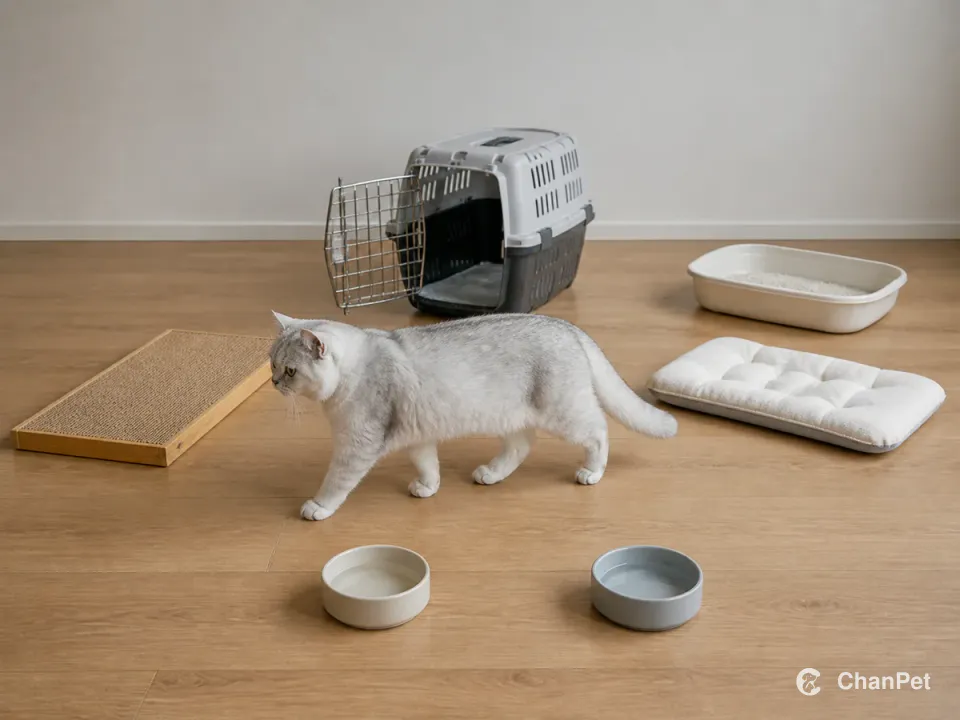
A carrier, scratcher, litter tray, bowls, and resting pad give the daily routine a secure place before coordinated extras.[2][1][3]
Fund the ordinary week before the beautiful extras
Start with what the cat uses every day
A responsible budget supports the next meal, the next clean litter box and the next health conversation. Once those are secure, the optional items can grow with the household rather than pressuring it.[1][3]
Common questions
Which purchases should come before decorative cat furniture?
Sources
Sources used in this article
- [2]British Shorthair Show StandardThe Cat Fanciers' Association
- [1]Feeding Your CatCornell University College of Veterinary Medicine, Cornell Feline Health Center
- [3]Body Condition Score: CatWorld Small Animal Veterinary Association