Buy the safe home before the accessories
Start with a secure, easy-to-clean cage, safe bar spacing, dishes, and varied perches. AAV warns that some metals and damaged toys can harm a budgie. A low sticker price loses its appeal when safety is missing.[1]
Dishes and cage paper are small purchases that keep returning. Choose items that are easy to wash and replace. Leave elaborate backdrops and matching accessories until the daily setup runs smoothly.[1][2]
Treat food as a running cost
AAV's budgie guidance includes formulated food, fresh chopped produce, and whole grains in a long-term feeding plan. Price the food as something you can buy every week, rather than as one cheerful cart on pickup day.[1]
A pellet transition can take time. Texas A&M notes that a budgie may not see pellets as food at first. Leave room for the transition food and a simple gram scale instead of forcing a quick change.[3]
Keep hygiene simple and ready
CDC notes that pet birds and their equipment can carry germs that make people ill. Handwashing, dedicated cleaning supplies, and replaceable cage paper usually deserve priority over scented products that only hide a smell.[2]
Keep cage tools and bird dishes away from food-preparation spaces. This choice costs very little and makes the household routine easier to keep clear.[2][1]
Leave space for avian care
A budgie can change quickly when unwell. AAV recommends a relationship with a veterinarian experienced with birds and regular examinations. Put both routine care and an urgent visit into your budget before you choose a pickup date.[1]
Find the nearby avian clinic while your choices are still open. When food, housing, hygiene, and veterinary care are already covered, you avoid building the bird's life around postponed essentials.[1][2]
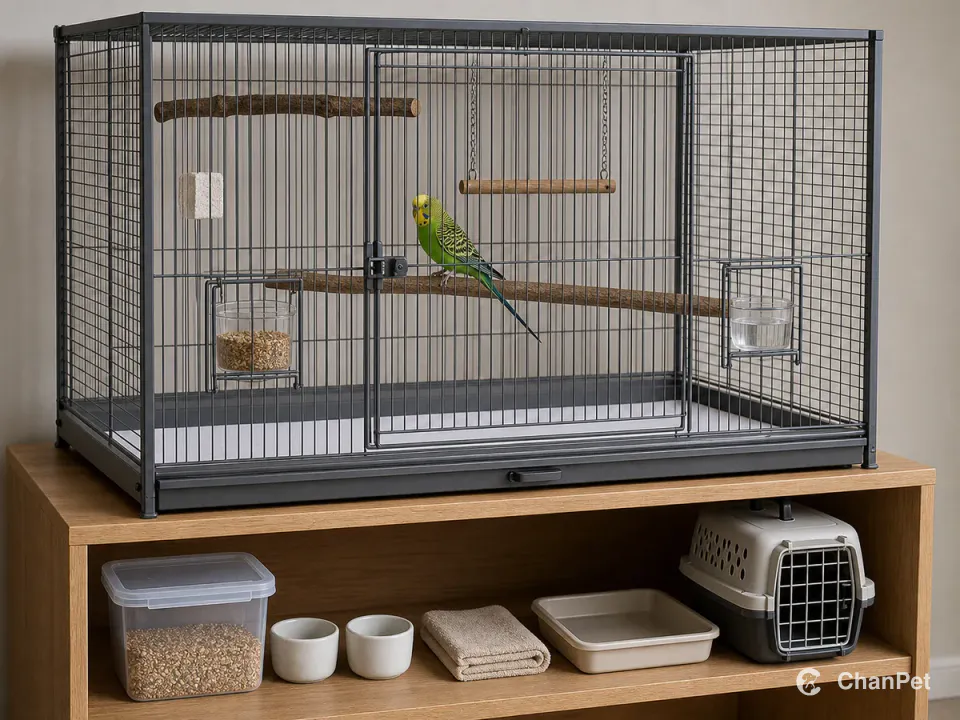
The budget first secures durable housing, complete food, clean dishes, movement routes and veterinary travel preparation. Simple decor is enough when daily care already works.[1][3][2]
Let the daily routine work before you buy the finishing touches
Want to know what keeping a budgie could cost?
Use our cost calculator to separate housing, everyday food, cleaning, and veterinary reserve, then refine the range with local quotes.[1][3]
Common questions
Which items can wait?
Keep the cage, dishes, perches, basic cleaning supplies, and food at the top of the list. Add decorative items as you learn what the budgie uses and enjoys.[1]
Sources
Sources used in this article
- [1]BudgiesAssociation of Avian Veterinarians
- [3]Don’t Fly Blind When It Comes To Bird NutritionTexas A&M College of Veterinary Medicine & Biomedical Sciences
- [2]BirdsCenters for Disease Control and Prevention