Start with the health paperwork
The first number people notice is often the adoption price. Spend time on the paperwork first. AKC's Chihuahua health-testing list names patella, cardiac and ophthalmologist evaluations. Ask to see reports that identify the parent dogs, then take copies to your veterinarian.[1]
The Chihuahua Club of America discusses patellar luxation, heart disease and eye disease in its health statement. Screening records cannot promise a trouble-free future. They help you ask better questions before you commit, and they give future veterinary conversations useful context.[2]
Treat mouth care as a recurring cost
Dental care can disappear from a budget because it rarely looks urgent at the start. WSAVA places dental health among the routine medical concerns of companion animals. Ask your veterinary team how home care, checks and professional treatment fit together before you bring a Chihuahua home.[3]
A toothbrush, suitable dental products and routine visits each take a small place in the plan. Over time, they become part of the real cost of care. Including them from day one makes the budget more honest and easier to sustain.[3]
Want to know what a Chihuahua may cost? Use our cost calculator to separate adoption setup, daily food, dental care and a veterinary buffer, then refine it with local quotes.[1][2][3]
Leave a buffer for the care that arrives when it arrives
A veterinary buffer is there to give you options when something changes. A change in gait, eyes, mouth or energy deserves attention. Health records and daily observation work better together than either one on its own.[1][2][3]
A tight plan can still be a good plan when the order is clear. Keep records, food, mouth care and veterinary preparation in place. Add outfits, accessories and extra toys after those foundations feel comfortably covered.[1][2][3]
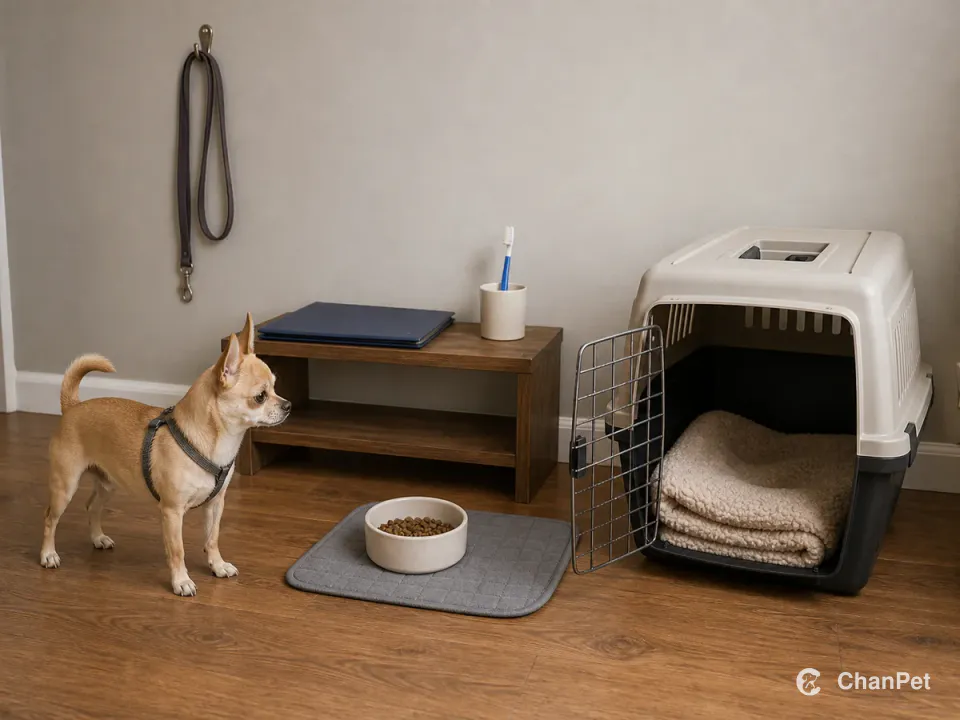
Put transport, warmth, food, mouth care and health records into the routine first; decorative extras can wait.[1][2][3]
Build the base before you set an adoption date
Let the budget protect the parts that matter most
Want to see whether a Chihuahua fits your budget now? Start a smart match and include your care reserve, routine and time at home.
Common questions
Does a Chihuahua's small size mean I can keep a smaller medical reserve?
Can dental care wait until bad breath appears?
Build daily dental care and regular checks into the routine from the start. WSAVA's guidance emphasizes the value of preventive care and veterinary assessment for companion animals.[3]
Sources
Sources used in this article
- [1]Toy Group Health Testing Requirements: ChihuahuaAmerican Kennel Club
- [2]Chihuahua Club of America Health StatementChihuahua Club of America
- [3]WSAVA Global Dental GuidelinesWorld Small Animal Veterinary Association