Buy the home before the look
Start with the enclosure itself. A crested gecko climbs, so its home needs useful vertical room, safe access and airflow. A small decorative tank can look tempting online, but it leaves you buying the real habitat later.[1][2]
Keep simple measuring tools in the first purchase list. Texas A&M and the University of Calgary both describe temperature and humidity as core reptile husbandry. You can only correct a habitat condition after you can see it clearly.[1][2]
Keep food and cleaning in the plan
The setup is only the first bill. Crested geckos need a dependable food routine, clean dishes and supplies for enclosure upkeep. List the things you will replace before you spend on a backdrop, premium fake plants or a themed enclosure.[1][2]
Tufts notes that reptiles can hide illness. Put a health reserve on the same list as food and cleaning supplies. That reserve gives you choices when the gecko needs veterinary attention.[3]
Want to see the enclosure, supplies and health reserve as separate parts of your plan? Use the cost calculator for a starting range, then refine it with local quotes.[1][3]
Save through simple, maintainable choices
Use sturdy branches, secure foliage and a layout you can reach for cleaning. The most useful enclosure is easy to monitor and reset. It does not need to look like a showroom to give a climbing gecko places to move and hide.[2][1]
Delay the items that only change the look of the enclosure. Keep the money for food, measuring tools, replacement equipment and veterinary support. Those are the parts of a modest setup that keep working after the excitement of day one has passed.[3][2]
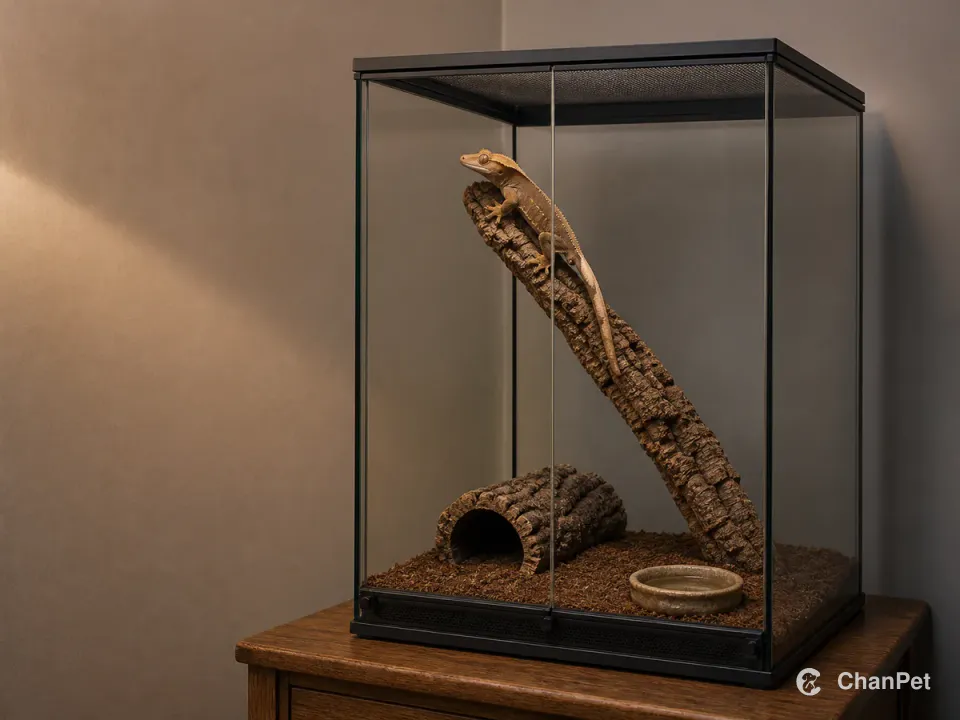
A tall ventilated enclosure, a climbing route and water come first; visual extras can follow once the routine is steady.[1][2]
A cheaper start still needs core care
Let the budget protect the everyday needs
The right frugal choice is simple and sturdy, with money left for the routine that follows. Build a usable vertical home first, then add visual extras only when the basics already feel secure.[1][2]
Common questions
Sources
Sources used in this article
- [1]All About Crested Geckos | Pet TalkTexas A&M College of Veterinary Medicine & Biomedical Sciences
- [2]Reptiles and HusbandryFaculty of Veterinary Medicine, University of Calgary
- [3]Reptiles 101: Adopting with CareCummings School of Veterinary Medicine at Tufts University